Introduction to Animal Research
This worksheet introduces students to the ethical considerations, methodologies, and importance of animal research in scientific advancements.
Includes
Standards
Introduction to Animal Research
Name:
Date:
Score:
Read each question carefully and answer to the best of your ability. For multiple choice questions, circle the letter corresponding to the correct answer. For fill-in-the-blank questions, write your answer on the line provided. For short answer questions, use the space provided.
1. Which of the following is NOT a primary ethical consideration in animal research?
Minimizing pain and distress
Ensuring public access to all research data
Replacing animal use with alternatives where possible
Reducing the number of animals used
2. The '3 Rs' in animal research ethics stand for:
Research, Report, Replicate
Respect, Responsibility, Regulation
Replace, Reduce, Refine
Review, Revise, Reassess
3. Animal research has significantly contributed to the development of and treatments for many human diseases.
4. The use of genetically modified animals in research allows scientists to study specific gene functions and their impact on .
5. All animal research is conducted without any ethical oversight.
True
False
6. In vitro studies are always a complete replacement for in vivo animal studies.
True
False
7. Briefly explain why animal models are sometimes necessary for understanding complex biological systems.
8. Describe one major scientific breakthrough that was made possible through animal research.
9. The diagram below shows an animal cell. Label three organelles and briefly describe their function in the context of cellular processes that might be studied in animal research.
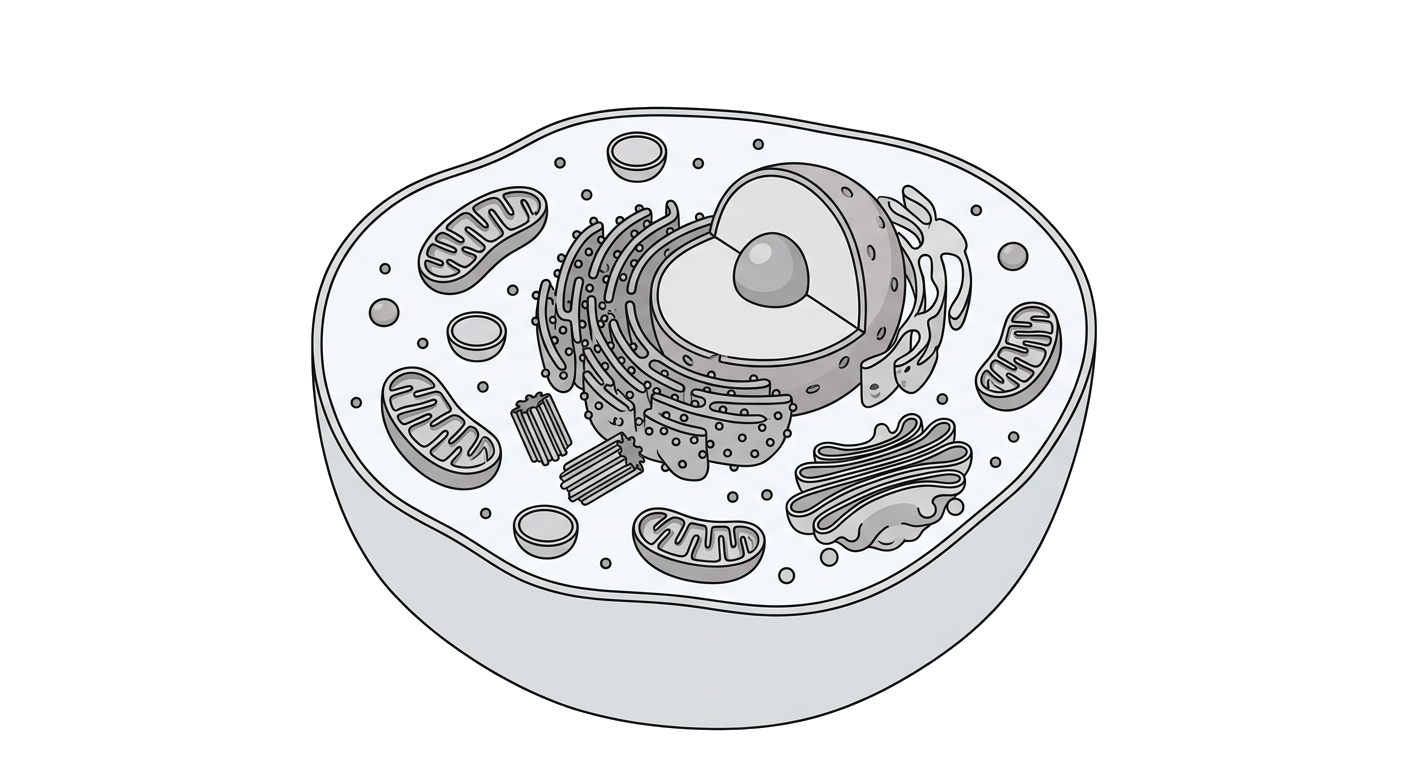
Organelle 1:
Function:
Organelle 2:
Function:
Organelle 3:
Function:
Related Worksheets
Phylogenetic Tree Worksheet
Explore the principles of phylogenetic trees, common ancestry, and evolutionary relationships among organisms.
Blood Sugar Regulation Worksheet
A Grade 10 science worksheet covering the regulation of blood sugar, including the roles of insulin, glucagon, and the pancreas.
Bacterial Transformation Worksheet
This worksheet covers key concepts in bacterial transformation, including the process, mechanisms, and applications.
Cell Environments Worksheet
Explore the principles of cell environments, including osmosis, diffusion, active transport, and their effects on plant and animal cells.
Bone Markings Worksheet
A Grade 10 Science worksheet focusing on the identification and function of various bone markings.
Properties of Carbon Worksheet
Explore the unique properties of carbon, its atomic structure, bonding capabilities, and its importance in organic chemistry and living organisms.
Human Skull Anatomy Worksheet
A Grade 10 science worksheet focusing on the anatomy and functions of the human skull, including its various bones and protective role.
Grade 10 Biology: Heart Structure Worksheet
A comprehensive worksheet for Grade 10 Biology students covering the structure and function of the human heart.