Bacterial Resistance: Understanding the Threat
This worksheet explores bacterial resistance, its causes, mechanisms, and consequences, suitable for Grade 10 Science students.
Includes
Standards
Bacterial Resistance: Understanding the Threat
Name:
Date:
Score:
Read each question carefully and answer to the best of your ability. Use complete sentences for short answer questions.
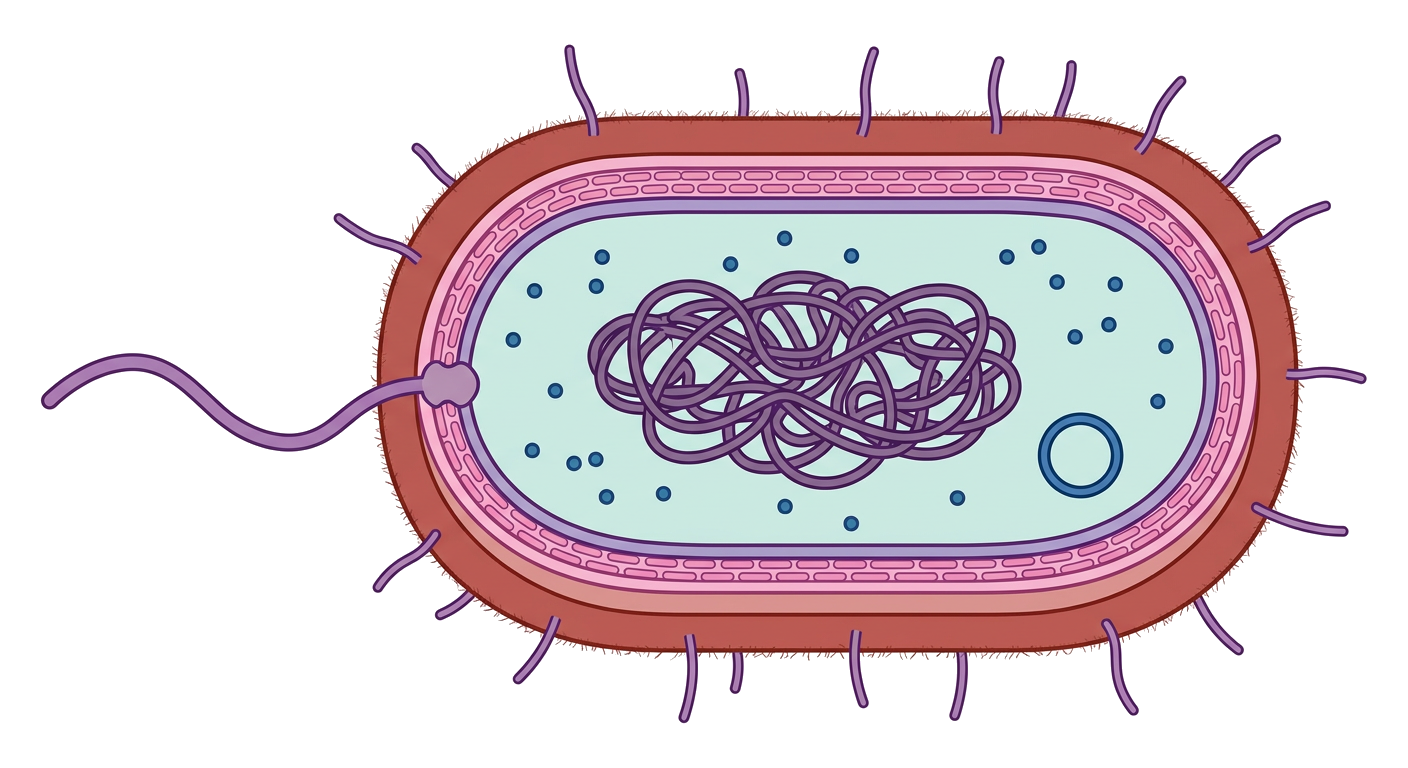
Bacterial resistance, also known as antibiotic resistance, is a growing global health concern. It occurs when bacteria evolve and become tolerant to antibiotics, making infections harder to treat. This section will introduce you to the basics of bacterial resistance.
1. What is the primary cause of bacterial resistance?
Overuse of vaccines
Misuse and overuse of antibiotics
Lack of proper hygiene
Genetic engineering in bacteria
2. Which of the following is NOT a mechanism by which bacteria can become resistant to antibiotics?
Mutation in bacterial DNA
Horizontal gene transfer
Increased bacterial reproduction rate
Efflux pumps actively removing antibiotics
3. Bacterial resistance is a form of where bacteria adapt to survive in the presence of antibiotics.
4. The transfer of genetic material between bacteria, leading to resistance, is called gene transfer.
5. A common example of an antibiotic-resistant bacterium often found in hospitals is .
6. Taking antibiotics for viral infections helps prevent bacterial resistance.
True
False
7. Completing the full course of antibiotics, even if you feel better, is crucial to minimize resistance.
True
False
8. Explain how natural selection contributes to the development of antibiotic resistance in bacteria.
9. Describe two ways in which humans can help prevent the spread of antibiotic resistance.
Use the words below to complete the sentences.
10. Bacteria can acquire resistance through random changes in their DNA, known as a .
11. Small, circular pieces of DNA called can carry resistance genes and be transferred between bacteria.
Related Worksheets
Phylogenetic Tree Worksheet
Explore the principles of phylogenetic trees, common ancestry, and evolutionary relationships among organisms.
Blood Sugar Regulation Worksheet
A Grade 10 science worksheet covering the regulation of blood sugar, including the roles of insulin, glucagon, and the pancreas.
Bacterial Transformation Worksheet
This worksheet covers key concepts in bacterial transformation, including the process, mechanisms, and applications.
Cell Environments Worksheet
Explore the principles of cell environments, including osmosis, diffusion, active transport, and their effects on plant and animal cells.
Bone Markings Worksheet
A Grade 10 Science worksheet focusing on the identification and function of various bone markings.
Properties of Carbon Worksheet
Explore the unique properties of carbon, its atomic structure, bonding capabilities, and its importance in organic chemistry and living organisms.
Human Skull Anatomy Worksheet
A Grade 10 science worksheet focusing on the anatomy and functions of the human skull, including its various bones and protective role.
Grade 10 Biology: Heart Structure Worksheet
A comprehensive worksheet for Grade 10 Biology students covering the structure and function of the human heart.