Cellular Transport Worksheet
Explore the mechanisms of cellular transport, including passive and active transport, osmosis, diffusion, and membrane structures.
Includes
Standards
Topics
Cellular Transport Worksheet
Name:
Date:
Score:
Read each question carefully and provide your best answer. For multiple-choice questions, circle the letter corresponding to the correct answer. For fill-in-the-blank and short-answer questions, write your answer in the space provided.
1. Which type of transport does NOT require energy to move substances across the cell membrane?
Active transport
Passive transport
Endocytosis
Exocytosis
2. The movement of water across a selectively permeable membrane from a region of higher water concentration to a region of lower water concentration is called:
Diffusion
Facilitated diffusion
Osmosis
Active transport
3. The cell membrane is primarily composed of a bilayer.
4. In , carrier proteins are used to move substances down their concentration gradient without the use of ATP.
5. A solution with a higher concentration of solutes than the cell's cytoplasm is called a solution.
6. Active transport moves substances from an area of low concentration to an area of high concentration.
True
False
7. The sodium-potassium pump is an example of passive transport.
True
False
8. Describe the primary difference between diffusion and osmosis.
9. Explain how the structure of the cell membrane contributes to its function in regulating cellular transport.
10. Label the following components on the diagram of the cell membrane:
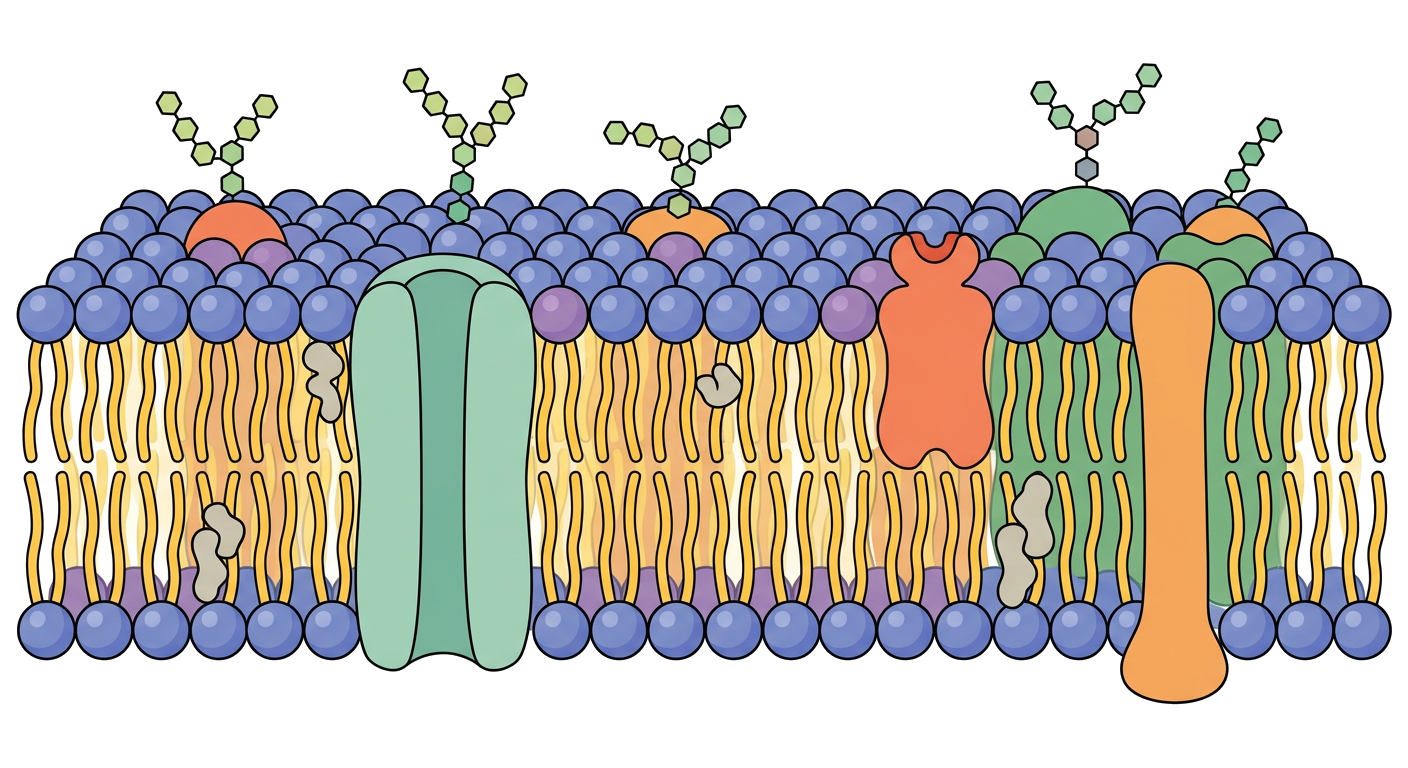
a. Phospholipid bilayer
b. Integral protein
c. Glycoprotein
Related Worksheets
Phylogenetic Tree Worksheet
Explore the principles of phylogenetic trees, common ancestry, and evolutionary relationships among organisms.
Blood Sugar Regulation Worksheet
A Grade 10 science worksheet covering the regulation of blood sugar, including the roles of insulin, glucagon, and the pancreas.
Bacterial Transformation Worksheet
This worksheet covers key concepts in bacterial transformation, including the process, mechanisms, and applications.
Cell Environments Worksheet
Explore the principles of cell environments, including osmosis, diffusion, active transport, and their effects on plant and animal cells.
Bone Markings Worksheet
A Grade 10 Science worksheet focusing on the identification and function of various bone markings.
Properties of Carbon Worksheet
Explore the unique properties of carbon, its atomic structure, bonding capabilities, and its importance in organic chemistry and living organisms.
Human Skull Anatomy Worksheet
A Grade 10 science worksheet focusing on the anatomy and functions of the human skull, including its various bones and protective role.
Grade 10 Biology: Heart Structure Worksheet
A comprehensive worksheet for Grade 10 Biology students covering the structure and function of the human heart.