Cloning: Process and Ethics
This worksheet covers the fundamental processes of cloning, including reproductive and therapeutic cloning, and explores the ethical considerations surrounding these biotechnologies.
Includes
Standards
Topics
Cloning: Process and Ethics
Name:
Date:
Score:
Read each question carefully and answer to the best of your ability. For multiple-choice questions, circle the letter corresponding to the correct answer. For fill-in-the-blank questions, complete the sentence with the appropriate term. For short-answer questions, provide concise and accurate responses.
1. What is the primary purpose of reproductive cloning?
To produce genetically identical copies of an entire organism.
To create tissues and organs for medical treatment.
To study genetic diseases in embryos.
To develop new agricultural crops.
2. Which of the following is a key step in somatic cell nuclear transfer (SCNT)?
Fertilizing an egg cell with sperm.
Injecting DNA directly into a zygote.
Removing the nucleus from an egg cell.
Fusing two somatic cells together.
3. The process of creating a genetically identical copy of a gene, cell, or organism is known as .
4. In therapeutic cloning, the goal is to produce cells for medical purposes, not a complete organism.
5. Dolly the sheep was the first mammal successfully cloned from an adult cell.
6. Briefly explain the difference between reproductive cloning and therapeutic cloning.
7. What are some of the ethical concerns associated with human reproductive cloning?
8. All cloned animals are exact replicas of their donor, possessing identical personalities and behaviors.
True
False
9. Therapeutic cloning involves implanting a cloned embryo into a surrogate mother to develop into a full organism.
True
False
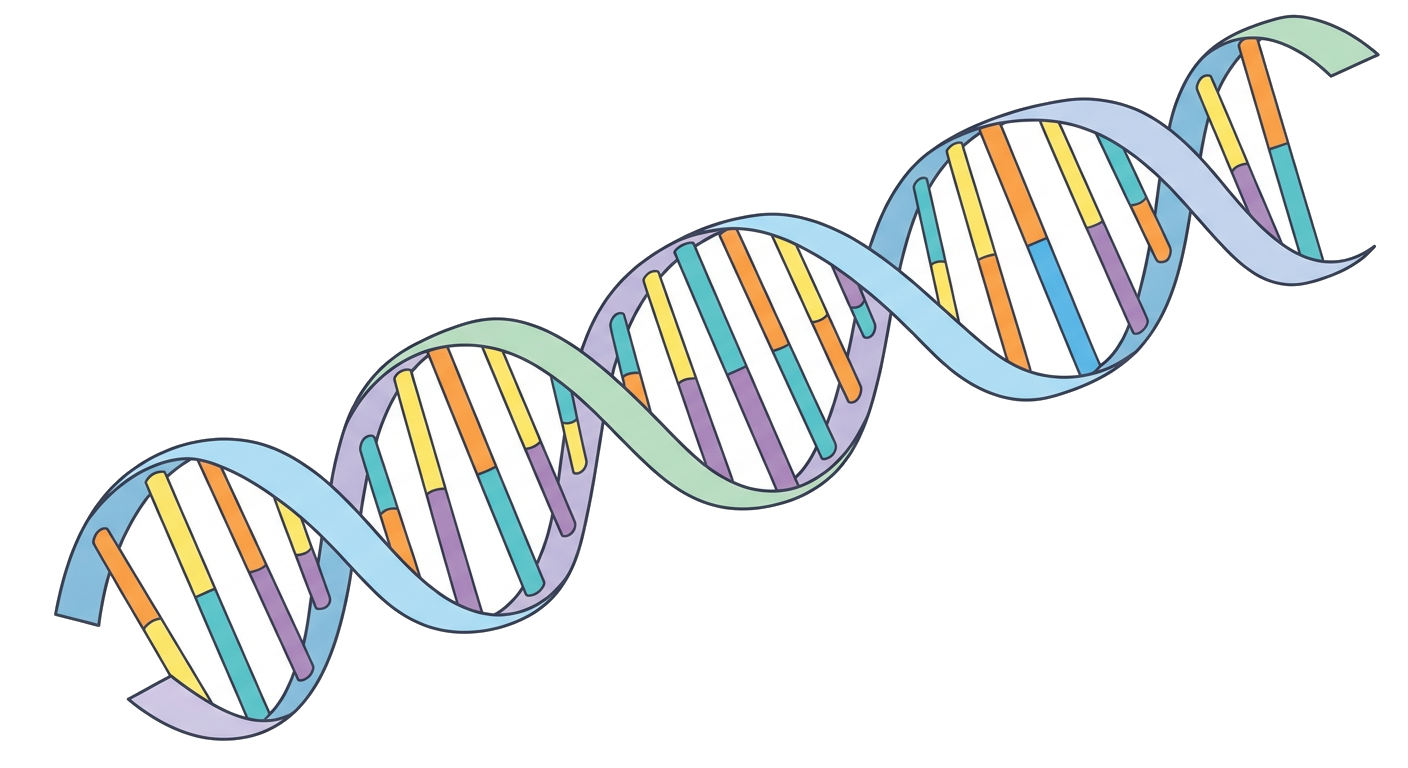
10. Observe the image below, which depicts a DNA double helix. In the context of cloning, why is understanding the structure of DNA crucial?
Related Worksheets
Phylogenetic Tree Worksheet
Explore the principles of phylogenetic trees, common ancestry, and evolutionary relationships among organisms.
Blood Sugar Regulation Worksheet
A Grade 10 science worksheet covering the regulation of blood sugar, including the roles of insulin, glucagon, and the pancreas.
Bacterial Transformation Worksheet
This worksheet covers key concepts in bacterial transformation, including the process, mechanisms, and applications.
Cell Environments Worksheet
Explore the principles of cell environments, including osmosis, diffusion, active transport, and their effects on plant and animal cells.
Bone Markings Worksheet
A Grade 10 Science worksheet focusing on the identification and function of various bone markings.
Properties of Carbon Worksheet
Explore the unique properties of carbon, its atomic structure, bonding capabilities, and its importance in organic chemistry and living organisms.
Human Skull Anatomy Worksheet
A Grade 10 science worksheet focusing on the anatomy and functions of the human skull, including its various bones and protective role.
Grade 10 Biology: Heart Structure Worksheet
A comprehensive worksheet for Grade 10 Biology students covering the structure and function of the human heart.