Entomology Basics Worksheet
Explore the fascinating world of insects with this worksheet covering their anatomy, classification, and life cycles.
Includes
Standards
Entomology Basics
Name:
Date:
Score:
Read each question carefully and answer to the best of your ability. Refer to the provided diagrams where applicable.
1. Label the three main body segments of the insect shown below.
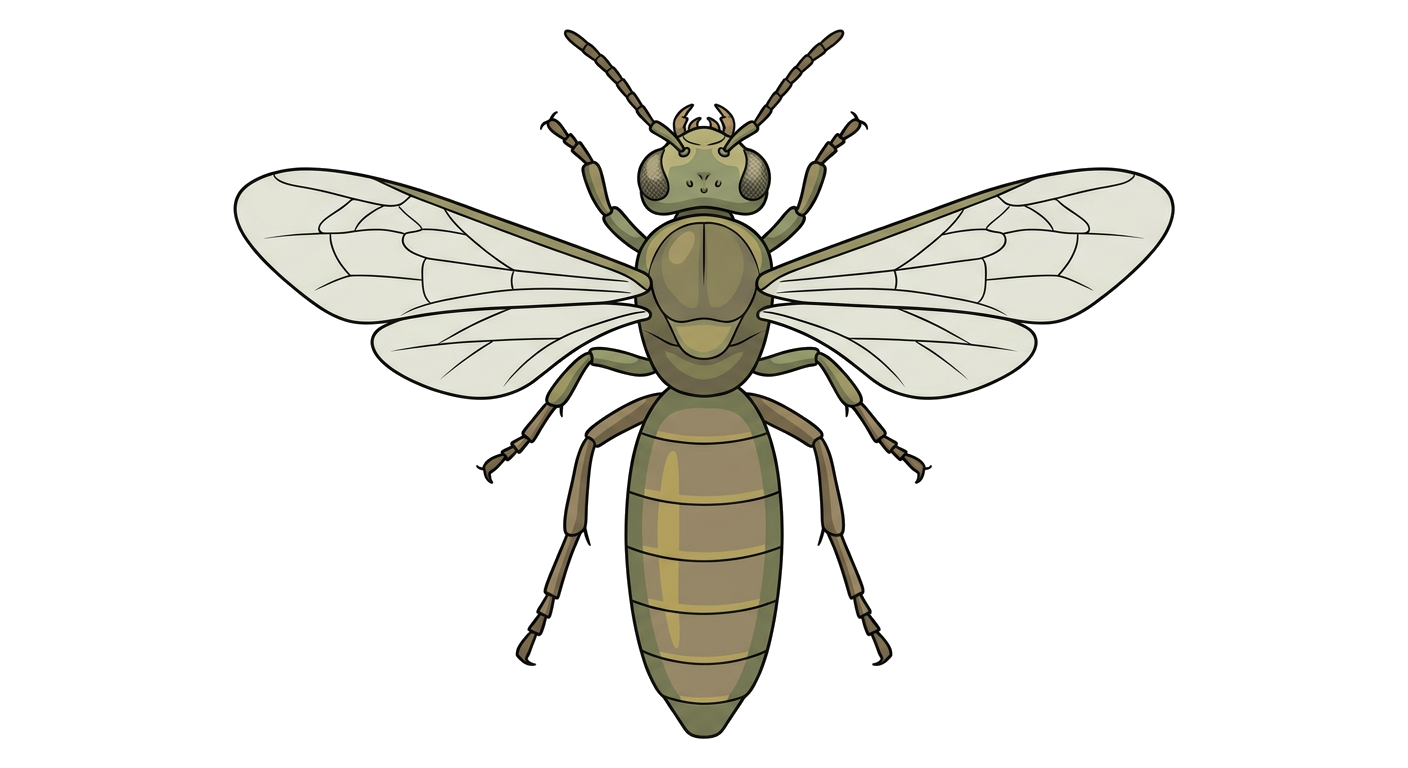
A:
B:
C:
2. Which of the following is NOT a characteristic of all insects?
Six legs
Exoskeleton
Wings
Three body segments
3. The two main types of insect metamorphosis are and .
4. A butterfly undergoes metamorphosis, which includes the stages of egg, larva, pupa, and adult.
5. All insects have antennae.
True
False
6. Insects are the most diverse group of animals on Earth.
True
False
7. Briefly describe the ecological importance of insects.
Related Worksheets
Phylogenetic Tree Worksheet
Explore the principles of phylogenetic trees, common ancestry, and evolutionary relationships among organisms.
Blood Sugar Regulation Worksheet
A Grade 10 science worksheet covering the regulation of blood sugar, including the roles of insulin, glucagon, and the pancreas.
Bacterial Transformation Worksheet
This worksheet covers key concepts in bacterial transformation, including the process, mechanisms, and applications.
Cell Environments Worksheet
Explore the principles of cell environments, including osmosis, diffusion, active transport, and their effects on plant and animal cells.
Bone Markings Worksheet
A Grade 10 Science worksheet focusing on the identification and function of various bone markings.
Properties of Carbon Worksheet
Explore the unique properties of carbon, its atomic structure, bonding capabilities, and its importance in organic chemistry and living organisms.
Human Skull Anatomy Worksheet
A Grade 10 science worksheet focusing on the anatomy and functions of the human skull, including its various bones and protective role.
Grade 10 Biology: Heart Structure Worksheet
A comprehensive worksheet for Grade 10 Biology students covering the structure and function of the human heart.