Viruses and Bacteria: A Comparative Study
This worksheet explores the fundamental differences and similarities between viruses and bacteria, their structures, modes of reproduction, and impact on living organisms, suitable for Grade 10 science students.
Includes
Standards
Topics
Viruses and Bacteria: A Comparative Study
Name:
Date:
Score:
Read each question carefully and answer to the best of your ability. Use complete sentences for short answer questions.
1. Which of the following statements best describes a key difference between viruses and bacteria?
Bacteria are living cells, while viruses are non-living particles.
Viruses are larger than bacteria and can be seen with a light microscope.
Bacteria require a host cell to reproduce, whereas viruses can reproduce independently.
Both viruses and bacteria are always harmful to humans.
2. Which component is found in all viruses, but not in all bacteria?
Cell wall
Ribosomes
Genetic material (DNA or RNA)
Cytoplasm
3. Viruses are obligate parasites, meaning they must infect a host cell to replicate.
4. Bacteria reproduce asexually through a process called .
5. The protective outer layer of a virus, made of protein, is called a .
6. Observe the diagram of the bacteriophage virus. Label its three main components.
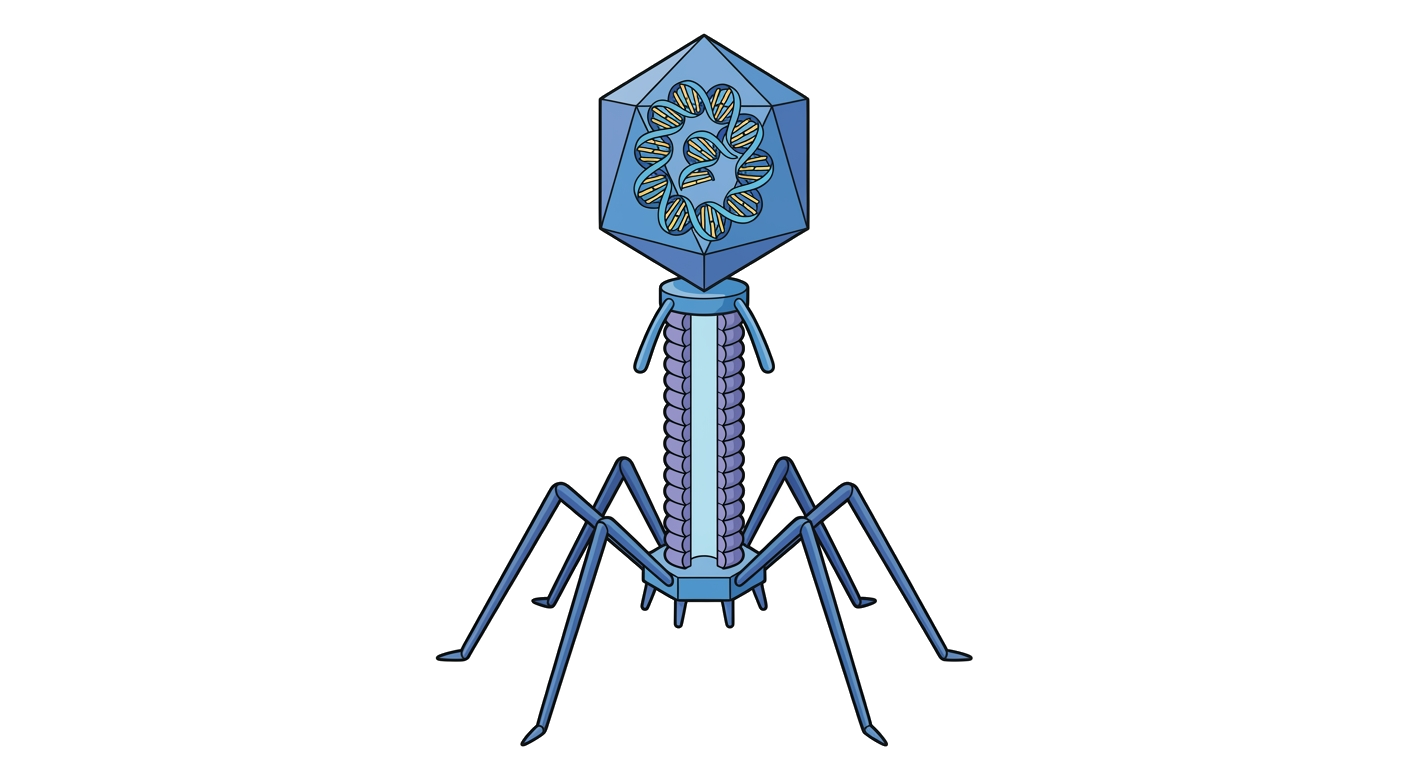
A.
B.
C.
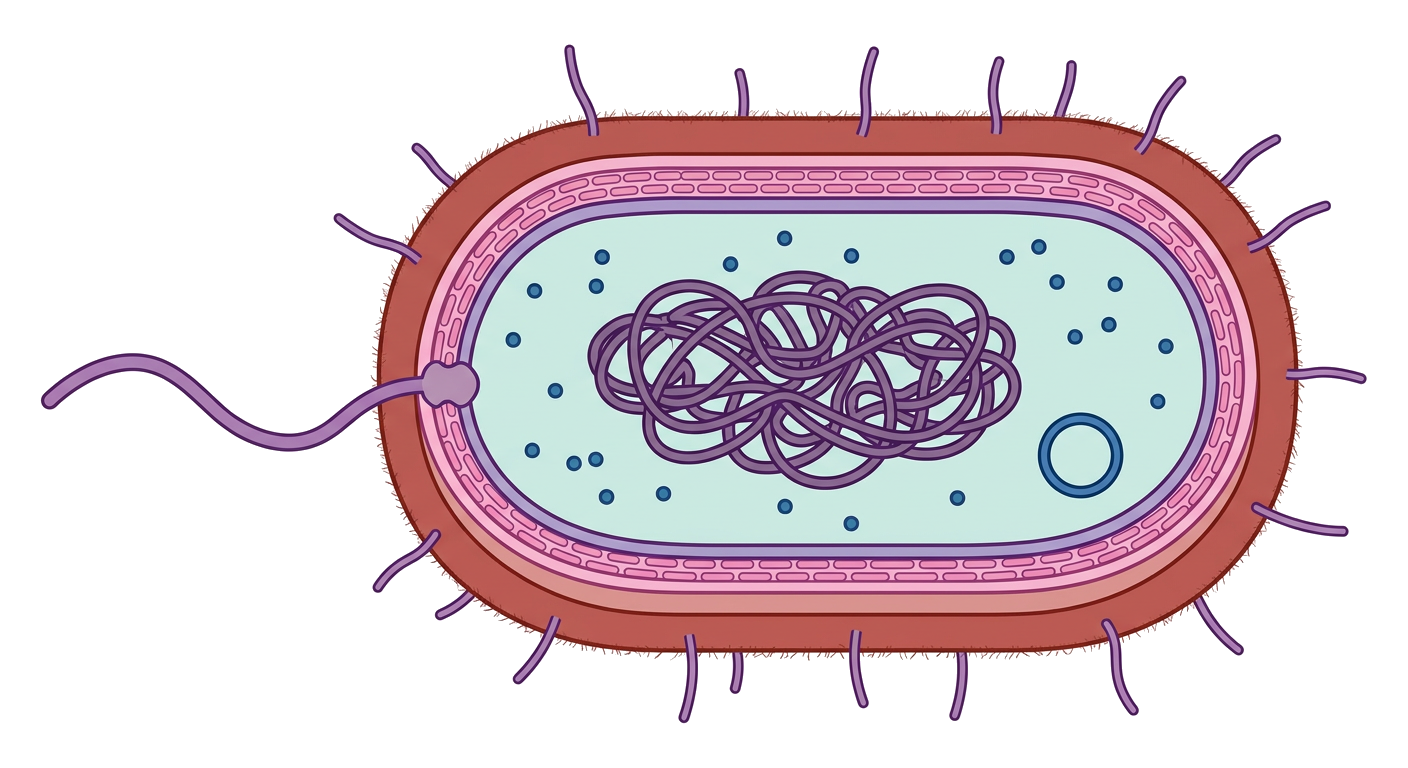
7. Observe the diagram of the bacterial cell. Explain the function of the flagellum.
8. All bacteria are harmful and cause diseases.
True
False
9. Antibiotics are effective against both bacterial and viral infections.
True
False
Match the term on the left with its description on the right.
10. Capsid
a. Genetic material of a virus
11. Plasmid
b. Protein coat of a virus
12. Flagellum
c. Small, circular DNA in bacteria
13. Nucleoid
d. Whip-like appendage for bacterial movement
14. Compare and contrast the general structure and mode of reproduction of viruses and bacteria. Discuss at least two similarities and two differences.
Related Worksheets
Phylogenetic Tree Worksheet
Explore the principles of phylogenetic trees, common ancestry, and evolutionary relationships among organisms.
Blood Sugar Regulation Worksheet
A Grade 10 science worksheet covering the regulation of blood sugar, including the roles of insulin, glucagon, and the pancreas.
Bacterial Transformation Worksheet
This worksheet covers key concepts in bacterial transformation, including the process, mechanisms, and applications.
Cell Environments Worksheet
Explore the principles of cell environments, including osmosis, diffusion, active transport, and their effects on plant and animal cells.
Bone Markings Worksheet
A Grade 10 Science worksheet focusing on the identification and function of various bone markings.
Properties of Carbon Worksheet
Explore the unique properties of carbon, its atomic structure, bonding capabilities, and its importance in organic chemistry and living organisms.
Human Skull Anatomy Worksheet
A Grade 10 science worksheet focusing on the anatomy and functions of the human skull, including its various bones and protective role.
Grade 10 Biology: Heart Structure Worksheet
A comprehensive worksheet for Grade 10 Biology students covering the structure and function of the human heart.