Bohr Model Worksheet
A Grade 10 Science worksheet focusing on the Bohr model of the atom, including its structure, electron configuration, and energy levels.
Includes
Standards
Topics
Bohr Model Worksheet
Name:
Date:
Score:
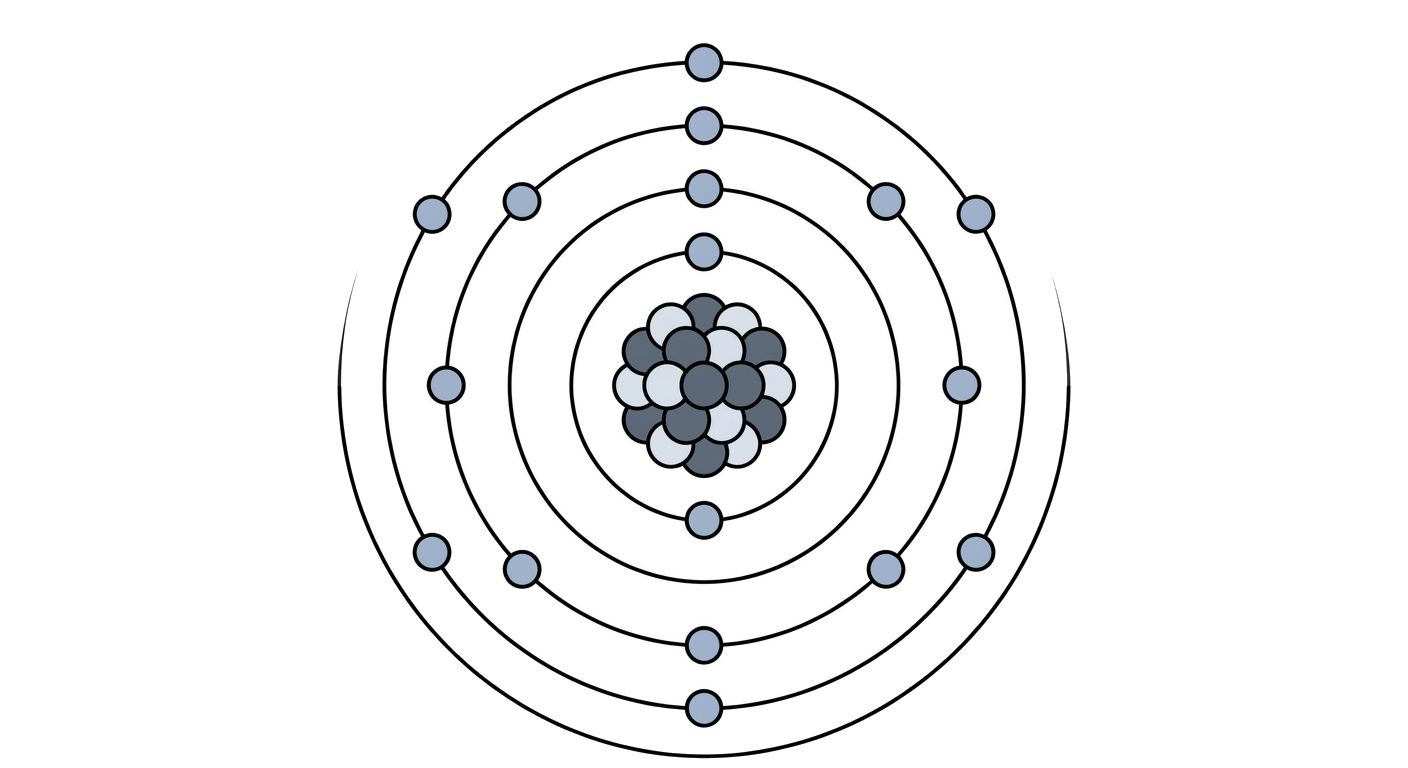
Read each question carefully and answer to the best of your ability. Refer to the Bohr model diagram provided where necessary.
Observe the diagram of a Bohr model atom below:
1. In the Bohr model, electrons orbit the nucleus in specific paths called:
Clouds
Energy levels
Random orbits
Nuclei
2. According to the Bohr model, what happens when an electron moves from a higher energy level to a lower energy level?
It absorbs energy.
It emits energy.
Its mass increases.
Its charge changes.
3. The central part of an atom, containing protons and neutrons, is called the .
4. Electrons in the outermost shell are known as electrons.
5. The Bohr model accurately describes the exact path of electrons around the nucleus.
True
False
6. Each energy level in the Bohr model can hold an unlimited number of electrons.
True
False
7. Briefly describe the main contribution of Niels Bohr to our understanding of atomic structure.
8. Explain why electrons in the Bohr model occupy specific energy levels instead of continuously losing energy and spiraling into the nucleus.
Related Worksheets
Ions and Formula Units Worksheet
Explore the formation of ions, ionic bonds, and the naming and writing of chemical formulas for ionic compounds at a Grade 10 level.
Actual Yield in Chemical Reactions
Explore the concept of actual yield, theoretical yield, and percentage yield in chemical reactions with this Grade 10 chemistry worksheet.
Exploring Salts: Properties and Reactions
This worksheet covers the properties, formation, and uses of various salts, including their role in everyday life and chemical reactions.
Relative Mass Worksheet
Explore the concepts of relative atomic mass, relative molecular mass, and isotopic abundance in this Grade 10 chemistry worksheet.
Solubility Curves Worksheet
This worksheet explores solubility curves, their interpretation, and how they represent the relationship between temperature and the solubility of substances.
Predicting Products of Chemical Reactions
Grade 10 Science worksheet focusing on predicting the products of various types of chemical reactions, including synthesis, decomposition, single displacement, double displacement, and combustion.
Band of Stability Worksheet
Explore the concept of the band of stability, nuclear forces, and radioactive decay with this Grade 10 chemistry worksheet.
Electron Dot Diagrams Worksheet
A Grade 10 Science worksheet covering electron dot diagrams, valence electrons, and their importance in chemical bonding.