Concentration of Solutions Worksheet
A Grade 10 Chemistry worksheet focusing on understanding and calculating the concentration of solutions, including molarity and mass percent.
Includes
Standards
Concentration of Solutions
Name:
Date:
Score:
Read each question carefully and answer to the best of your ability. Show all your work for calculation problems.
1. Which of the following statements best describes a concentrated solution?
A solution with a small amount of solute.
A solution with a large amount of solvent.
A solution with a large amount of solute dissolved in a given amount of solvent.
A solution that cannot dissolve any more solute.
2. What is the unit for molarity?
grams per liter (g/L)
moles per liter (mol/L)
liters per mole (L/mol)
kilograms per liter (kg/L)
3. A substance that dissolves in a solvent to form a solution is called a .
4. The is the component that is present in the larger amount in a solution.
5. A solution containing the maximum amount of solute that can be dissolved at a given temperature is called a solution.
6. Calculate the molarity of a solution prepared by dissolving 25.0 g of NaOH (molar mass = 40.00 g/mol) in enough water to make 500. mL of solution. Show your work.
7. What is the mass percent of a solution made by dissolving 15.0 g of potassium chloride (KCl) in 85.0 g of water? Show your work.
8. Diluting a solution increases its concentration.
True
False
9. A solution is a homogeneous mixture.
True
False
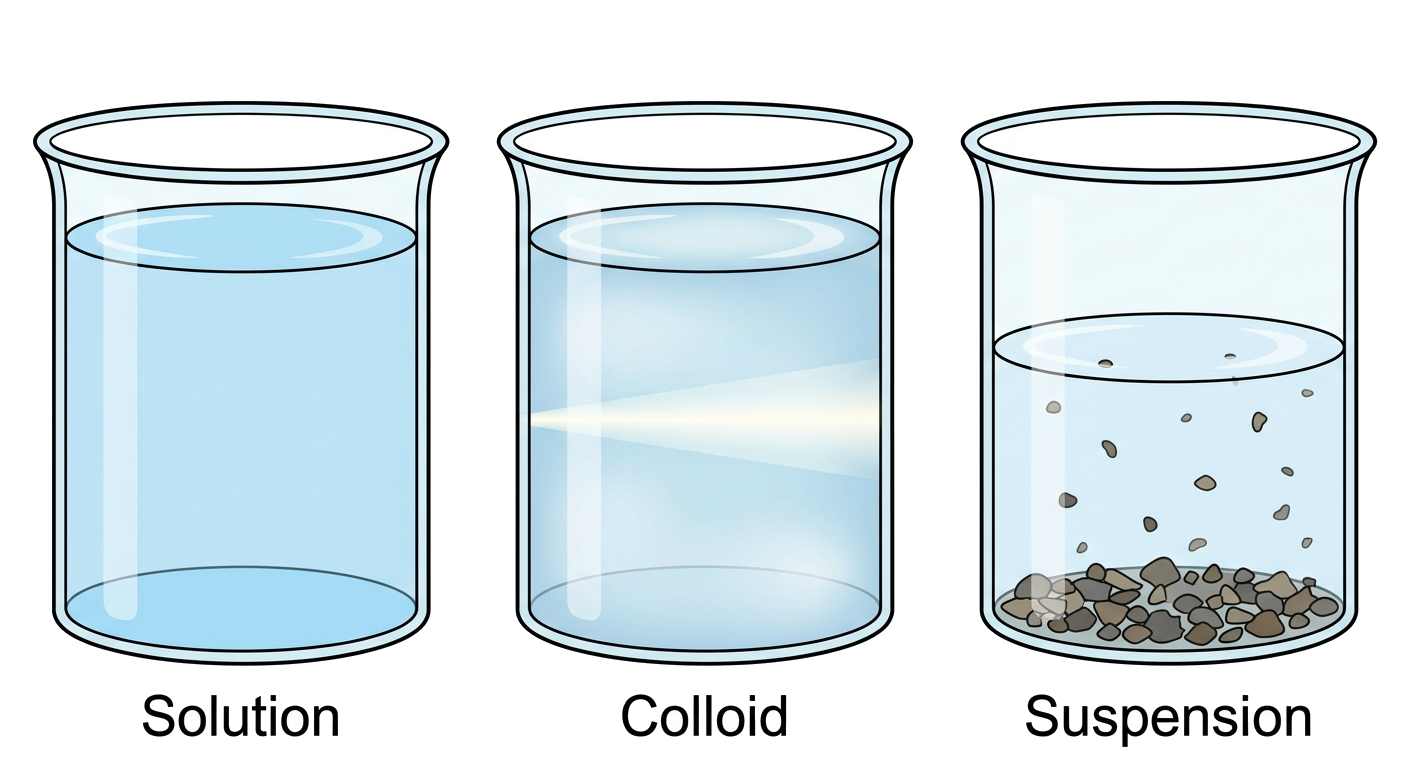
10. Observe the image below. Which beaker likely contains a more concentrated solution? Explain your reasoning.