Heat Transfer and Thermal Equilibrium Worksheet
Explore the principles of heat transfer (conduction, convection, radiation) and thermal equilibrium with this Grade 10 science worksheet.
Includes
Standards
Heat Transfer and Thermal Equilibrium
Name:
Date:
Score:
Read each question carefully and answer to the best of your ability. Show all your work for calculations.
1. Which method of heat transfer involves the movement of fluids (liquids or gases)?
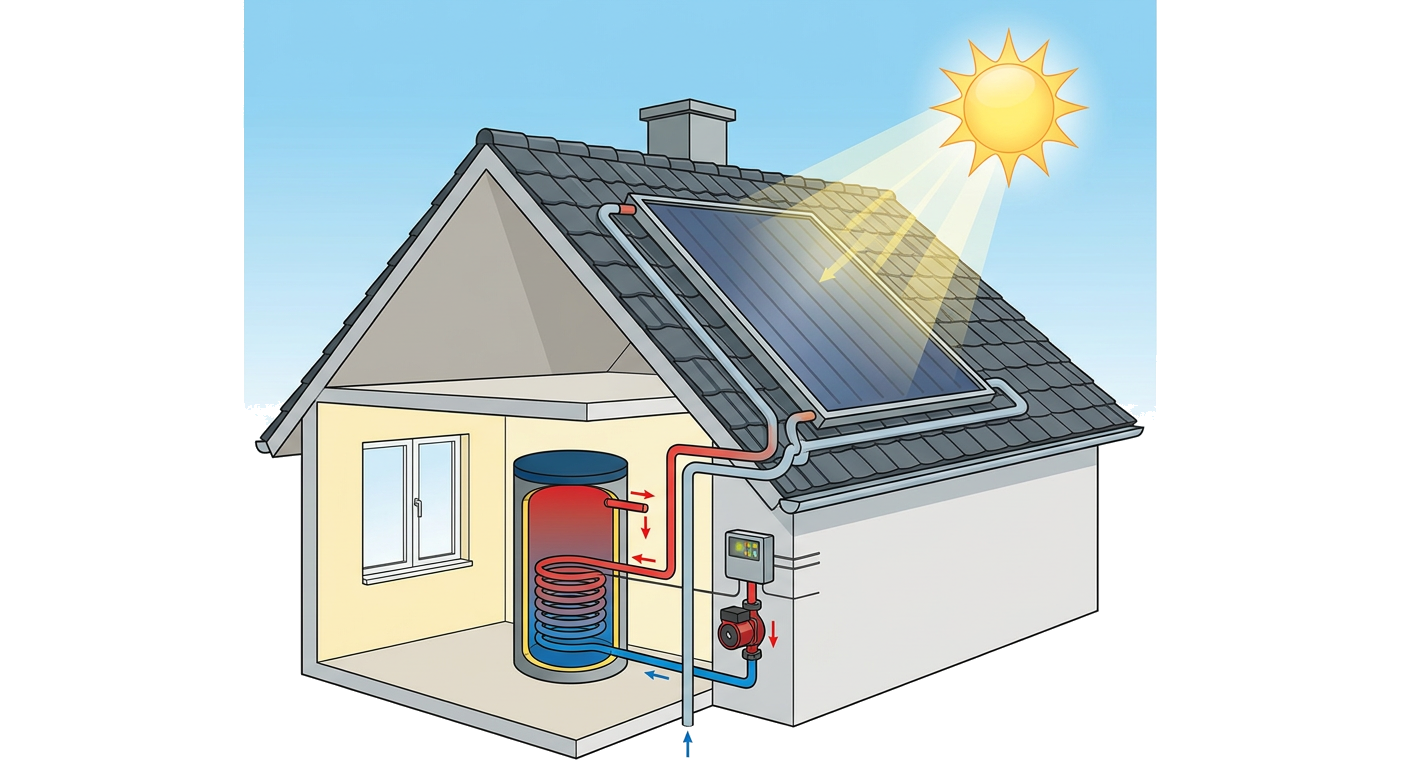
Conduction
Convection
Radiation
Insulation
2. What happens when two objects at different temperatures are placed in contact?
Heat flows from the colder object to the hotter object.
Heat flows from the hotter object to the colder object.
No heat transfer occurs.
Both objects immediately reach the same temperature.
3. The transfer of heat through direct contact between particles is called .
4. Thermal is reached when there is no net flow of heat between objects in contact.
5. Heat transfer by electromagnetic waves is known as .
6. Dark, dull surfaces are better absorbers of thermal radiation than light, shiny surfaces.
True
False
7. Convection can occur in solids.
True
False
8. Explain the difference between a conductor and an insulator, providing an example of each.
9. Describe how a thermos bottle minimizes heat transfer by conduction, convection, and radiation.
10. Observe the image below showing a solar water heater. Identify and describe one way heat is transferred to the water within the system.