Ionic and Covalent Compounds Worksheet
Explore the fundamental differences between ionic and covalent compounds, their properties, and how they form.
Includes
Standards
Topics
Ionic and Covalent Compounds
Name:
Date:
Score:
Read each question carefully and provide the best answer based on your knowledge of ionic and covalent compounds.
1. Which type of bond involves the transfer of electrons between atoms?
Covalent bond
Ionic bond
Metallic bond
Hydrogen bond
2. Compounds formed by the sharing of electrons are generally characterized by:
High melting points
Good electrical conductivity when molten
Low melting points
Solubility in nonpolar solvents only
3. An ionic bond typically forms between a and a .
4. Covalent compounds are formed when atoms electrons to achieve a stable electron configuration.
5. The smallest unit of an ionic compound is a(n) , while for a covalent compound it is a(n) .
6. Ionic compounds are generally soluble in water.
True
False
7. Covalent compounds typically have high boiling points.
True
False
8. Describe the main difference in electron behavior between ionic and covalent bonding.
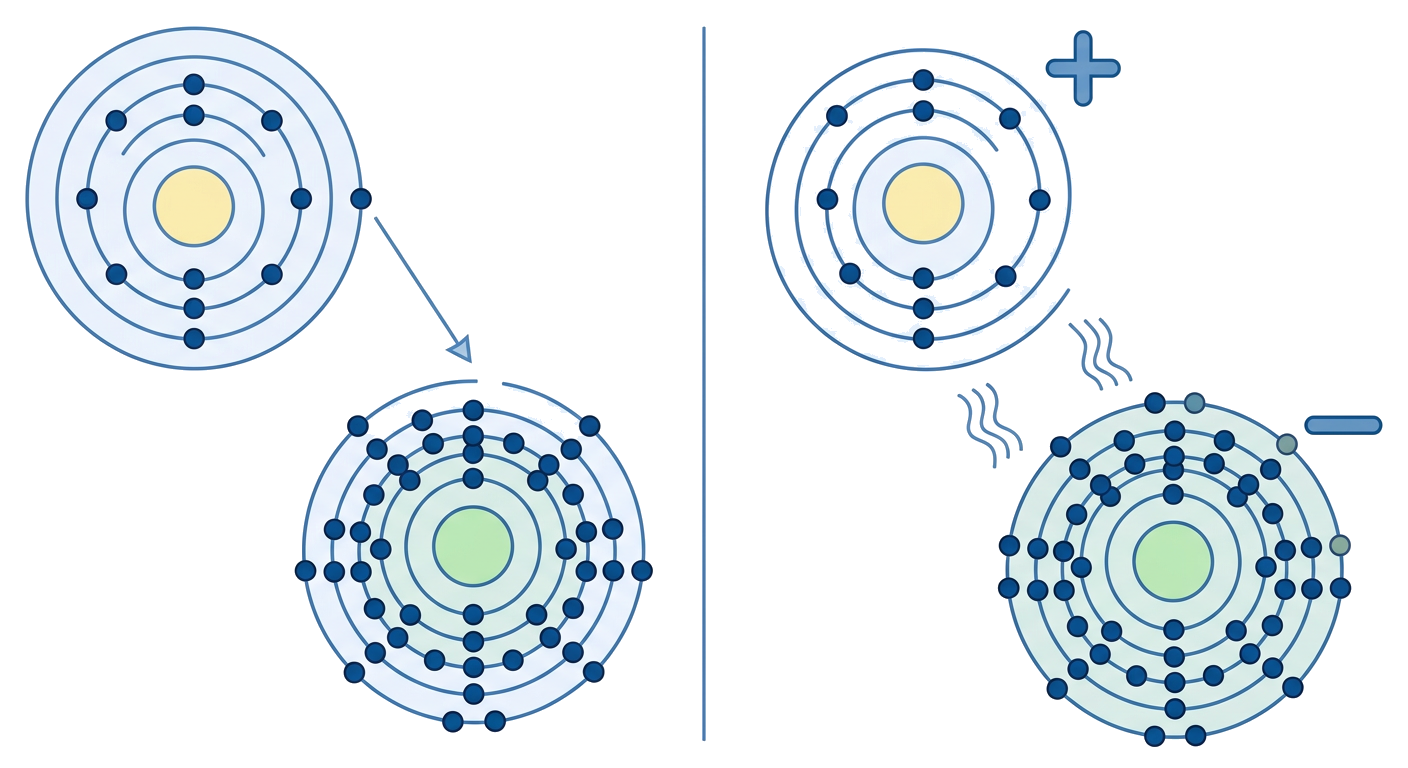
9. Observe the diagram showing ionic bond formation. What happens to the electrons of the sodium (Na) and chlorine (Cl) atoms?
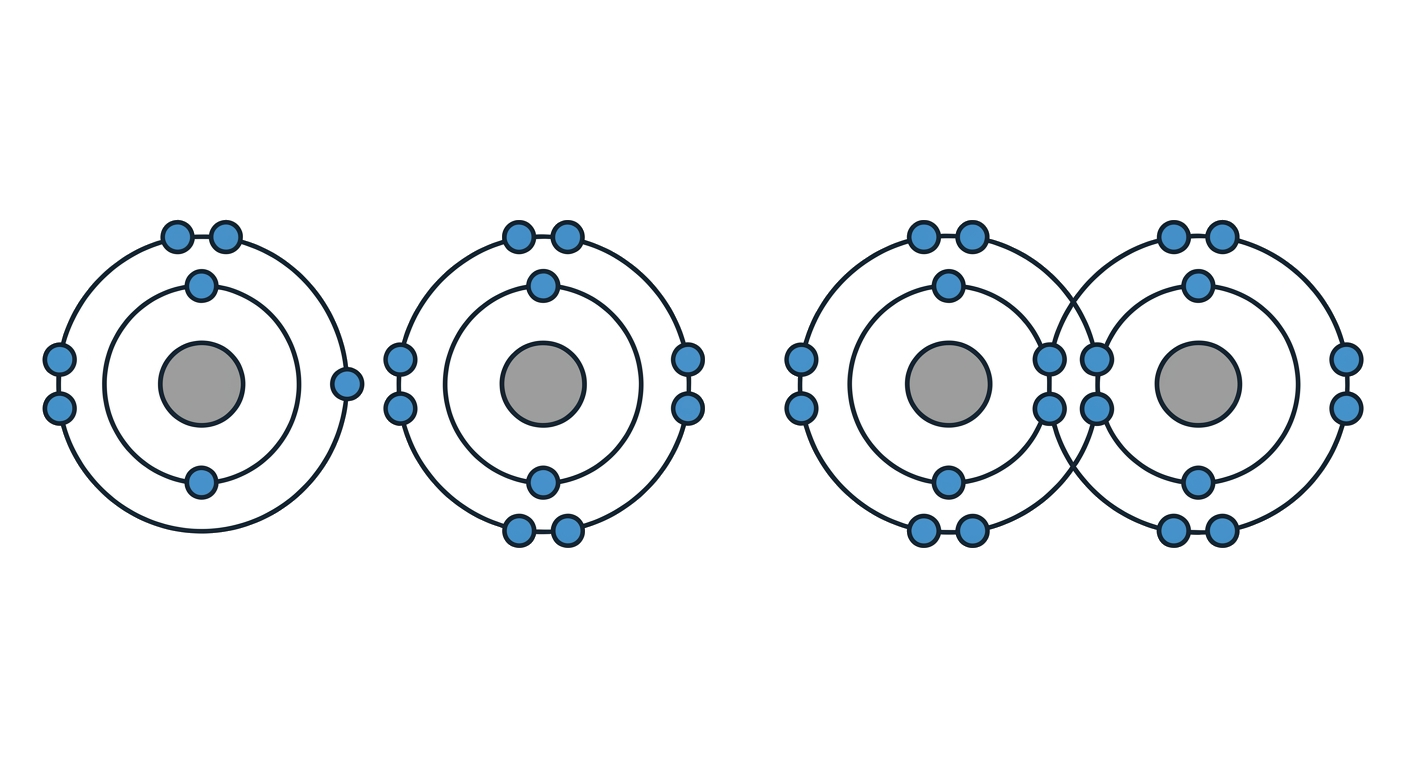
10. Observe the diagram showing covalent bond formation. How do the hydrogen (H) atoms achieve stability?
Match the property to the type of compound.
11. High melting point
a. Ionic Compound
12. Shares electrons
b. Covalent Compound
13. Forms crystal lattice
c. Both
14. Conducts electricity when dissolved in water