Molarity and Dilution Worksheet
A Grade 10 science worksheet covering molarity calculations and dilution principles with practical problems.
Includes
Standards
Topics
Molarity and Dilution Worksheet
Name:
Date:
Score:
Read each question carefully and provide your answers in the space provided. Show all your work for calculations.
1. Molarity is defined as the number of of solute per liter of solution.
2. When diluting a solution, the amount of remains constant.
3. The formula for dilution is M1V1 = .
1. Calculate the molarity of a solution prepared by dissolving 15.0 g of NaCl (molar mass = 58.44 g/mol) in enough water to make 250 mL of solution.
2. How many grams of potassium iodide (KI, molar mass = 166.00 g/mol) are needed to prepare 500 mL of a 0.20 M solution?
1. Adding more solvent to a solution increases its molarity.
True
False
2. Dilution is the process of decreasing the concentration of a solute in a solution, usually by adding more solvent.
True
False
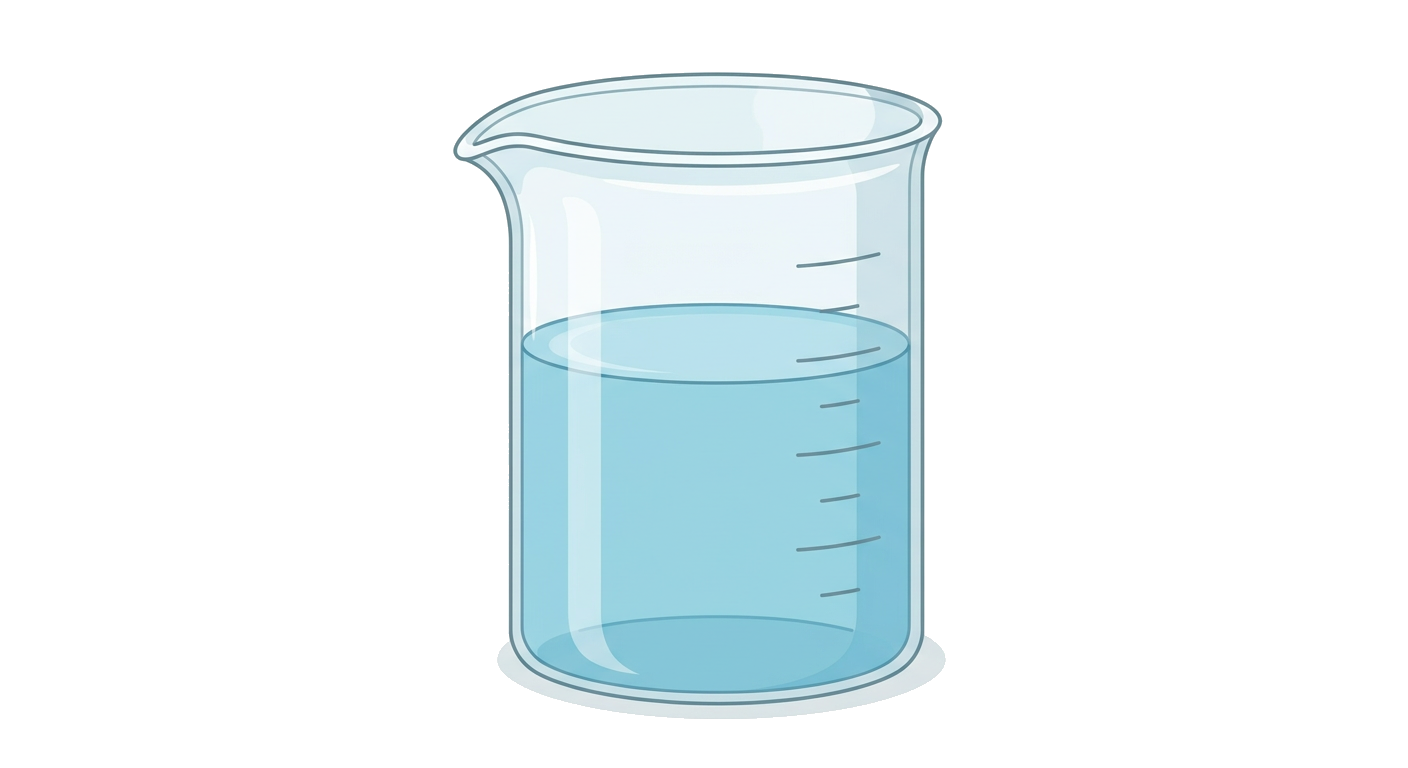
1. If you have 100 mL of a 2.5 M stock solution of HCl, how much water must be added to dilute it to a 0.5 M solution?
2. A 1.5 M solution of NaOH needs to be diluted to 0.25 M. If the final volume desired is 750 mL, what volume of the concentrated NaOH solution is needed?
1. Which of the following is NOT affected when a solution is diluted?
Volume of solvent
Molarity of the solution
Moles of solute
Total volume of solution
Related Worksheets
Ions and Formula Units Worksheet
Explore the formation of ions, ionic bonds, and the naming and writing of chemical formulas for ionic compounds at a Grade 10 level.
Actual Yield in Chemical Reactions
Explore the concept of actual yield, theoretical yield, and percentage yield in chemical reactions with this Grade 10 chemistry worksheet.
Exploring Salts: Properties and Reactions
This worksheet covers the properties, formation, and uses of various salts, including their role in everyday life and chemical reactions.
Relative Mass Worksheet
Explore the concepts of relative atomic mass, relative molecular mass, and isotopic abundance in this Grade 10 chemistry worksheet.
Solubility Curves Worksheet
This worksheet explores solubility curves, their interpretation, and how they represent the relationship between temperature and the solubility of substances.
Predicting Products of Chemical Reactions
Grade 10 Science worksheet focusing on predicting the products of various types of chemical reactions, including synthesis, decomposition, single displacement, double displacement, and combustion.
Band of Stability Worksheet
Explore the concept of the band of stability, nuclear forces, and radioactive decay with this Grade 10 chemistry worksheet.
Electron Dot Diagrams Worksheet
A Grade 10 Science worksheet covering electron dot diagrams, valence electrons, and their importance in chemical bonding.