Mole-Gram Conversion Worksheet
A worksheet for Grade 10 Chemistry students focusing on mole-gram conversions, including calculations and conceptual understanding.
Includes
Standards
Topics
Mole-Gram Conversion Practice
Name:
Date:
Score:
Read each question carefully and provide the best answer. Show all your work for calculations.
1. The molar mass of a substance is numerically equal to its mass expressed in grams per mole.
2. Avogadro's number is approximately x 10^23 particles per mole.
3. To convert from moles to grams, you must by the molar mass.
1. Calculate the mass in grams of 2.50 moles of H₂O (water). (Atomic masses: H=1.01 g/mol, O=16.00 g/mol)
2. What is the mass of 0.75 moles of CO₂ (carbon dioxide)? (Atomic masses: C=12.01 g/mol, O=16.00 g/mol)
1. How many moles are present in 50.0 grams of NaCl (sodium chloride)? (Atomic masses: Na=22.99 g/mol, Cl=35.45 g/mol)
2. A sample of glucose (C₆H₁₂O₆) has a mass of 180.18 grams. How many moles of glucose are in the sample? (Atomic masses: C=12.01 g/mol, H=1.01 g/mol, O=16.00 g/mol)
1. Which of the following is the correct unit for molar mass?
grams
moles
grams/mole
mole/gram
2. If you have 1 mole of any substance, you have approximately how many particles of that substance?
6.02 x 10^22
6.02 x 10^23
1.00 x 10^23
1.00 x 10^24
1. The molar mass of an element is the same as its atomic mass.
True
False
2. You can convert grams to moles by dividing by Avogadro's number.
True
False
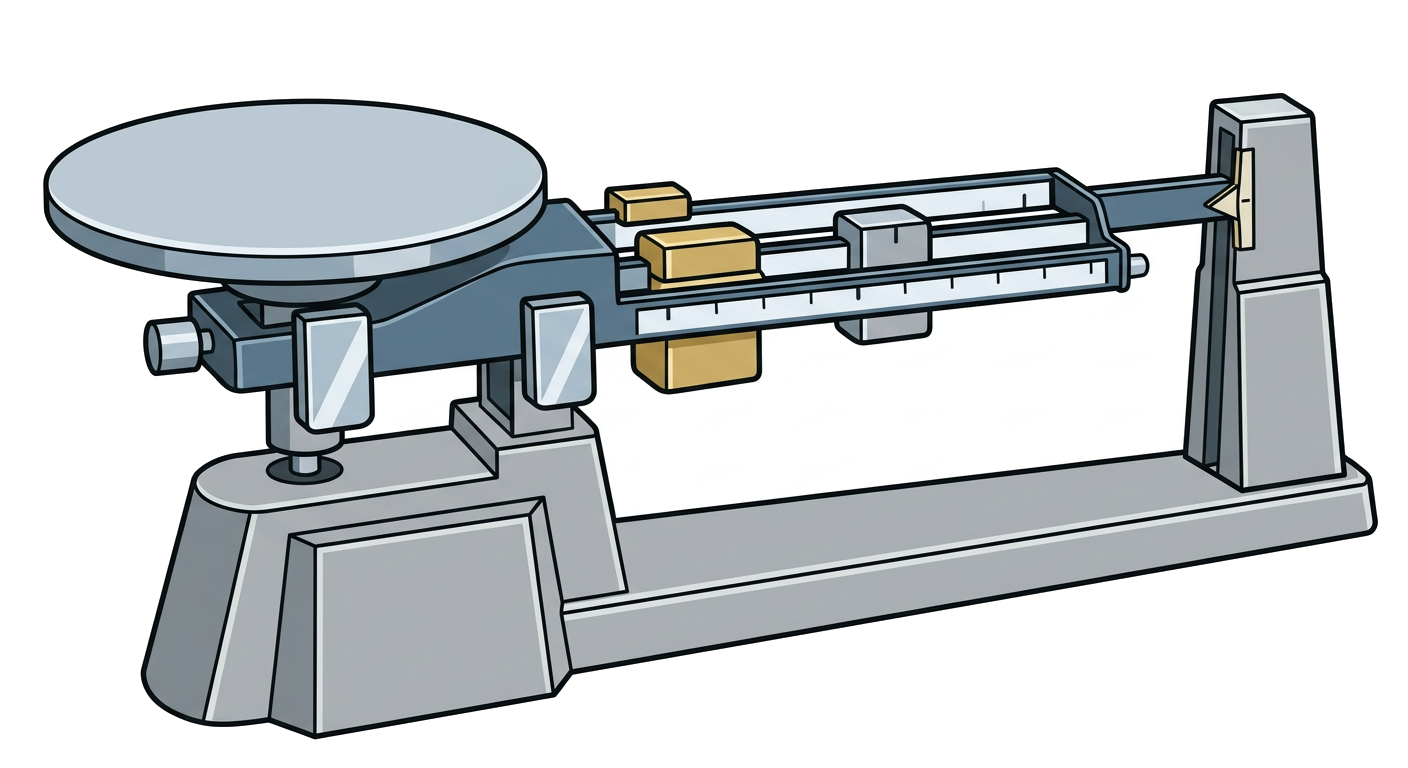
1. A chemist uses a triple beam balance to measure 17.1 grams of sucrose (C₁₂H₂₂O₁₁). How many moles of sucrose did the chemist measure? (Atomic masses: C=12.01 g/mol, H=1.01 g/mol, O=16.00 g/mol)