Mole to Mass Conversion Worksheet
A Grade 10 chemistry worksheet focusing on mole to mass conversions using molar mass, with practice problems and a periodic table illustration.
Includes
Standards
Topics
Mole to Mass Conversion
Name:
Date:
Score:
Carefully read each question and follow the instructions to convert between moles and mass. Remember to use the periodic table to find molar masses (round to two decimal places). Show all your work for full credit.
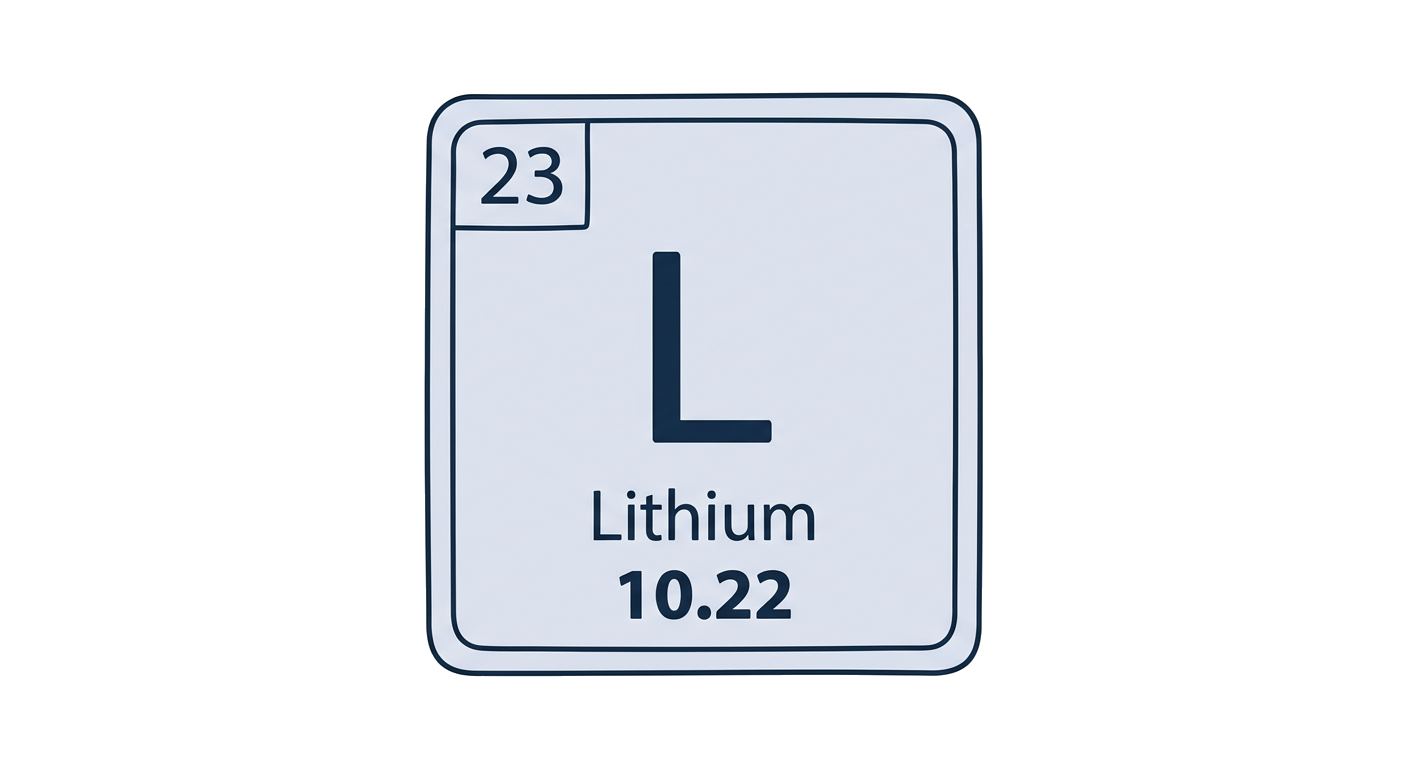
Reference: Illustration of a periodic table element box to help with atomic mass.
1. The mass of one mole of a substance is called its .
2. To convert from moles to mass, you must the number of moles by the molar mass.
3. The units for molar mass are typically .
1. Calculate the mass of 3.5 moles of water (H₂O).
2. What is the mass of 0.75 moles of carbon dioxide (CO₂)?
1. How many moles are in 80.0 grams of sodium hydroxide (NaOH)?
2. Determine the number of moles in 245 grams of sulfuric acid (H₂SO₄).
1. Which of the following correctly represents the molar mass of oxygen gas (O₂)?
16.00 g/mol
32.00 g/mol
1.00 g/mol
2.00 g/mol
2. How many grams are in 0.5 moles of NaCl (sodium chloride)? (Na = 22.99 g/mol, Cl = 35.45 g/mol)
29.22 g
58.44 g
116.88 g
81.43 g
1. The molar mass of a compound is the sum of the atomic masses of all atoms in its chemical formula.
True
False
2. Converting from mass to moles requires dividing by the molar mass.
True
False
Related Worksheets
Ions and Formula Units Worksheet
Explore the formation of ions, ionic bonds, and the naming and writing of chemical formulas for ionic compounds at a Grade 10 level.
Actual Yield in Chemical Reactions
Explore the concept of actual yield, theoretical yield, and percentage yield in chemical reactions with this Grade 10 chemistry worksheet.
Exploring Salts: Properties and Reactions
This worksheet covers the properties, formation, and uses of various salts, including their role in everyday life and chemical reactions.
Relative Mass Worksheet
Explore the concepts of relative atomic mass, relative molecular mass, and isotopic abundance in this Grade 10 chemistry worksheet.
Solubility Curves Worksheet
This worksheet explores solubility curves, their interpretation, and how they represent the relationship between temperature and the solubility of substances.
Predicting Products of Chemical Reactions
Grade 10 Science worksheet focusing on predicting the products of various types of chemical reactions, including synthesis, decomposition, single displacement, double displacement, and combustion.
Band of Stability Worksheet
Explore the concept of the band of stability, nuclear forces, and radioactive decay with this Grade 10 chemistry worksheet.
Electron Dot Diagrams Worksheet
A Grade 10 Science worksheet covering electron dot diagrams, valence electrons, and their importance in chemical bonding.