Naming Ionic and Covalent Compounds
A Grade 10 chemistry worksheet on naming ionic and covalent compounds, including practice questions and explanations.
Includes
Standards
Topics
Naming Ionic and Covalent Compounds
Name:
Date:
Score:
Read each question carefully and provide the best answer. Show all your work for calculations.
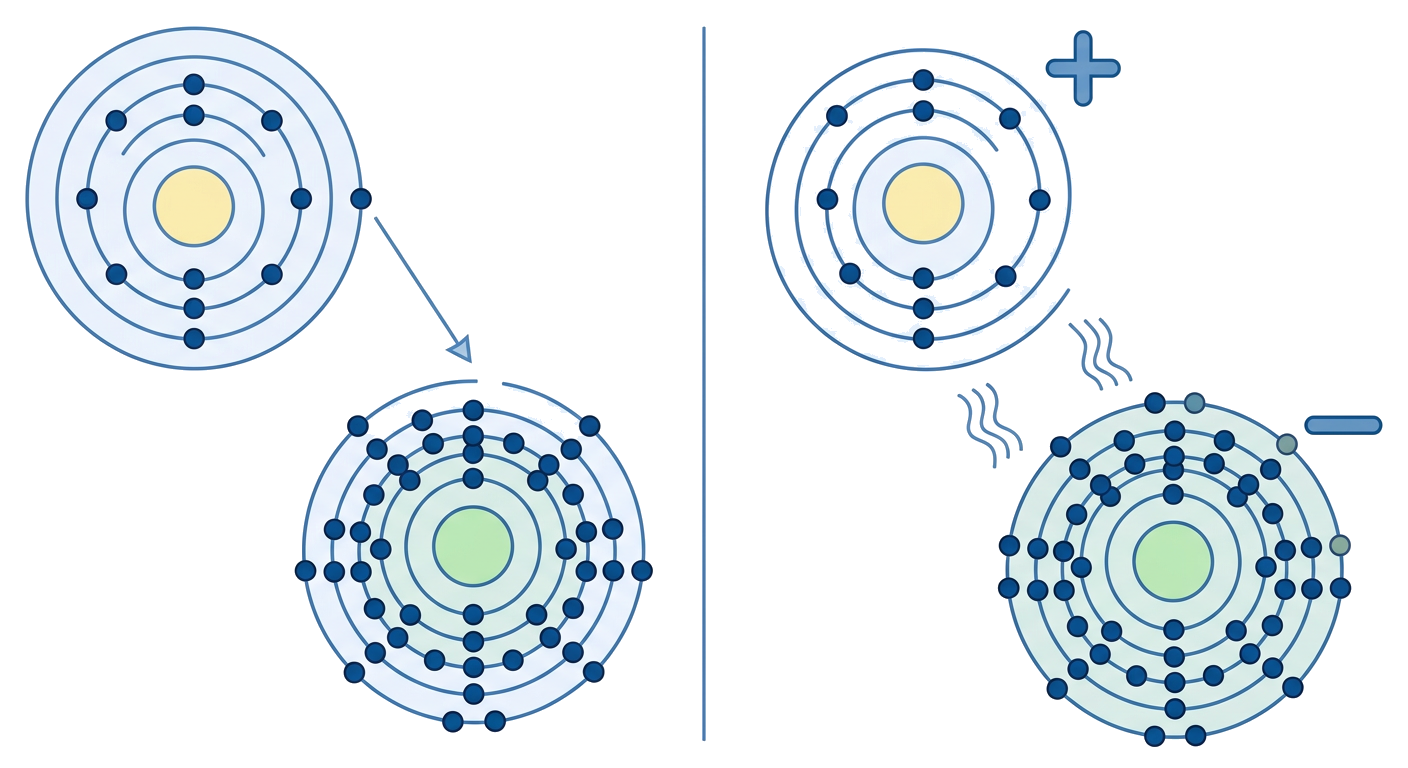
Ionic compounds are formed between a metal and a nonmetal through the transfer of electrons. The metal loses electrons to form a cation, and the nonmetal gains electrons to form an anion. These oppositely charged ions are attracted to each other, forming an ionic bond.
1. The metal in an ionic compound is always named .
2. The nonmetal in an ionic compound is named by taking the root of the element name and adding the suffix .
3. Write the chemical formula for sodium chloride:
4. Write the name for the ionic compound KBr:
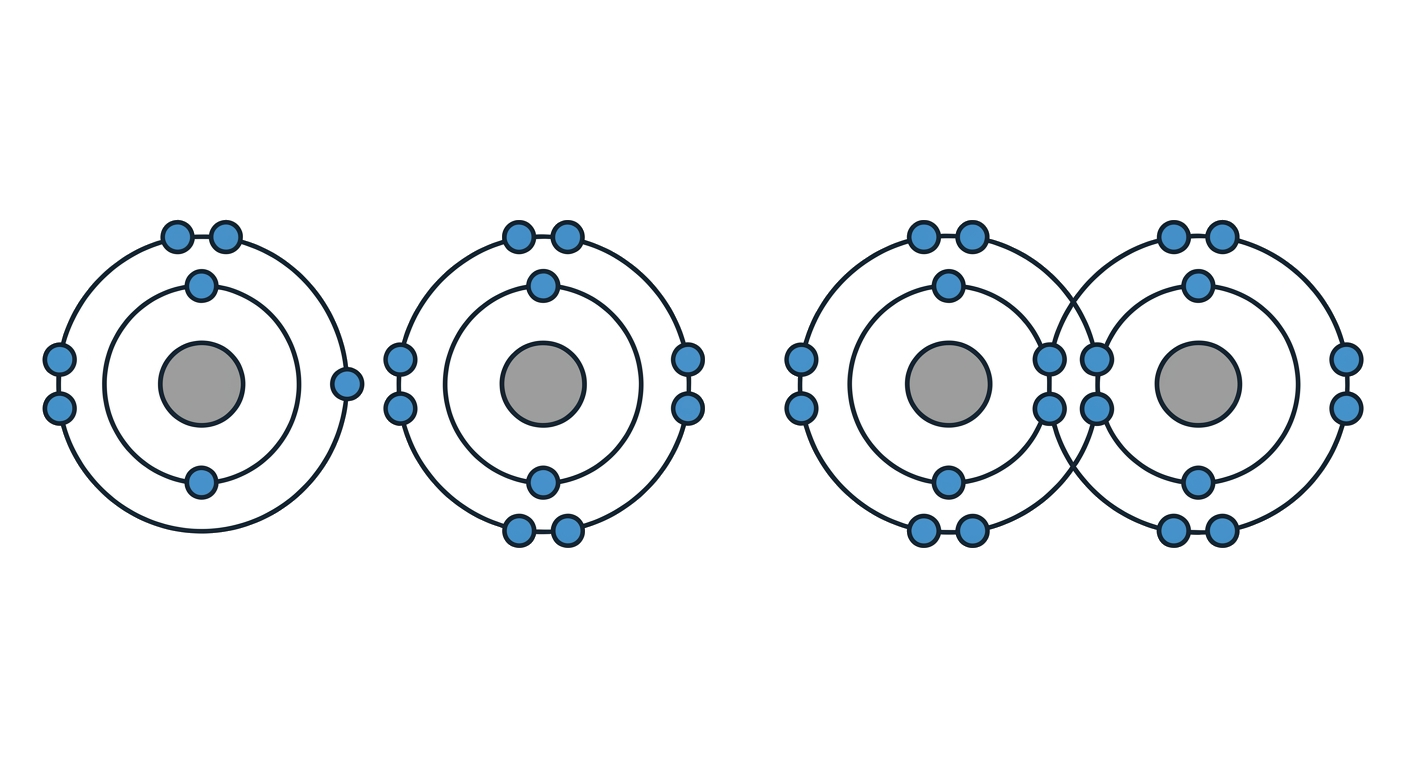
Covalent compounds are formed between two nonmetals through the sharing of electrons. Prefixes are used to indicate the number of atoms of each element in the compound. The first element is named normally, and the second element takes an -ide suffix.
5. What prefix is used to indicate two atoms of an element in a covalent compound?
6. Write the name for the covalent compound CO2:
7. Write the chemical formula for sulfur trioxide:
8. Which of the following is an ionic compound?
CO
H2O
NaCl
SO3
9. Which of the following is a covalent compound?
MgO
KCl
Na2S
PCl3
10. Ionic compounds typically have high melting points.
True
False
11. Covalent compounds are formed by the transfer of electrons.
True
False
Match each compound with its correct bond type.
12. CaCl2
a. Covalent
13. N2O4
b. Ionic
14. Fe2O3
c. Both