Naming Ionic Compounds Worksheet
A Grade 10 science worksheet focusing on the rules and practice of naming ionic compounds, including binary and polyatomic ion compounds.
Includes
Standards
Topics
Naming Ionic Compounds
Name:
Date:
Score:
Carefully read each question and provide the best answer. Remember the rules for naming ionic compounds, including those with polyatomic ions and transition metals.
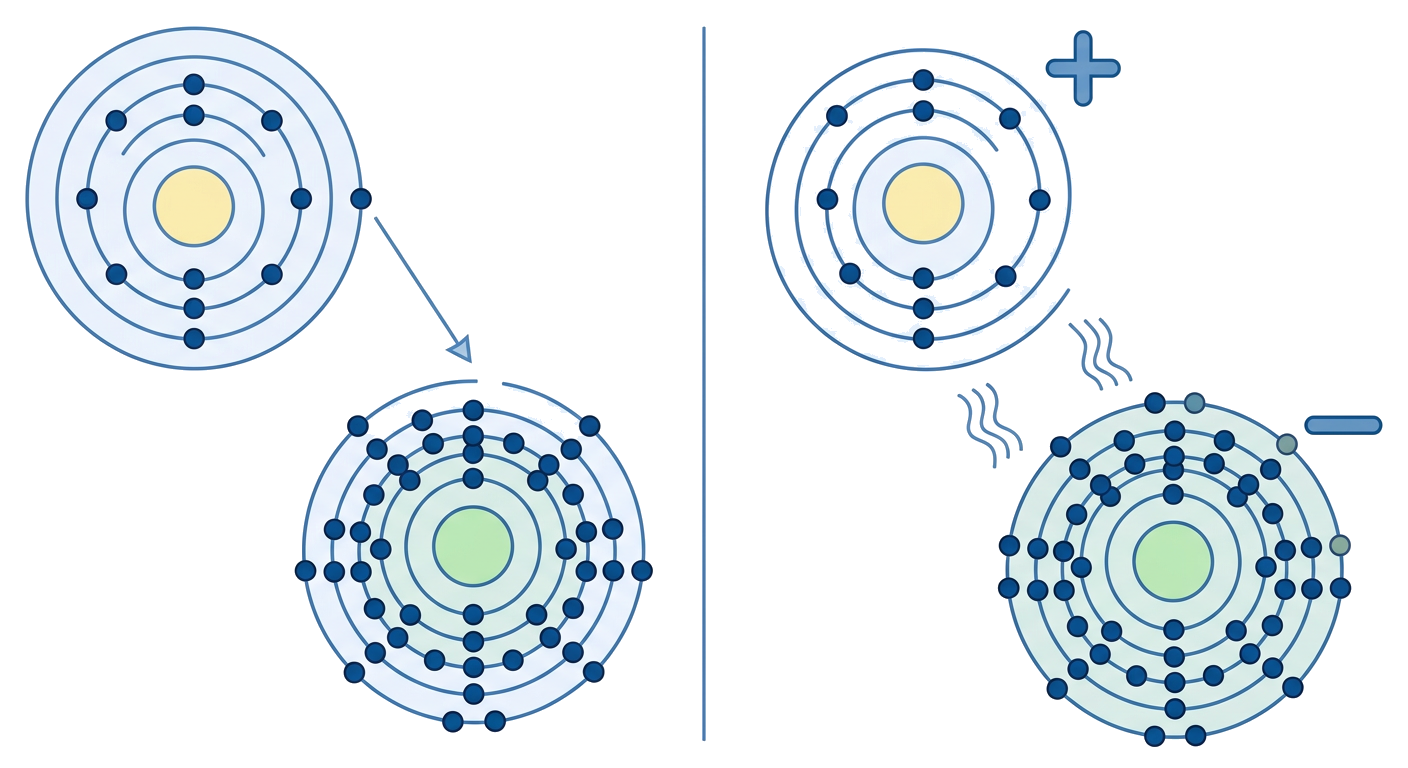
1. What is the correct name for the ionic compound K₂O?
Potassium oxide
Dipotassium monoxide
Potassium oxygen
Potassium(II) oxide
2. Which of the following is the correct formula for iron(III) chloride?
FeCl
FeCl₂
FeCl₃
Fe₃Cl
3. Ionic compounds are formed between a and a .
4. The polyatomic ion sulfate has the formula .
5. When naming ionic compounds with transition metals, a numeral is used to indicate the charge of the metal ion.
6. Name the following ionic compounds:
a) Na₃N:
b) Cu(NO₃)₂:
c) Ca(OH)₂:
7. Write the chemical formula for the following ionic compounds:
a) Magnesium phosphide:
b) Ammonium chloride:
c) Lead(IV) oxide:
8. The suffix '-ide' is used for the second element in all binary ionic compounds.
True
False
9. Polyatomic ions are groups of atoms that carry an overall charge.
True
False
10. Observe the illustration below showing the formation of an ionic bond. Describe in your own words what is happening at the atomic level to form this bond, relating it to the naming conventions of ionic compounds.