Exploring Polar Molecules
A Grade 10 science worksheet covering the concepts of polar molecules, electronegativity, molecular geometry, and their properties.
Includes
Standards
Exploring Polar Molecules
Name:
Date:
Score:
Read each question carefully and answer to the best of your ability. Show all your work for calculations.
1. A polar molecule has a net moment due to the unequal sharing of electrons.
2. The ability of an atom to attract electrons in a chemical bond is called .
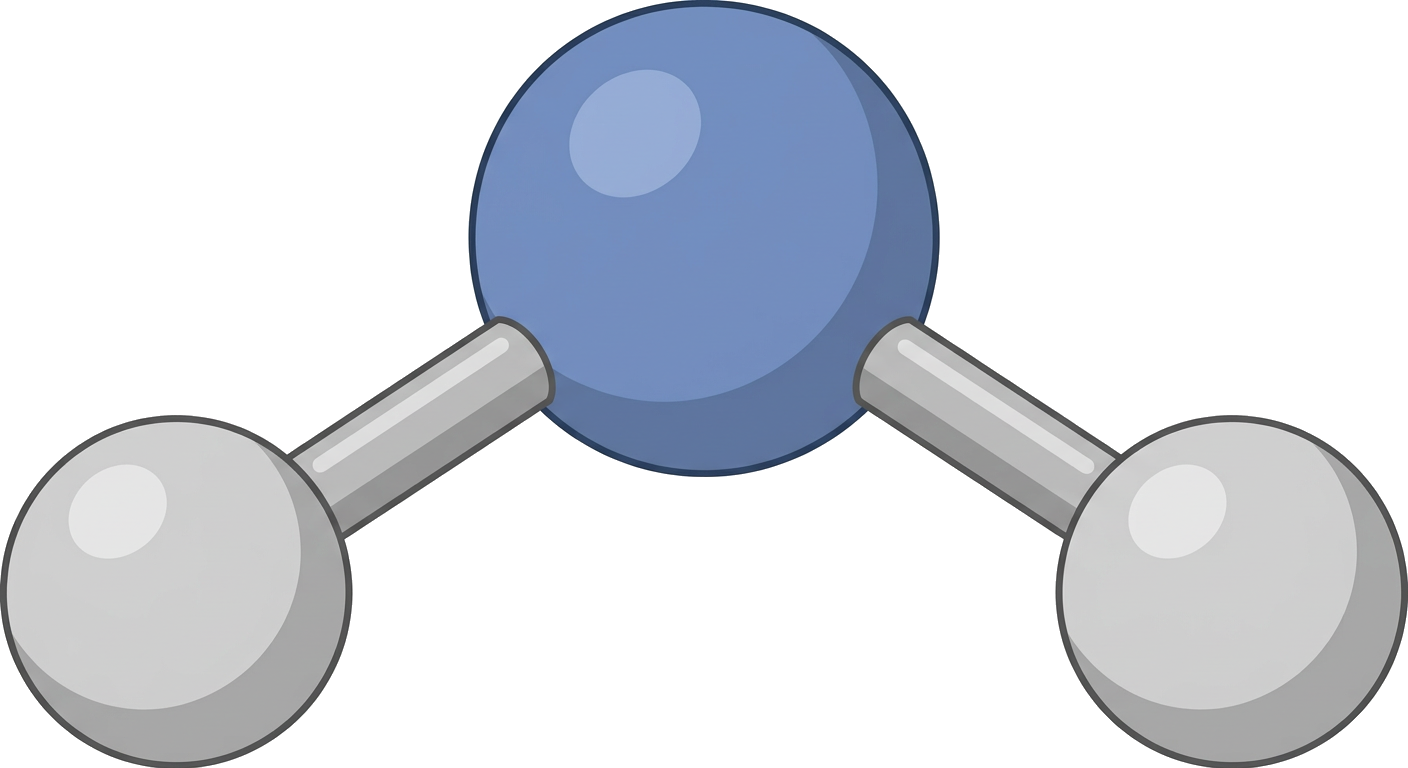
3. Water is an example of a molecule because of its bent molecular geometry.
4. In a nonpolar molecule, the dipoles cancel each other out due to its molecular geometry.
1. Which of the following is most likely to be a polar molecule?
CH4 (Methane)
CO2 (Carbon Dioxide)
H2O (Water)
O2 (Oxygen)
2. What is the primary factor that determines if a molecule is polar?
The number of atoms in the molecule
The electronegativity difference between bonded atoms
The state of matter at room temperature
The atomic mass of the central atom
1. All molecules with polar bonds are polar molecules.
True
False
2. Nonpolar molecules typically have higher boiling points than polar molecules of similar size.
True
False
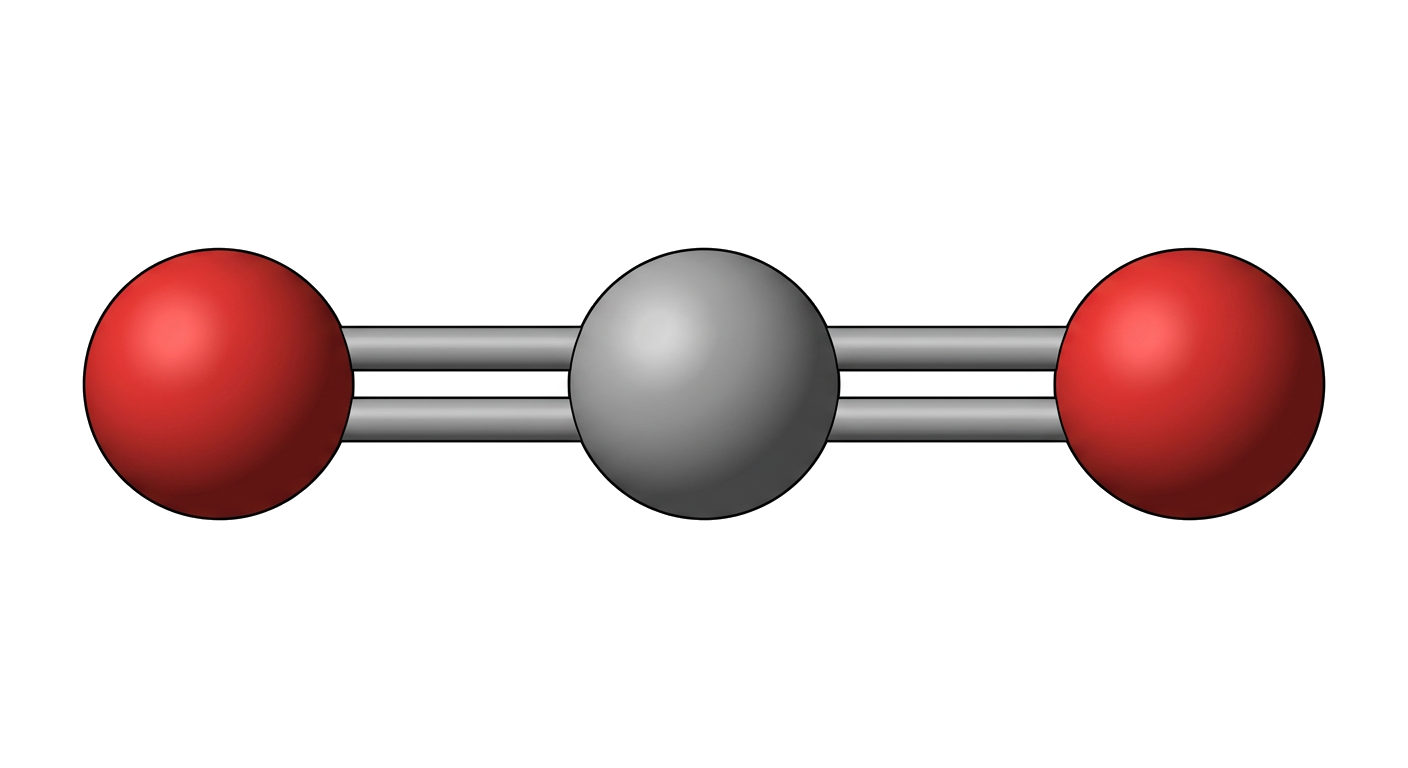
1. Explain why carbon dioxide (CO2) is a nonpolar molecule despite having polar bonds. You may refer to the diagram below.
2. Describe the concept of 'like dissolves like' in the context of polar and nonpolar molecules.
Observe the water molecule diagram below. Indicate the partial positive and partial negative charges using the symbols δ+ and δ- where appropriate.