Properties of Water Worksheet
Explore the unique physical and chemical properties of water, including its polarity, hydrogen bonding, and their effects on density, specific heat, and solvent capabilities.
Includes
Standards
Topics
Properties of Water
Name:
Date:
Score:
Read each question carefully and answer to the best of your ability. Show all your work for calculations.
1. Which property of water allows insects to walk on its surface?
High specific heat capacity
Cohesion
Adhesion
Surface tension
2. Water is often called the 'universal solvent' because:
It can dissolve any substance.
Its molecules are nonpolar.
Its polarity allows it to dissolve many different solutes.
It has a low boiling point.
3. Ice is denser than liquid water.
True
False
4. Water molecules are nonpolar.
True
False
5. The strong attraction between water molecules due to hydrogen bonding is called .
6. Water has a high , meaning it can absorb a lot of heat without a significant change in temperature.
7. Explain how the polarity of water molecules contributes to its ability to act as a solvent.
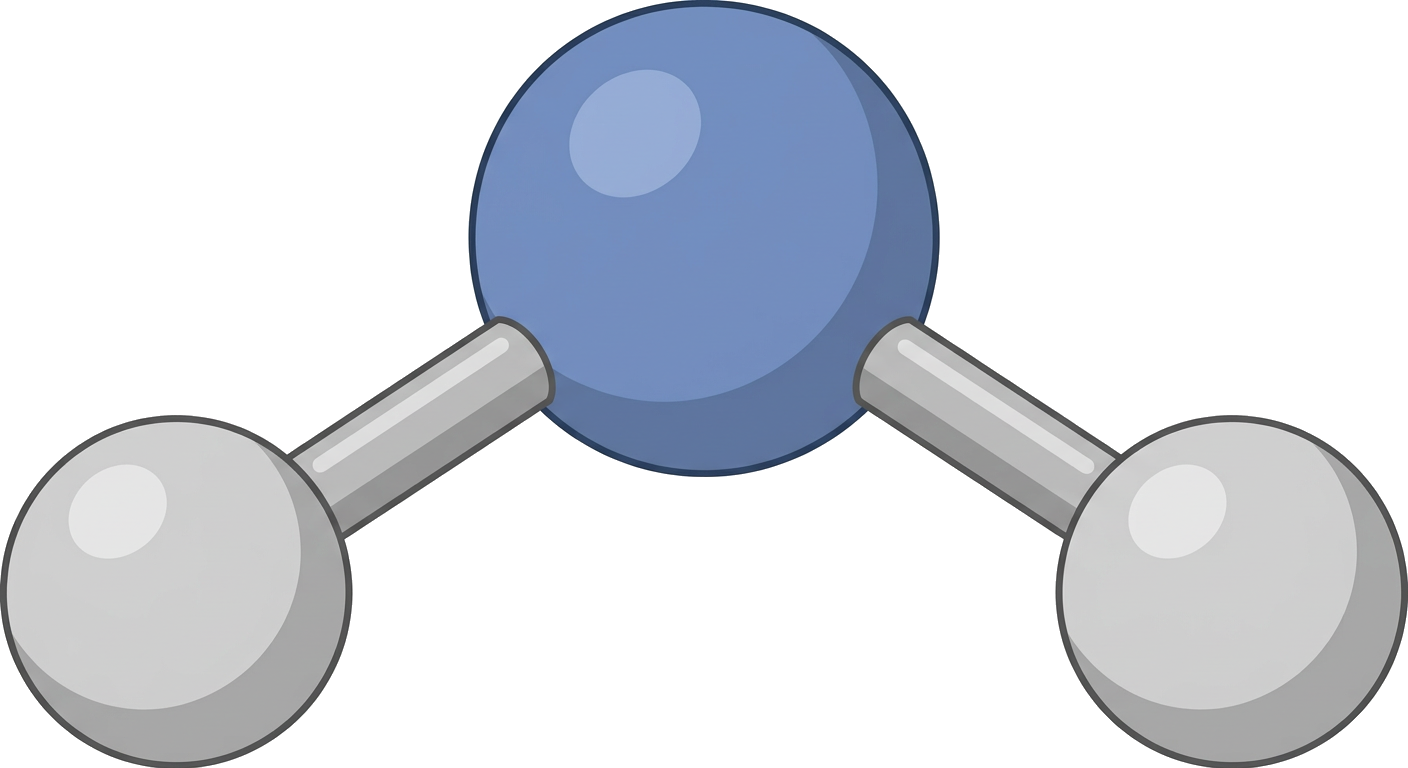
8. Describe the role of hydrogen bonds in the unique property of ice floating on water. Include a diagram of a water molecule.
Match each term on the left with its definition on the right.
9. Cohesion
a. The attraction between water molecules and other substances.
10. Adhesion
b. The attraction between water molecules themselves.
11. Capillary Action
c. The tendency of water to rise in a narrow tube against the force of gravity.