Covalent Compound Formulas
A Grade 10 science worksheet focusing on writing chemical formulas for covalent compounds, including naming conventions and common examples.
Includes
Standards
Topics
Covalent Compound Formulas
Name:
Date:
Score:
Read each question carefully and follow the instructions to write the correct chemical formulas for covalent compounds or identify the correct names. Remember the prefixes used for naming covalent compounds.
Covalent bonds form when atoms share electrons to achieve a stable electron configuration. The formula for a covalent compound indicates the number of atoms of each element present in a molecule.
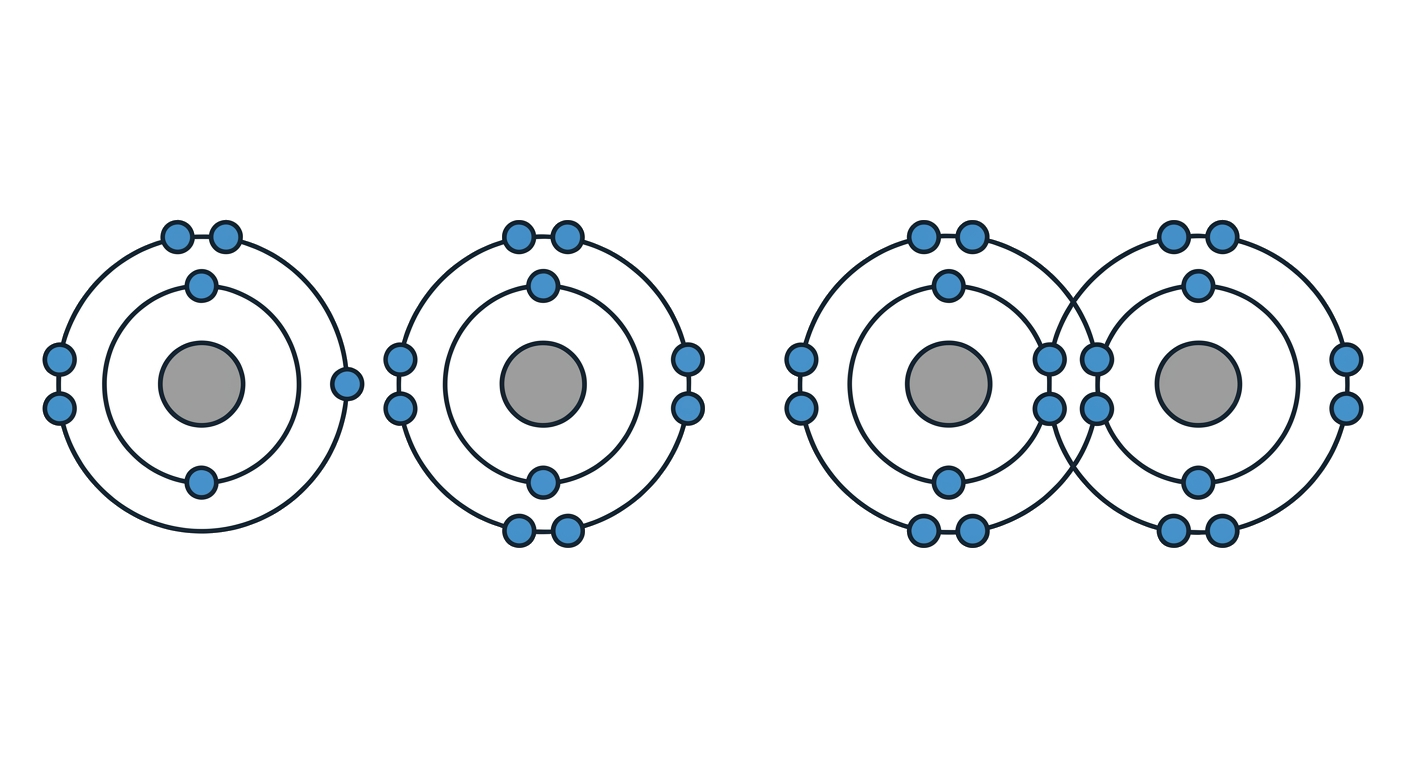
Complete the following sentences about naming prefixes for covalent compounds:
1. The prefix for one atom is .
2. The prefix for two atoms is .
3. The prefix for three atoms is .
4. The prefix for four atoms is .
5. The prefix for five atoms is .
Match each covalent compound name on the left with its correct chemical formula on the right.
1. Carbon dioxide
a. N2O4
2. Dinitrogen tetroxide
b. CO2
3. Sulfur trioxide
c. PCl5
4. Phosphorus pentachloride
d. SO3
Write the chemical formula for each of the following covalent compounds:
1. Dihydrogen monoxide
2. Carbon tetrachloride
3. Nitrogen trifluoride
4. Tetraphosphorus decoxide
Choose the correct name for the given chemical formula.
1. What is the correct name for the compound P2O5?
Phosphorus oxide
Diphosphorus pentoxide
Phosphorus pentoxide
Diphosphorus oxide
Indicate whether each statement is True or False.
1. Covalent compounds are formed between a metal and a nonmetal.
True
False