Cycles of Matter Worksheet
Explore the fundamental cycles of matter (water, carbon, nitrogen, phosphorus) and their importance in sustaining life on Earth.
Includes
Standards
Topics
Cycles of Matter: Understanding Earth's Essential Processes
Name:
Date:
Score:
Read each question carefully and provide your best answer. Use complete sentences for short answer questions.
1. Which process is responsible for converting liquid water into water vapor in the atmosphere?
Condensation
Precipitation
Evaporation
Transpiration
2. The illustration below depicts the water cycle. Which arrow best represents surface runoff?
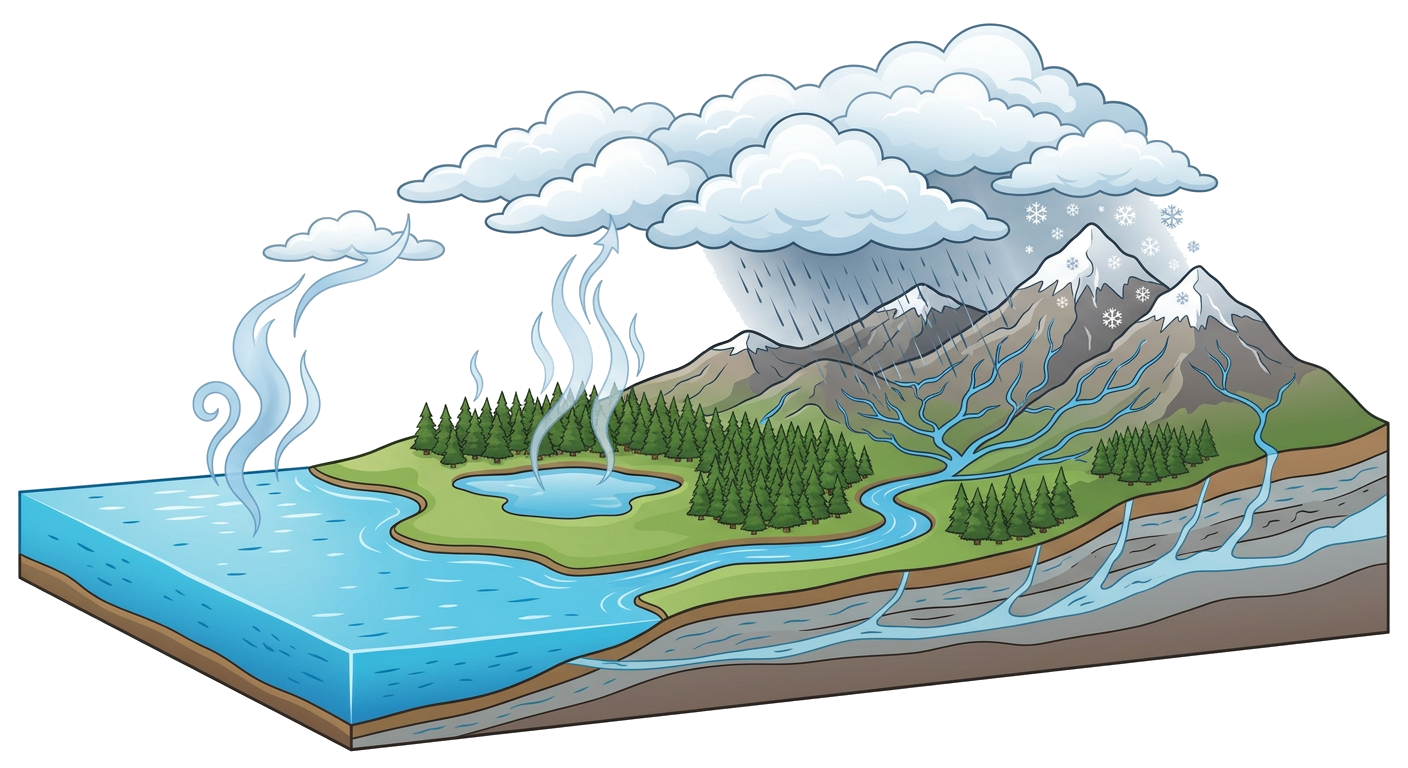
Arrow A (pointing up from ocean)
Arrow B (pointing from clouds to ocean)
Arrow C (pointing from land to ocean)
Arrow D (pointing from ocean to clouds)
1. Plants absorb carbon dioxide from the atmosphere during the process of .
2. The burning of fossil fuels releases large amounts of into the atmosphere.
3. Decomposers play a crucial role in returning carbon to the soil and atmosphere through the process of .
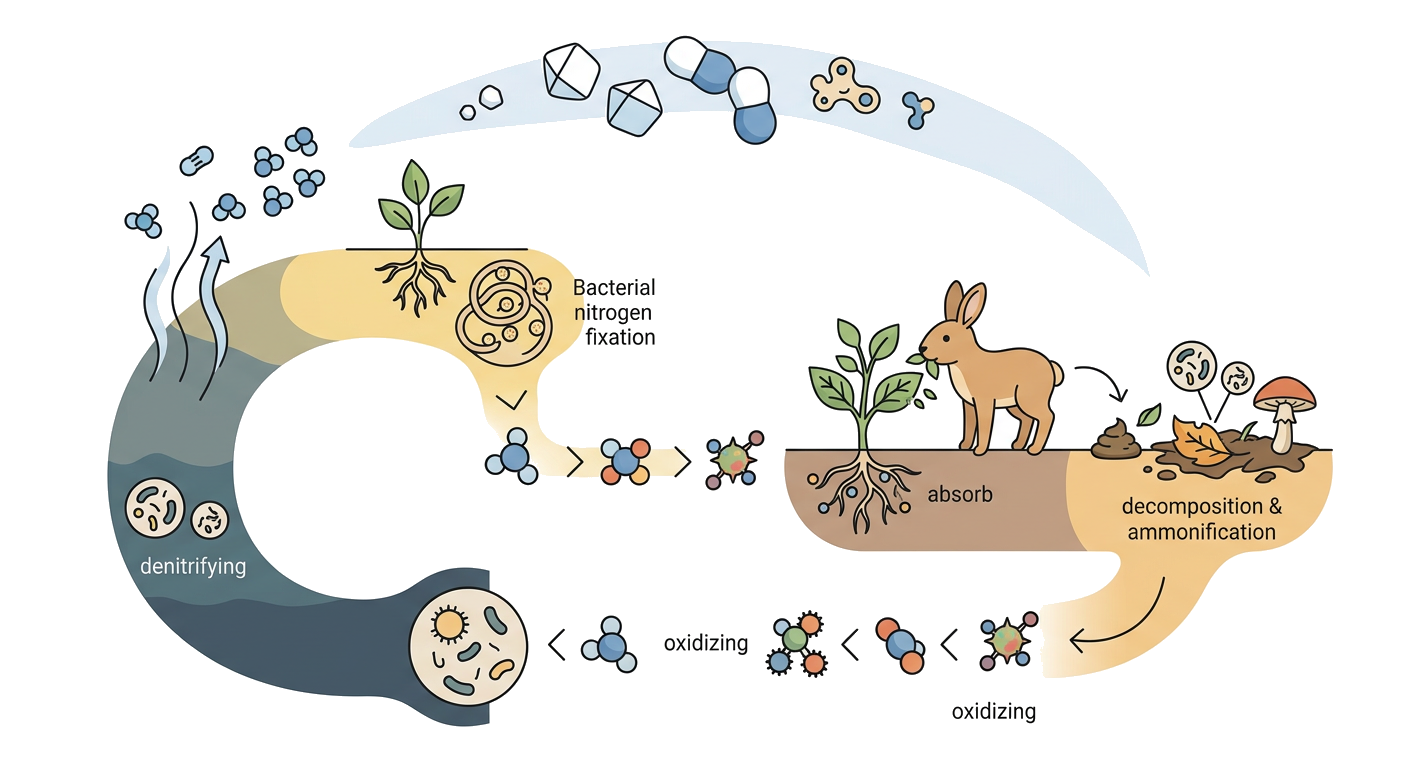
1. Explain the role of nitrogen-fixing bacteria in the nitrogen cycle.
2. Observe the nitrogen cycle diagram. Describe one way human activities impact the nitrogen cycle.
1. The phosphorus cycle does not involve a significant atmospheric component.
True
False
2. Eutrophication is primarily caused by an excess of nitrogen and phosphorus in aquatic ecosystems.
True
False
Match each term with its correct definition or associated cycle.
1. Denitrification
a. The process by which water vapor in the air changes into liquid water
2. Condensation
b. The conversion of nitrates into nitrogen gas by bacteria
3. Photosynthesis
c. The process by which plants use sunlight to convert carbon dioxide and water into glucose and oxygen
Discuss the interconnectedness of the water, carbon, and nitrogen cycles. How would a significant disruption in one cycle affect the others and the overall health of an ecosystem?
Related Worksheets
Grade 10 Science: Lab Safety and Procedures
This worksheet covers essential lab safety rules, common laboratory equipment, and fundamental practical skills for Grade 10 science students.
Earth History Exploration
This worksheet explores key concepts in Earth's history, including geological eras, major events, and dating methods for Grade 10 Science students.
Planet Earth Worksheet
Explore the structure, composition, and dynamic processes of Planet Earth with this Grade 10 science worksheet.
Rock Cycle Exploration
Explore the processes and types of rocks involved in the Earth's rock cycle with this comprehensive worksheet.