Index Fossils: Clues to Earth's Past
Explore the concept of index fossils, their characteristics, and how they are used to date rock layers and understand Earth's geological history.
Includes
Standards
Index Fossils: Clues to Earth's Past
Name:
Date:
Score:
Read each question carefully and provide your best answer based on your understanding of index fossils and geological time.
1. Which of the following is NOT a characteristic of a good index fossil?
Widespread geographic distribution
Lived for a very long geological period
Easily recognizable features
Abundant in the fossil record
2. The principle that states that in an undisturbed sequence of sedimentary rocks, the oldest layers are at the bottom and the youngest are at the top, is known as:
Principle of Faunal Succession
Principle of Superposition
Principle of Original Horizontality
Principle of Cross-Cutting Relationships
3. Index fossils are used to correlate rock layers across different geographic regions, helping geologists to establish a relative .
4. Organisms that make good index fossils typically had a relatively short range but a wide geographic distribution.
5. The presence of an index fossil in two separate rock layers indicates that those layers were formed at roughly the same time.
True
False
6. Radiometric dating is a method used to determine the relative age of index fossils.
True
False
7. Explain how the Principle of Faunal Succession is related to the use of index fossils.
8. Describe two key characteristics that make a fossil suitable for use as an index fossil.
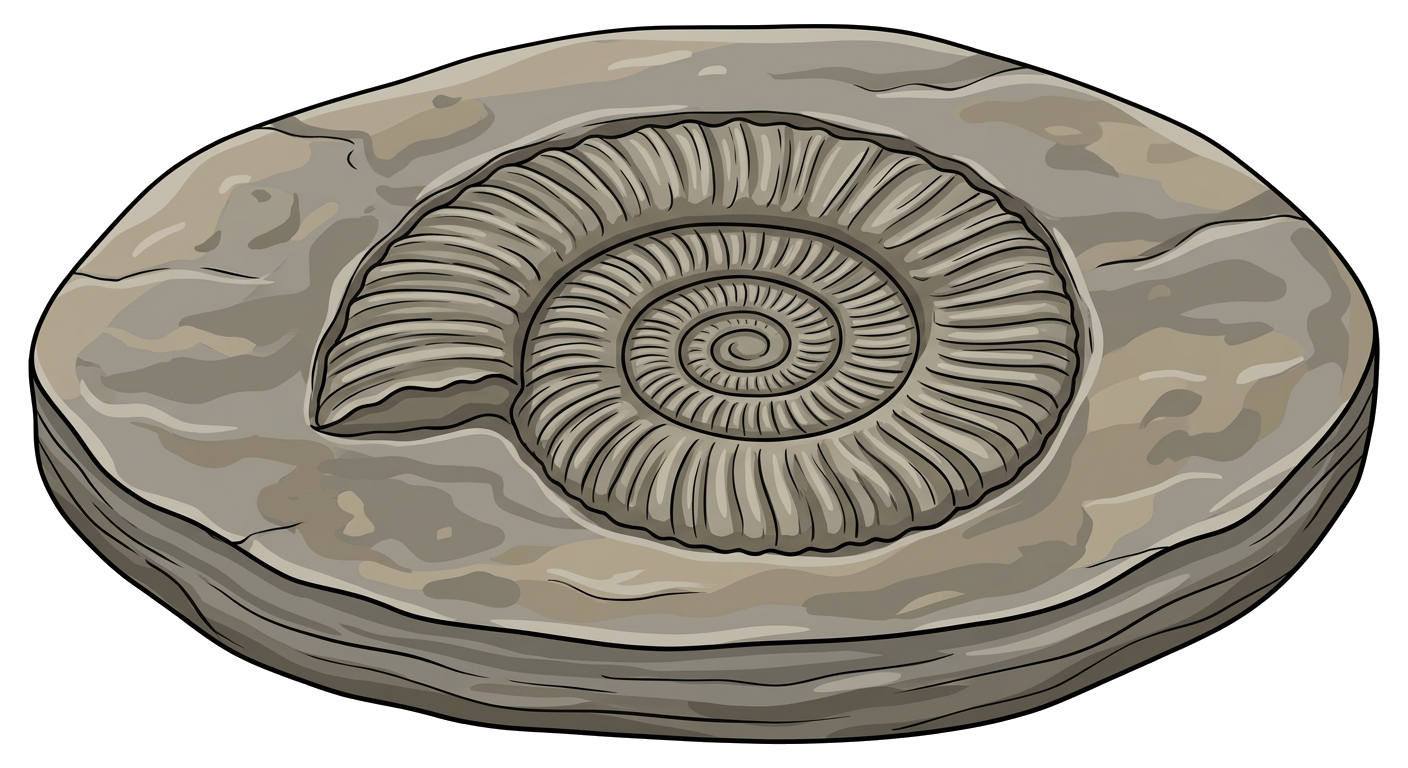
9. Examine the image of the fossil below. Based on its appearance, suggest what type of organism it might have been and what characteristics it might possess that would make it a good index fossil.
Related Worksheets
Grade 10 Science: Lab Safety and Procedures
This worksheet covers essential lab safety rules, common laboratory equipment, and fundamental practical skills for Grade 10 science students.
Earth History Exploration
This worksheet explores key concepts in Earth's history, including geological eras, major events, and dating methods for Grade 10 Science students.
Planet Earth Worksheet
Explore the structure, composition, and dynamic processes of Planet Earth with this Grade 10 science worksheet.
Rock Cycle Exploration
Explore the processes and types of rocks involved in the Earth's rock cycle with this comprehensive worksheet.