Magnetic Forces, Fields, and Faraday's Law
Explore magnetic forces, magnetic fields around various sources, and the fundamental principles of electromagnetic induction as described by Faraday's Law.
Includes
Standards
Magnetic Forces, Fields, and Faraday's Law Worksheet
Name:
Date:
Score:
Read each question carefully and provide your best answer based on your understanding of magnetic forces, magnetic fields, and Faraday's Law.
1. Which of the following best describes the direction of magnetic field lines outside a bar magnet?
From South pole to North pole
From North pole to South pole
In random directions
Parallel to the magnet's length
2. What happens to the magnetic force between two magnets if the distance between them is halved?
It is halved
It is doubled
It is quadrupled
It remains the same
1. Magnetic field lines never each other.
2. Faraday's Law of Induction states that a changing magnetic flux through a coil induces an (EMF) in the coil.
3. The strength of a magnetic field is measured in (T).
1. Moving electric charges produce magnetic fields.
True
False
2. A stationary magnet can induce an electric current in a stationary wire.
True
False
1. Describe the right-hand rule for determining the direction of the magnetic field around a current-carrying wire.
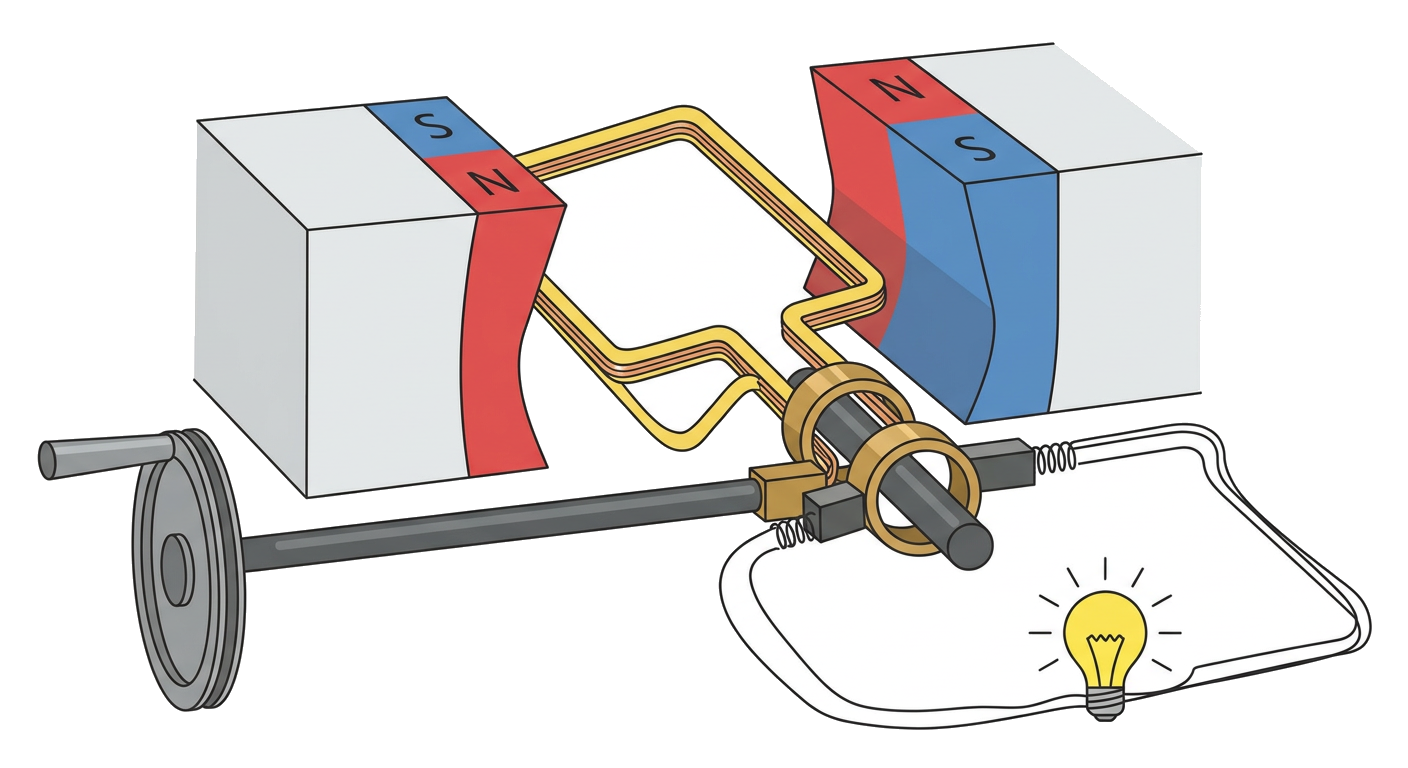
2. Explain how an electric generator works based on Faraday's Law.
Consider the image of the magnetic field lines around a bar magnet below:
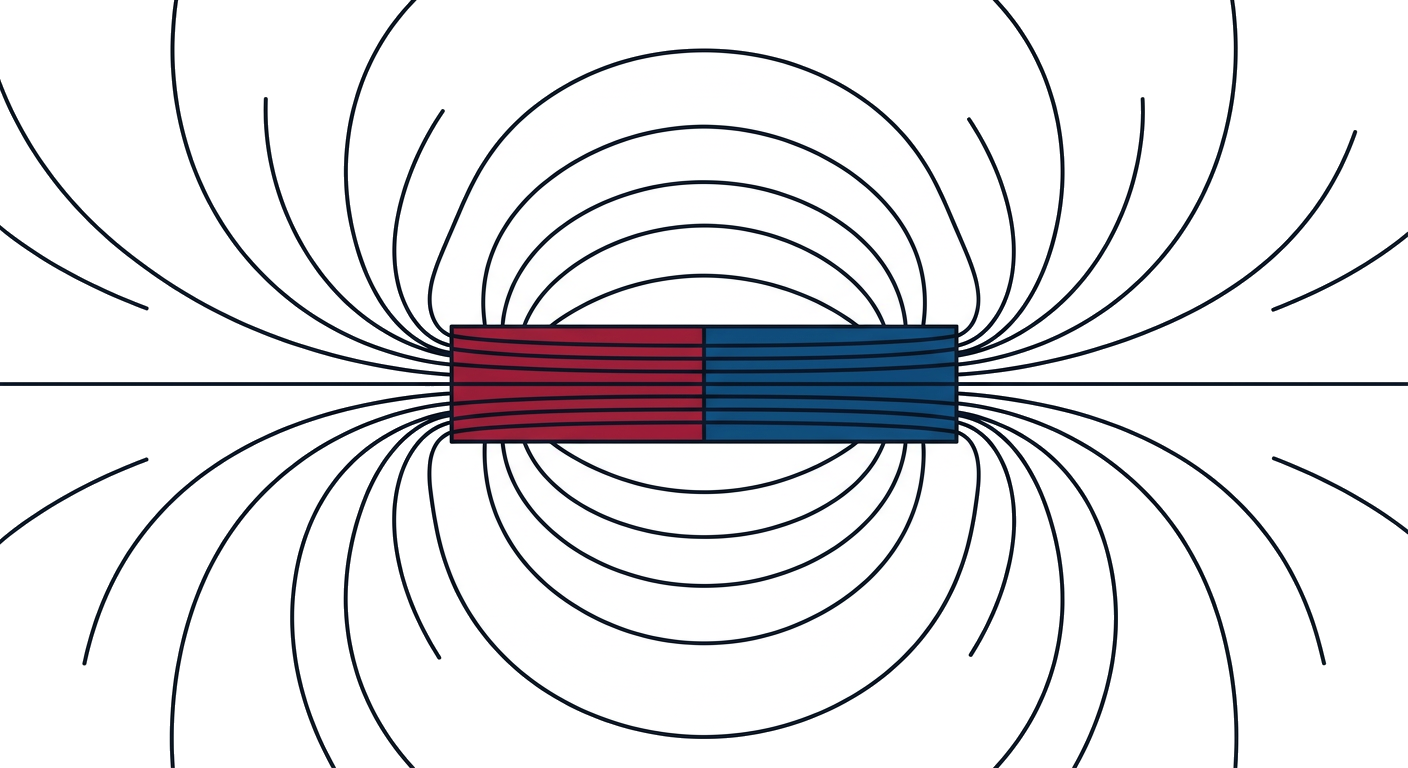
1. What do the density of the magnetic field lines indicate about the magnetic field strength?
2. If you were to place a small compass at point 'X' (near the North pole) and then at point 'Y' (further away from the North pole but still in the field), how would the compass needle behave differently at each point?