Understanding Cognitive Distortions
This worksheet helps Grade 10 students identify and understand common cognitive distortions and their impact on thoughts and behaviors.
Includes
Topics
Understanding Cognitive Distortions
Name:
Date:
Score:
Read each question carefully and answer to the best of your ability. This worksheet is designed to help you understand common cognitive distortions, which are irrational ways of thinking that can negatively impact your emotions and behavior.
1. is a cognitive distortion where you see things in absolute, black-and-white categories.
2. When you assume that you know what another person is thinking without having sufficient evidence, you are engaging in .
3. involves focusing solely on the negative aspects of a situation while ignoring the positive.
4. The cognitive distortion of means you take responsibility for events that are not entirely your fault.
5. Which cognitive distortion is characterized by making broad, negative conclusions based on a single event?
Magnification
Overgeneralization
Catastrophizing
Emotional Reasoning
6. If you believe that your feelings are facts, you are most likely experiencing which cognitive distortion?
Personalization
Jumping to Conclusions
Emotional Reasoning
Labeling
7. Cognitive distortions are always conscious and easy to identify without practice.
True
False
8. Being aware of cognitive distortions can help individuals challenge negative thought patterns.
True
False
9. Describe a time when you or someone you know might have experienced 'Catastrophizing'. How did it affect the situation?
10. Explain the difference between 'Mind Reading' and 'Jumping to Conclusions'.
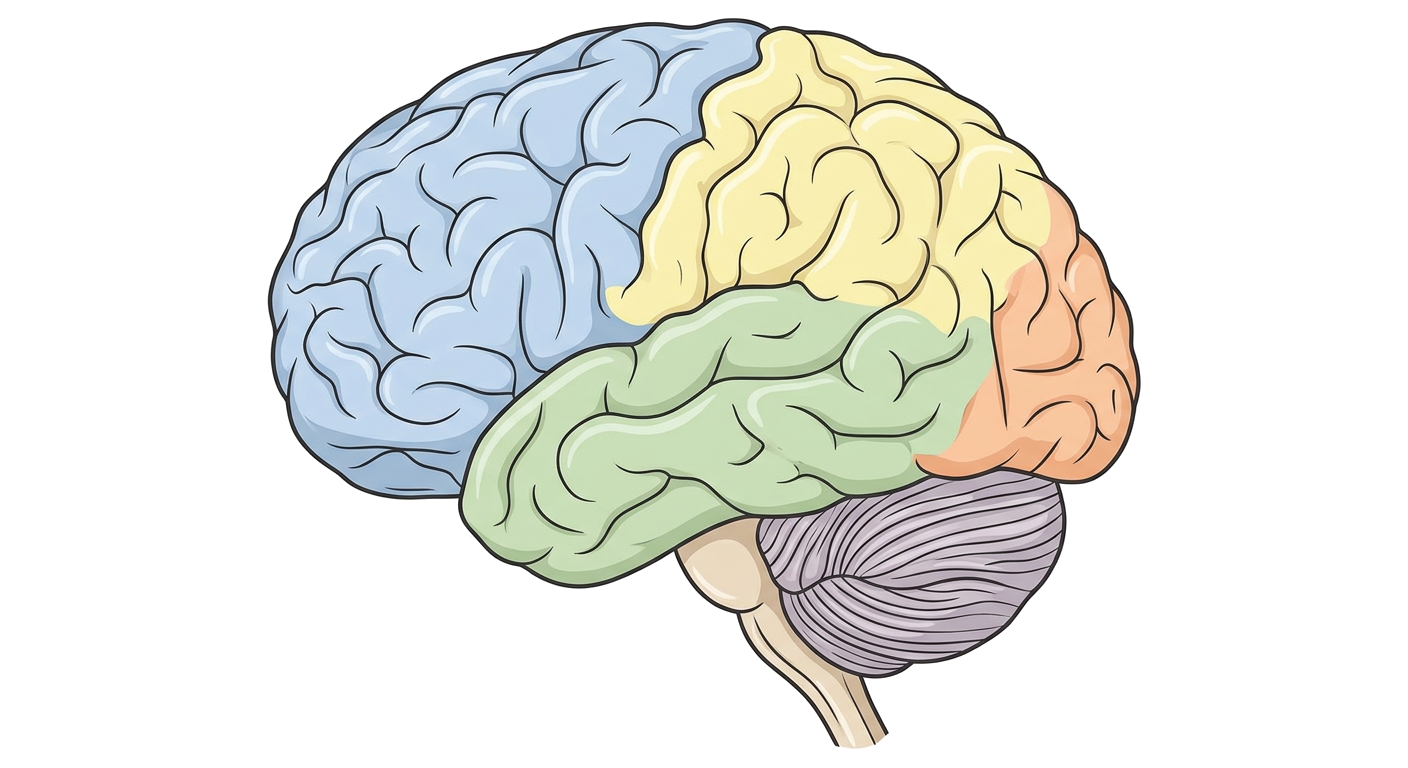
11. How does understanding cognitive distortions, which are patterns of thinking, relate to the function of the brain as shown in the image? Explain your thoughts.
Use the words from the bank to fill in the blanks in the sentences below.
12. Telling yourself, 'I be perfect at everything I do,' is a common cognitive distortion.
13. When you call yourself a 'loser' after making a small mistake, you are engaging in .
14. Seeing a situation as either a complete success or a total failure, with no middle ground, is an example of .
Related Worksheets
Understanding Integrity
A Grade 10 social studies worksheet exploring the concept of integrity, its importance, and its application in daily life.
Reframing Thoughts Worksheet
A Grade 10 social studies worksheet focusing on identifying negative thought patterns, understanding cognitive distortions, and practicing reframing techniques for improved mental well-being.
Grade 10 Career Exploration Worksheet
A worksheet for 10th-grade students to explore career options, self-assessment, and future planning in social studies.
Emotional Intelligence: Understanding Ourselves and Others
This worksheet explores the key components of emotional intelligence and its importance in personal and social development for high school students.
Choices and Consequences
Explore the process of decision-making and the impact of choices on individuals and society.
Understanding Cognitive Dissonance
This worksheet explores the concept of cognitive dissonance, its causes, effects, and real-world examples, suitable for Grade 10 Social Studies students.
Understanding Healthy Relationships
This worksheet explores key components of healthy relationships, including communication, respect, boundaries, and conflict resolution, for Grade 10 Social Studies.
Developing Leadership Skills
This worksheet focuses on understanding and developing key leadership skills for grade 10 social studies students.