Understanding Negative Thinking Patterns
This worksheet helps Grade 10 students identify and challenge common negative thinking patterns to promote healthier cognitive habits.
Includes
Standards
Topics
Understanding Negative Thinking Patterns
Name:
Date:
Score:
Read each question carefully and answer to the best of your ability. This worksheet is designed to help you understand and identify common negative thinking patterns.
1. Which negative thinking pattern involves believing that if one bad thing happens, everything else will also go wrong?
Catastrophizing
Mind Reading
All-or-Nothing Thinking
Personalization
2. Sarah assumes her friends are talking negatively about her when they whisper, even though she has no direct evidence. This is an example of:
Overgeneralization
Emotional Reasoning
Mind Reading
Filtering
1. 'Should statements' are a type of negative thinking pattern where you criticize yourself or others with 'shoulds', 'shouldn'ts', 'musts', and 'oughts'.
True
False
2. Personalization is when you take negative events personally, even when there's no logical reason to.
True
False
1. When you focus only on the negative aspects of a situation and ignore the positive, you are engaging in .
2. An example of 'All-or-Nothing Thinking' is believing that if you don't achieve perfection, you are a complete .
1. Briefly explain the concept of 'Emotional Reasoning' and provide an example.
2. How can identifying negative thinking patterns help improve one's overall well-being?
Match each negative thinking pattern on the left with its description on the right.
1. Overgeneralization
a. Assuming you know what others are thinking negatively about you.
2. Magnification & Minimization
b. Blowing things out of proportion or shrinking their importance.
3. Mind Reading
c. Drawing a sweeping negative conclusion based on a single event.
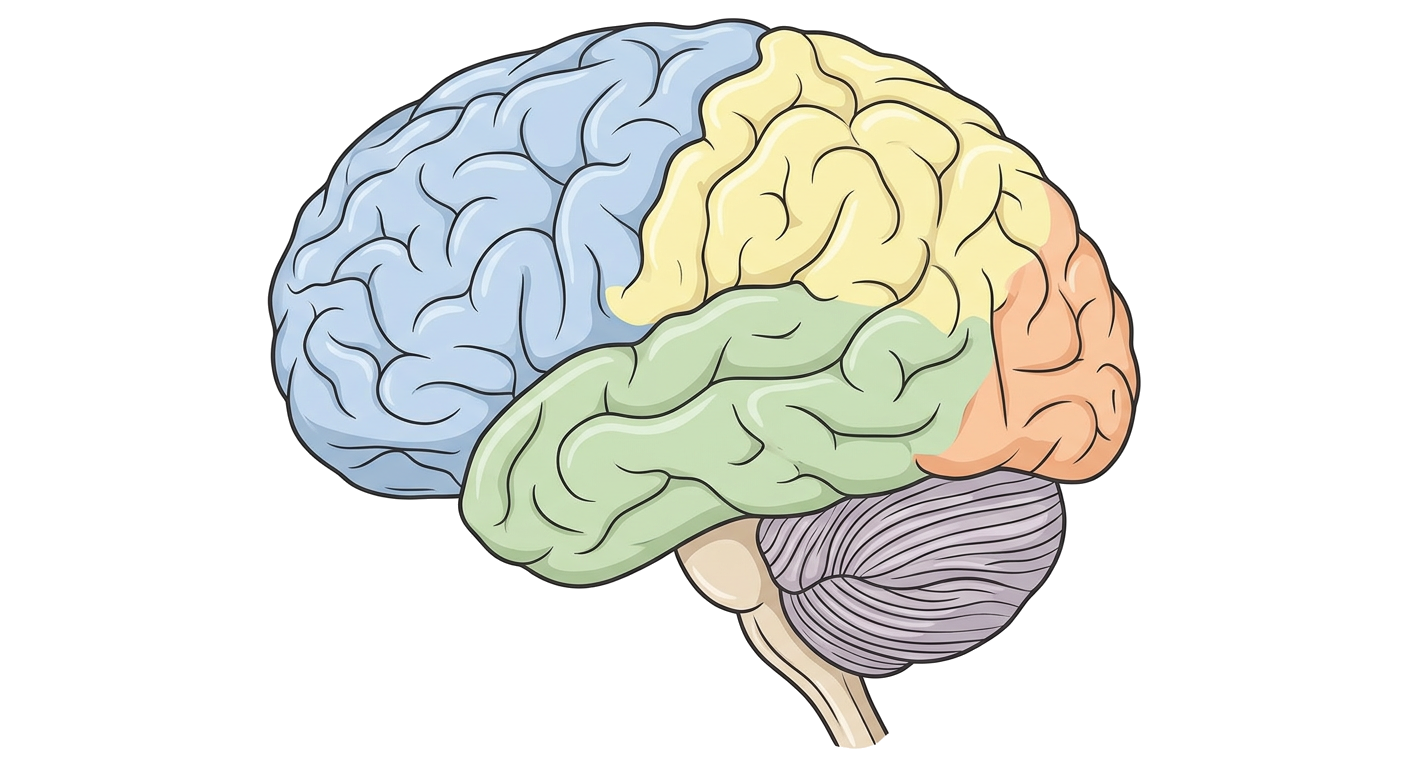
Consider the image of the brain below. Our thoughts and thinking patterns are complex neurological processes. Reflect on how understanding these patterns can empower you to change your cognitive habits.
1. Describe a time when you experienced a negative thinking pattern. Which specific pattern was it, and how did it affect your feelings or actions?
2. What is one practical strategy you can use to challenge or reframe a negative thought the next time it occurs?