Reframing Negative Thoughts Worksheet
This worksheet helps Grade 10 students identify negative thought patterns and practice reframing them into more positive and realistic perspectives.
Includes
Standards
Topics
Reframing Negative Thoughts
Name:
Date:
Score:
Read each question carefully and answer to the best of your ability. This worksheet is designed to help you understand and practice reframing negative thoughts.
1. What are some common negative thought patterns you've noticed in yourself or others?
2. Why is it important to identify and challenge negative thoughts?
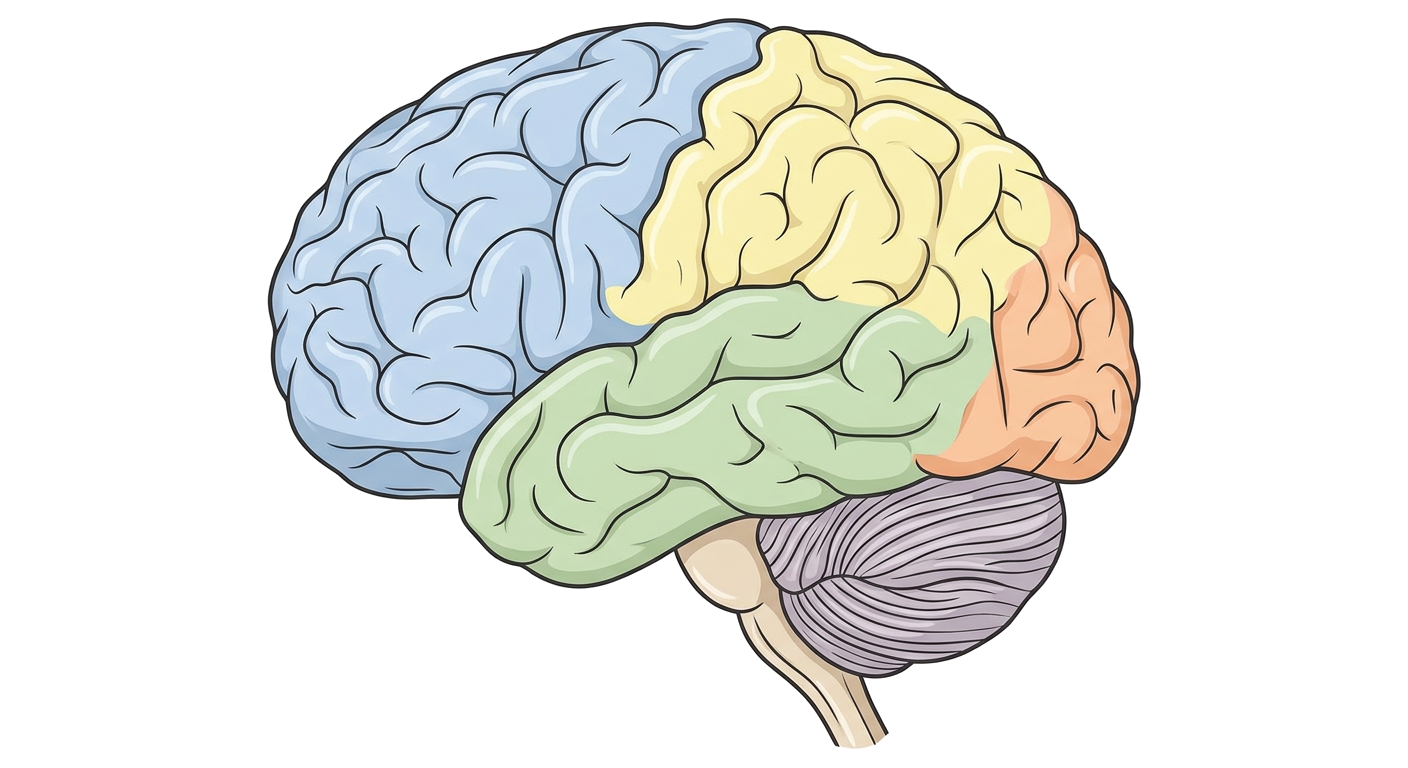
The brain plays a significant role in how we perceive and process thoughts. Identifying areas of the brain involved in emotional regulation can help us understand the biological basis of reframing.
Fill in the blanks with the correct cognitive distortion:
1. is when you focus only on the negative aspects of a situation and ignore the positive.
2. Thinking in absolute terms, such as 'always' or 'never', is known as .
3. When you take responsibility for things that are not your fault, you are engaging in .
Match each cognitive distortion with its reframing technique.
1. Catastrophizing
a. Look for evidence to support or refute the thought.
2. All-or-Nothing Thinking
b. Consider the worst, best, and most likely outcomes.
3. Mind Reading
c. Identify shades of gray and alternative perspectives.
Indicate whether the following statements about reframing negative thoughts are true or false.
1. Reframing means ignoring negative feelings and pretending everything is fine.
True
False
2. Reframing involves actively challenging and replacing unhelpful thoughts with more balanced ones.
True
False
1. Describe a recent situation where you experienced a negative thought. Then, reframe that thought into a more positive or realistic one.
Negative Thought:
Reframed Thought:
1. Which of the following is NOT a benefit of reframing negative thoughts?
Increased resilience
Improved mood
Enhanced problem-solving skills
Elimination of all negative emotions
Related Worksheets
Understanding Integrity
A Grade 10 social studies worksheet exploring the concept of integrity, its importance, and its application in daily life.
Reframing Thoughts Worksheet
A Grade 10 social studies worksheet focusing on identifying negative thought patterns, understanding cognitive distortions, and practicing reframing techniques for improved mental well-being.
Grade 10 Career Exploration Worksheet
A worksheet for 10th-grade students to explore career options, self-assessment, and future planning in social studies.
Emotional Intelligence: Understanding Ourselves and Others
This worksheet explores the key components of emotional intelligence and its importance in personal and social development for high school students.
Choices and Consequences
Explore the process of decision-making and the impact of choices on individuals and society.
Understanding Cognitive Dissonance
This worksheet explores the concept of cognitive dissonance, its causes, effects, and real-world examples, suitable for Grade 10 Social Studies students.
Understanding Healthy Relationships
This worksheet explores key components of healthy relationships, including communication, respect, boundaries, and conflict resolution, for Grade 10 Social Studies.
Developing Leadership Skills
This worksheet focuses on understanding and developing key leadership skills for grade 10 social studies students.