Robber Barons: Industrial Titans or Exploitative Capitalists?
This worksheet explores the era of American 'Robber Barons,' examining their impact on industrialization, labor, and society during the late 19th and early 20th centuries.
Includes
Standards
Topics
Robber Barons: Industrial Titans or Exploitative Capitalists?
Name:
Date:
Score:
Read each question carefully and answer to the best of your ability. For multiple-choice questions, select the best answer. For short-answer questions, provide concise and thoughtful responses.
1. Which of the following industries was NOT primarily associated with the 'Robber Barons' of the late 19th century?
Railroads
Steel production
Oil refining
Textile manufacturing
2. The term 'Robber Baron' suggests that these industrialists:
Contributed positively to society through philanthropy.
Amassed wealth through unethical and exploitative practices.
Were primarily inventors and innovators.
Were government officials who regulated industry.
3. Andrew Carnegie made his fortune primarily in the industry.
4. John D. Rockefeller is most associated with the industry and his company, Standard Oil.
5. The theory of was often used to justify the vast wealth accumulated by industrialists, suggesting that societal progress resulted from competition.
6. Briefly explain the concept of 'vertical integration' and provide an example of how a Robber Baron might have used it.
7. The Sherman Antitrust Act was primarily designed to protect the interests of large corporations.
True
False
8. Many Robber Barons were also significant philanthropists, donating large sums to charities and public institutions.
True
False
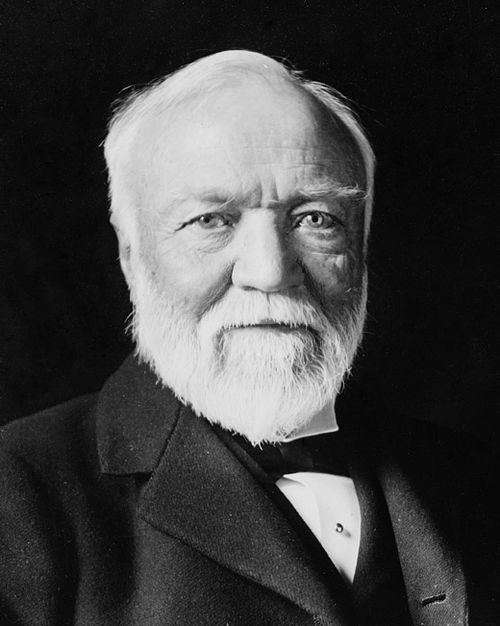
9. Examine the image of Andrew Carnegie below. What aspects of his public persona or business practices might this portrait aim to convey?
10. Discuss the dual nature of the 'Robber Barons' as both industrial innovators and exploitative capitalists. Provide specific examples of their contributions to American industrial growth and the criticisms leveled against their business practices.