Elements of Drama: Grade 11 ELA Worksheet
Explore the fundamental elements of drama, including plot, character, theme, setting, and dialogue, with this comprehensive Grade 11 ELA worksheet.
Includes
Standards
Topics
Elements of Drama
Name:
Date:
Score:
Read each question carefully and provide thoughtful responses based on your understanding of the elements of drama.
1. Which element of drama refers to the underlying message or moral of the play?
Plot
Character
Theme
Spectacle
2. The arrangement of events and incidents in a play is known as the:
Dialogue
Plot
Setting
Climax
3. The conversations between characters in a play are referred to as .
4. The time and place in which the action of a play occurs is called the .
5. A character who undergoes a significant internal change throughout the play is known as a character.
6. The protagonist is always the 'good guy' in a play.
True
False
7. Spectacle refers to the visual elements of a play, including scenery, costumes, and lighting.
True
False
8. Briefly explain the difference between a static character and a dynamic character.
9. How does the setting of a play contribute to its overall mood and theme?
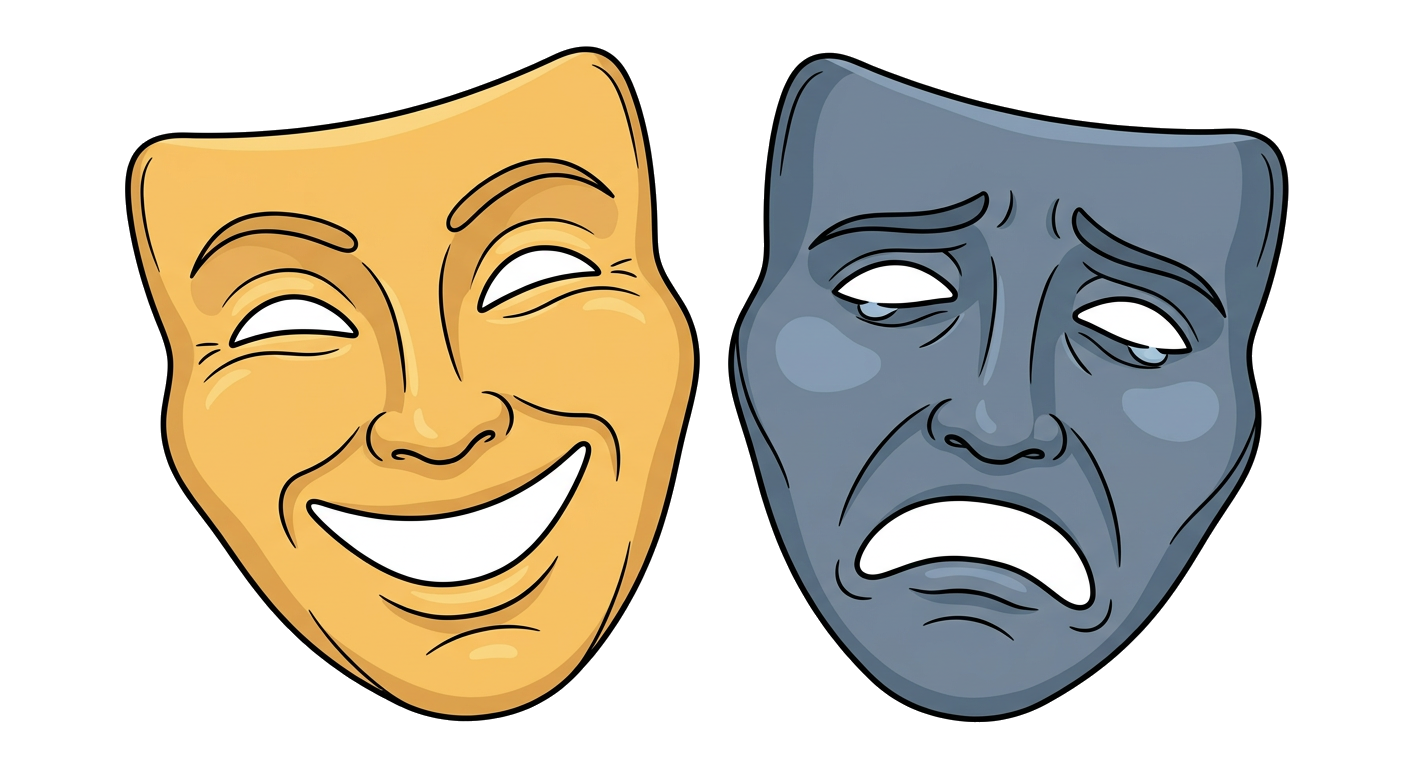
10. Observe the image below. What iconic elements of drama does it represent, and what do they symbolize?
11. Choose a play you have recently read or seen. Analyze how at least three different elements of drama (e.g., plot, character, theme, dialogue, setting, spectacle) work together to create meaning and impact for the audience. Provide specific examples from the play to support your analysis.