Atomic Orbital Diagram Worksheet
A Grade 11 science worksheet covering atomic orbital diagrams, electron configurations, and related principles.
Includes
Standards
Topics
Atomic Orbital Diagram Worksheet
Name:
Date:
Score:
Read each question carefully and answer to the best of your ability. Show all work where applicable.
1. Which principle states that electrons will occupy the lowest energy orbitals available?
Pauli Exclusion Principle
Hund's Rule
Aufbau Principle
Heisenberg Uncertainty Principle
2. How many electrons can a single atomic orbital hold?
1
2
6
10
3. The quantum number describes the shape of an atomic orbital.
4. According to Hund's Rule, electrons will occupy separate orbitals within a subshell with spins before pairing up.
5. Write the full electron configuration for a neutral atom of Oxygen (O).
6. Draw the orbital diagram for a neutral atom of Nitrogen (N).
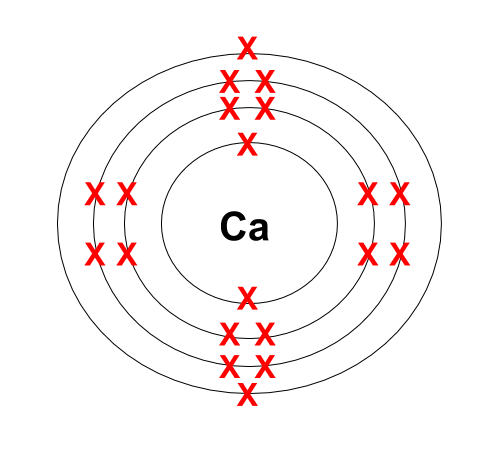
7. The image below shows an electron configuration diagram for Calcium. Explain how this diagram illustrates the Aufbau principle and the Pauli Exclusion Principle.
8. The 3d subshell has a lower energy than the 4s subshell.
True
False
9. All orbitals in a given subshell have the same energy in a multi-electron atom.
True
False
Match each term with its definition.
10. Principal Quantum Number
a. Describes electron spin
11. Azimuthal Quantum Number
b. Describes orbital shape
12. Magnetic Quantum Number
c. Describes orbital orientation in space
13. Spin Quantum Number
d. Describes the main energy level