Electron Properties and Behavior
Explore the fundamental properties, quantum numbers, and orbital configurations of electrons in atoms at a Grade 11 level, including their role in chemical bonding.
Includes
Standards
Topics
Electron Properties and Behavior
Name:
Date:
Score:
Read each question carefully and answer to the best of your ability. Show all work for calculations.
1. Which of the following describes the most probable location of an electron in an atom?
Nucleus
Electron cloud
Proton shell
Neutron field
2. The Pauli Exclusion Principle states that no two electrons in the same atom can have the same set of four:
Energy levels
Quantum numbers
Electron affinities
Valence electrons
3. The rule states that electrons will occupy orbitals of equal energy singly before pairing up.
4. Electrons in the outermost shell of an atom are called electrons.
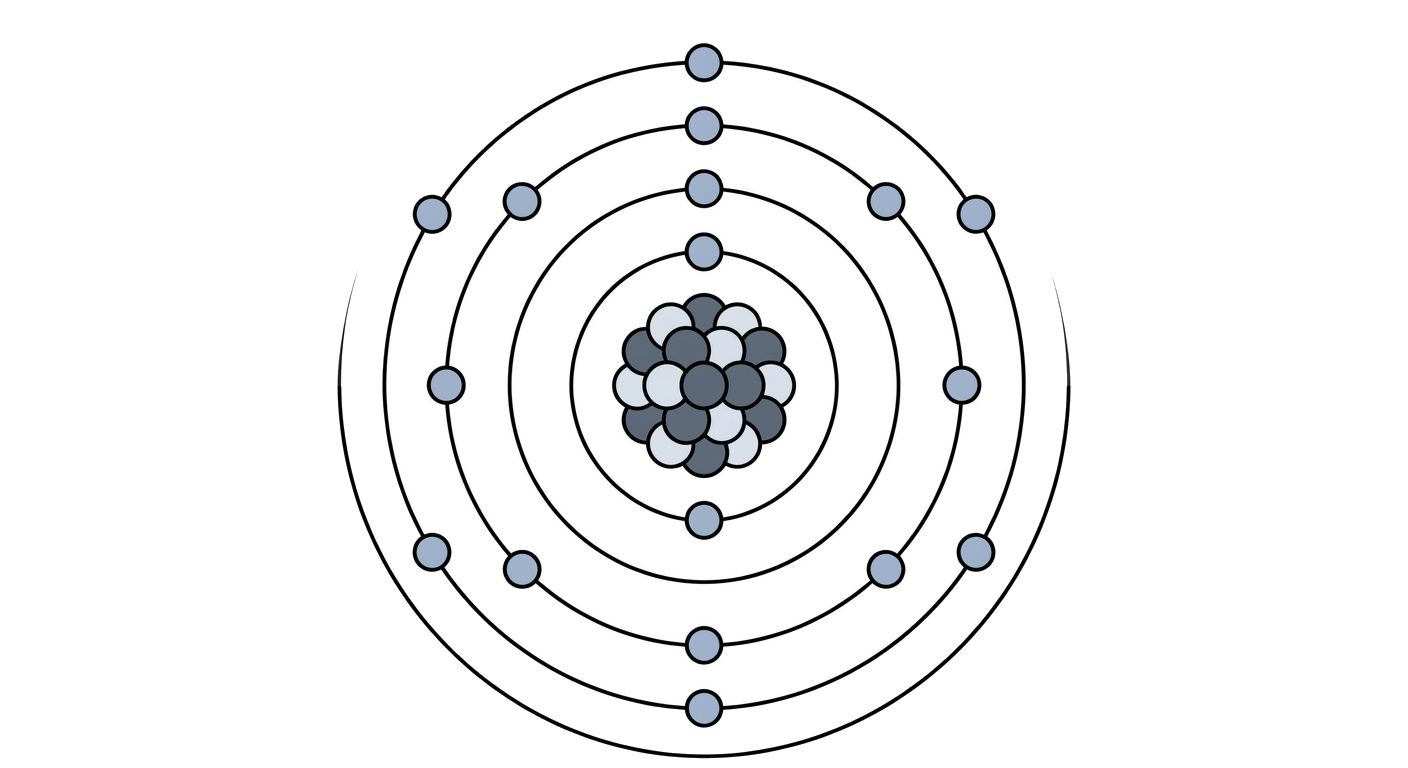
5. Draw the Bohr model for a Carbon atom, showing its protons, neutrons, and electrons in their respective shells.
6. Explain the concept of electron shielding and how it affects the effective nuclear charge experienced by valence electrons.
7. All electrons within the same principal energy level have the same energy.
True
False
8. An electron's spin quantum number can have values of +1 or -1.
True
False
Match each quantum number with its description.
9. Principal quantum number (n)
a. Describes the orientation of an orbital in space
10. Angular momentum quantum number (l)
b. Describes the size and energy of an orbital
11. Magnetic quantum number (ml)
c. Describes the shape of an orbital
12. Spin quantum number (ms)
d. Describes the intrinsic angular momentum of an electron
Related Worksheets
pH and pOH Calculations Worksheet
A Grade 11 Chemistry worksheet focusing on pH and pOH calculations, including strong acids, bases, and ion concentrations.
Ionic Bonds Worksheet
Explore the fundamentals of ionic bonding, including electron transfer, ion formation, and properties of ionic compounds, suitable for Grade 11 Chemistry students.
Molecular Geometry Worksheet
A Grade 11 Chemistry worksheet focusing on VSEPR theory and molecular shapes, including questions on bond angles and polarity.
Lewis Structure Practice Worksheet
A Grade 11 Chemistry worksheet focusing on drawing and understanding Lewis Structures, including octet rule, formal charge, and resonance.
Molecular Structure Worksheet
A Grade 11 Science worksheet covering key concepts in molecular structure, including VSEPR theory, hybridization, and intermolecular forces.
Calorimetry Principles
This worksheet explores the fundamental principles of calorimetry, including heat transfer, specific heat capacity, and calculations related to calorimetry experiments.
Grade 11 Chemistry: Word Equations
A worksheet for Grade 11 Chemistry students focusing on writing and balancing word equations for chemical reactions.
Types of Chemical Reactions Worksheet
Explore different types of chemical reactions including synthesis, decomposition, single displacement, double displacement, and combustion with this Grade 11 chemistry worksheet.