Ionic and Covalent Compounds Worksheet
Explore the fundamental differences between ionic and covalent compounds, including their bonding, properties, and examples, suitable for Grade 11 Chemistry students.
Includes
Standards
Topics
Ionic and Covalent Compounds
Name:
Date:
Score:
Read each question carefully and provide your best answer. Show all work for calculations.
1. Which of the following statements best describes an ionic bond?
Sharing of electrons between two nonmetals.
Transfer of electrons from a metal to a nonmetal.
Attraction between two positively charged ions.
Formation of a sea of delocalized electrons.
2. Which of the following compounds is most likely to be covalent?
NaCl
MgCl2
CO2
K2O
3. Ionic compounds typically form between a and a .
4. Covalent compounds are formed when atoms electrons.
5. The smallest unit of an ionic compound is a(n) , while for a covalent compound it is a(n) .
6. Explain the difference in electrical conductivity between solid ionic compounds and molten ionic compounds.
7. Provide two characteristic properties of covalent compounds that differ from ionic compounds.
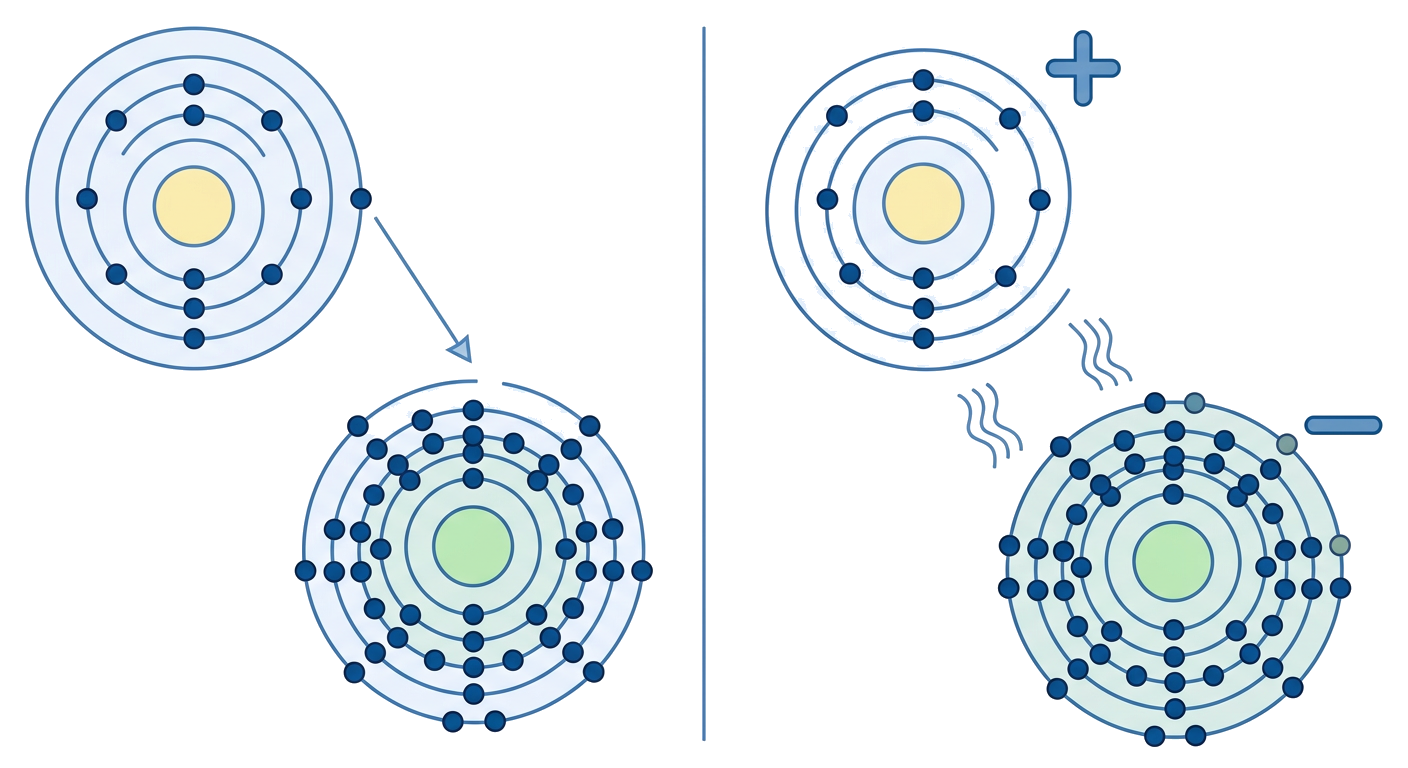
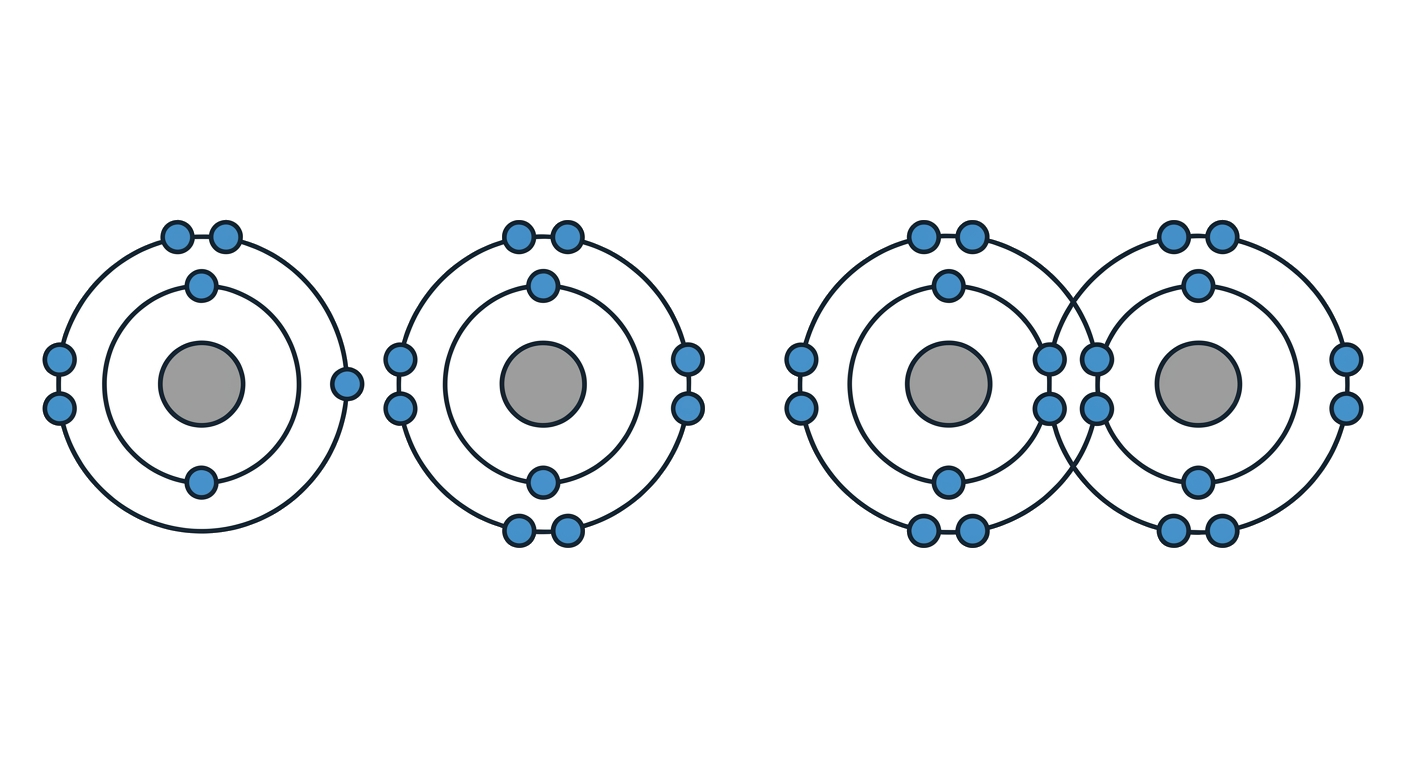
Observe the following diagrams illustrating types of chemical bonding. Label each diagram as either 'Ionic Bond' or 'Covalent Bond' and briefly describe how the electrons are involved in each type of bond.
8. Ionic compounds generally have lower melting points than covalent compounds.
True
False
9. A diatomic molecule like O2 is an example of a covalent compound.
True
False
Match each definition or example on the left with the correct term on the right.
10. Compound formed by electron transfer
a. Covalent bond
11. Sharing of electrons
b. Ionic compound
12. NaCl
c. Covalent compound
13. H2O
d. Ionic bond
Related Worksheets
pH and pOH Calculations Worksheet
A Grade 11 Chemistry worksheet focusing on pH and pOH calculations, including strong acids, bases, and ion concentrations.
Ionic Bonds Worksheet
Explore the fundamentals of ionic bonding, including electron transfer, ion formation, and properties of ionic compounds, suitable for Grade 11 Chemistry students.
Molecular Geometry Worksheet
A Grade 11 Chemistry worksheet focusing on VSEPR theory and molecular shapes, including questions on bond angles and polarity.
Lewis Structure Practice Worksheet
A Grade 11 Chemistry worksheet focusing on drawing and understanding Lewis Structures, including octet rule, formal charge, and resonance.
Molecular Structure Worksheet
A Grade 11 Science worksheet covering key concepts in molecular structure, including VSEPR theory, hybridization, and intermolecular forces.
Calorimetry Principles
This worksheet explores the fundamental principles of calorimetry, including heat transfer, specific heat capacity, and calculations related to calorimetry experiments.
Grade 11 Chemistry: Word Equations
A worksheet for Grade 11 Chemistry students focusing on writing and balancing word equations for chemical reactions.
Types of Chemical Reactions Worksheet
Explore different types of chemical reactions including synthesis, decomposition, single displacement, double displacement, and combustion with this Grade 11 chemistry worksheet.