Naming Ionic and Covalent Compounds
Grade 11 Chemistry worksheet on identifying and naming ionic and covalent compounds according to IUPAC nomenclature rules.
Includes
Standards
Topics
Naming Ionic and Covalent Compounds
Name:
Date:
Score:
Read each question carefully and provide the best answer. Remember to distinguish between ionic and covalent compounds when naming.
1. Which of the following compounds is most likely to be ionic?
CO₂
CH₄
NaCl
H₂O
2. What is the correct name for the covalent compound N₂O₄?
Dinitrogen tetroxide
Nitrogen oxide
Dinitrogen quadoxide
Nitrogen tetroxide
3. An ionic bond typically forms between a and a nonmetal.
4. The compound with the formula CaCl₂ is named .
5. In covalent naming, prefixes are used to indicate the number of of each element.
6. Briefly explain the key difference in electron behavior between ionic and covalent bonding.
Match the formula with its correct name.
7. P₄O₁₀
a. Iron(III) oxide
8. Fe₂O₃
b. Diphosphorus pentoxide
9. MgCl₂
c. Magnesium chloride
10. SO₃
d. Sulfur trioxide
11. Observe the diagrams below illustrating bond formation.
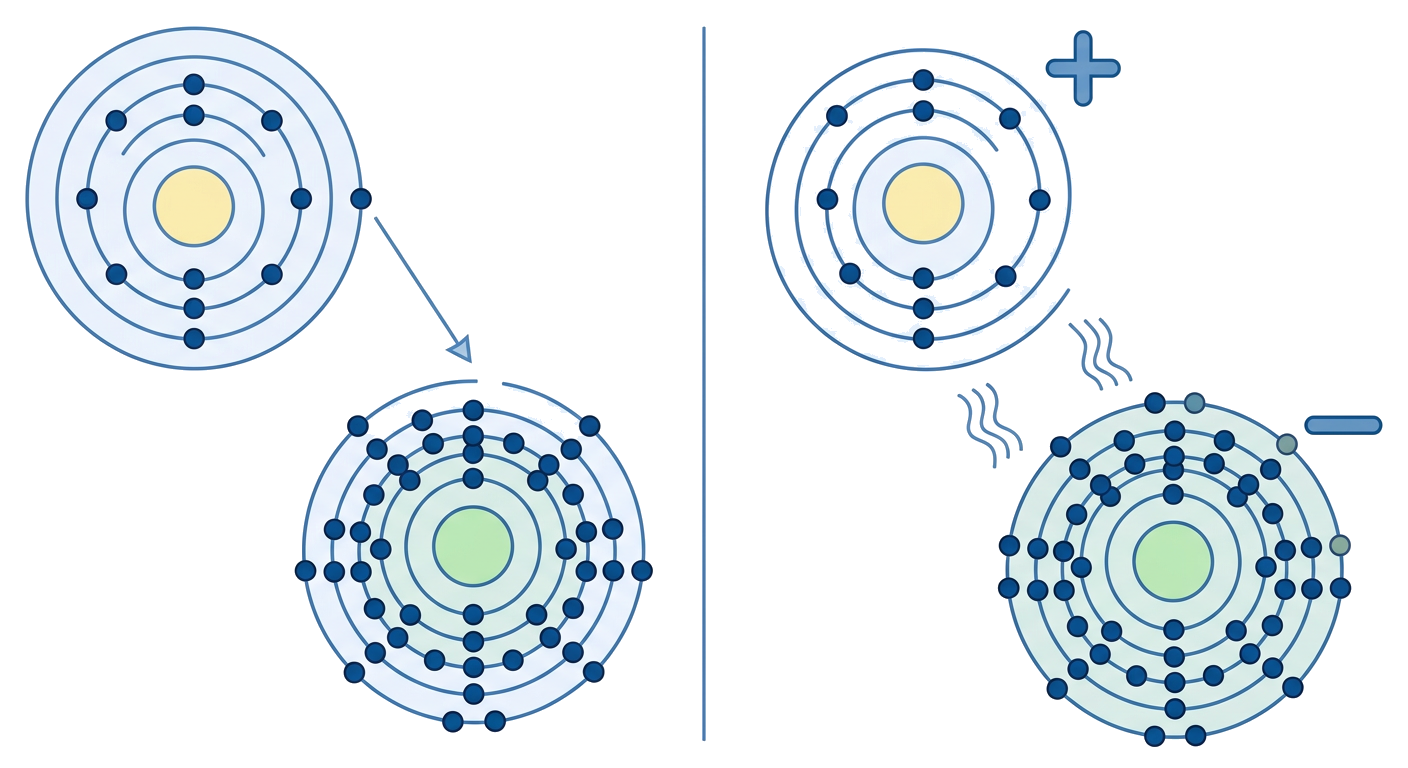
Diagram A
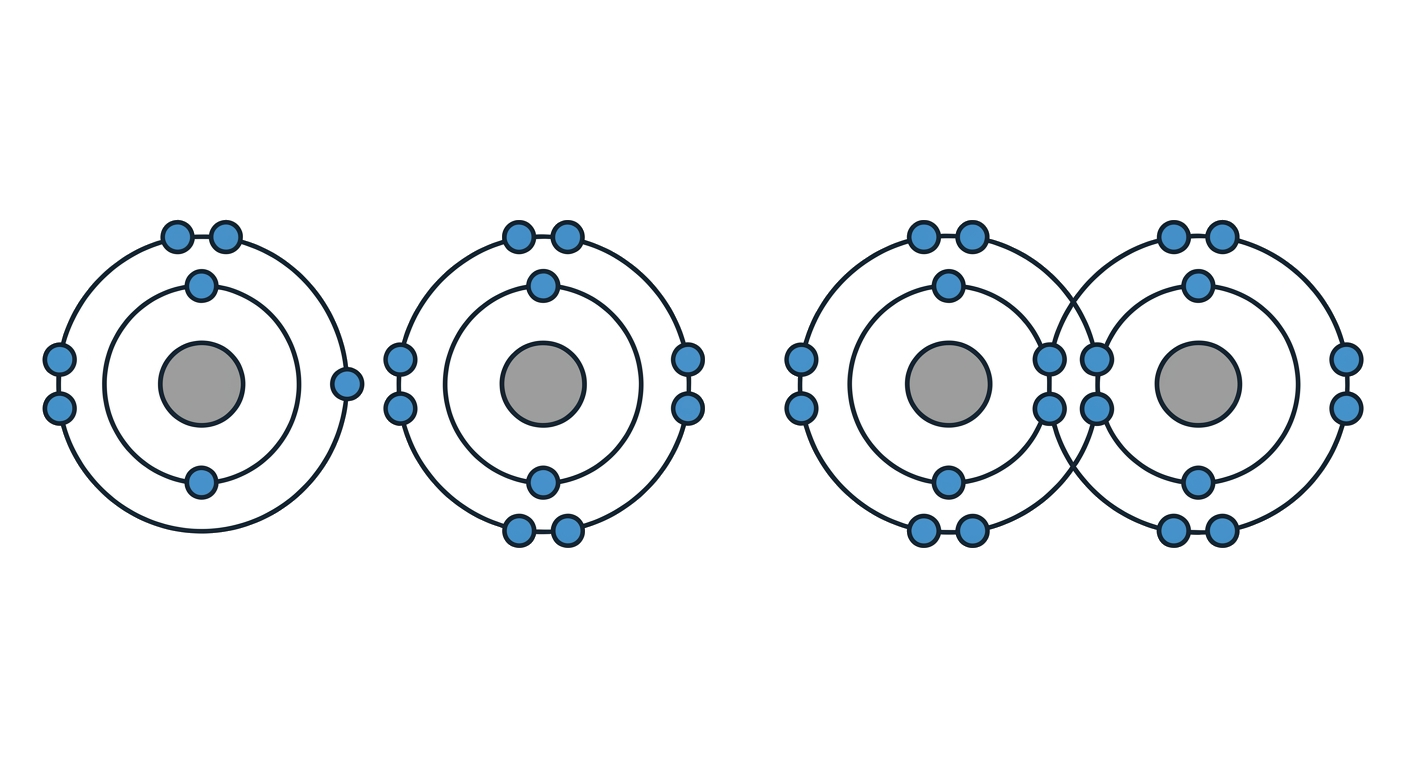
Diagram B
a. Which diagram represents the formation of an ionic bond? Explain your reasoning.
b. Which diagram represents the formation of a covalent bond? Explain your reasoning.
12. Roman numerals are used when naming ionic compounds with transition metals to indicate the charge of the anion.
True
False
13. The compound carbon tetrachloride (CCl₄) is an example of an ionic compound.
True
False
14. Provide the correct chemical formula for the following names:
a. Potassium iodide:
b. Copper(II) nitrate:
c. Sulfur hexafluoride:
d. Dinitrogen monoxide:
15. Provide the correct name for the following chemical formulas:
a. Na₃PO₄:
b. Cr₂(SO₄)₃:
c. CCl₄:
d. H₂S:
Related Worksheets
pH and pOH Calculations Worksheet
A Grade 11 Chemistry worksheet focusing on pH and pOH calculations, including strong acids, bases, and ion concentrations.
Ionic Bonds Worksheet
Explore the fundamentals of ionic bonding, including electron transfer, ion formation, and properties of ionic compounds, suitable for Grade 11 Chemistry students.
Molecular Geometry Worksheet
A Grade 11 Chemistry worksheet focusing on VSEPR theory and molecular shapes, including questions on bond angles and polarity.
Lewis Structure Practice Worksheet
A Grade 11 Chemistry worksheet focusing on drawing and understanding Lewis Structures, including octet rule, formal charge, and resonance.
Molecular Structure Worksheet
A Grade 11 Science worksheet covering key concepts in molecular structure, including VSEPR theory, hybridization, and intermolecular forces.
Calorimetry Principles
This worksheet explores the fundamental principles of calorimetry, including heat transfer, specific heat capacity, and calculations related to calorimetry experiments.
Grade 11 Chemistry: Word Equations
A worksheet for Grade 11 Chemistry students focusing on writing and balancing word equations for chemical reactions.
Types of Chemical Reactions Worksheet
Explore different types of chemical reactions including synthesis, decomposition, single displacement, double displacement, and combustion with this Grade 11 chemistry worksheet.