The Carbon Cycle Worksheet
An 11th-grade science worksheet focusing on the carbon cycle, its processes, reservoirs, and human impact.
Includes
Standards
Topics
The Carbon Cycle
Name:
Date:
Score:
Read each question carefully and provide thoughtful, detailed answers. Refer to the provided diagram where necessary.
Observe the diagram of the carbon cycle below and answer the questions that follow.
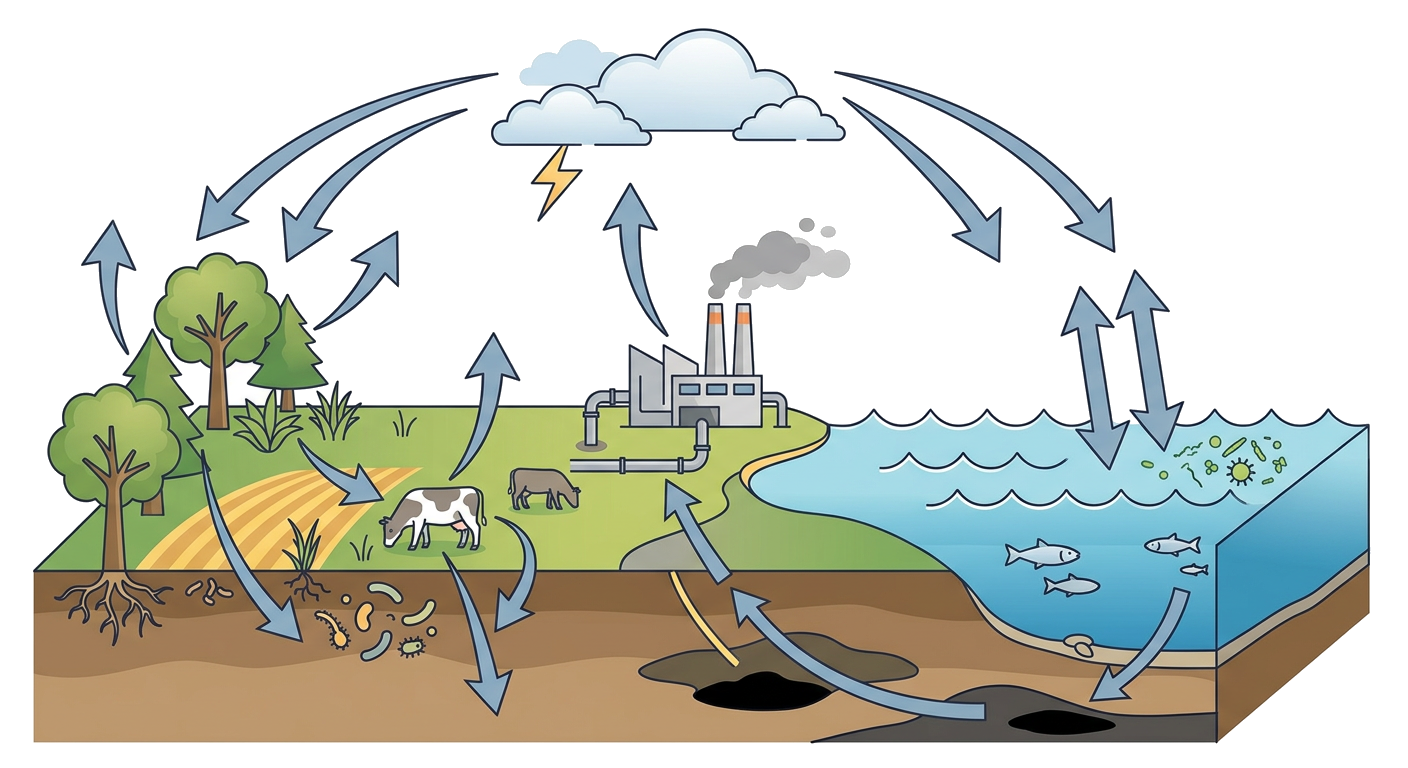
1. Identify two major reservoirs of carbon shown in the diagram.
2. Describe the process by which carbon moves from the atmosphere to terrestrial plants.
Complete the following sentences with the appropriate terms related to the carbon cycle.
1. The process of converting atmospheric carbon dioxide into organic compounds by plants is called .
2. When organisms die, decomposers break down organic matter, returning carbon to the soil and atmosphere through .
3. The burning of fossil fuels releases large amounts of into the atmosphere.
Choose the best answer for each question.
1. Which of the following is NOT a significant carbon sink?
Oceans
Forests
Atmosphere
Lithosphere
2. How do human activities primarily impact the carbon cycle?
By increasing photosynthesis
By reducing ocean absorption of CO2
By releasing stored carbon from fossil fuels
By enhancing volcanic activity
Answer the following questions in 2-3 sentences.
1. Explain the role of decomposers in the carbon cycle.
2. Describe one natural process that contributes to the release of carbon dioxide into the atmosphere.
Indicate whether each statement is True (T) or False (F).
1. The oceans are the largest active reservoir of carbon on Earth.
True
False
2. Deforestation contributes to an increase in atmospheric carbon dioxide.
True
False
Discuss the potential consequences of an imbalance in the carbon cycle, specifically addressing the impact of increased atmospheric carbon dioxide on global climate.
Related Worksheets
Convection in the Earth's Mantle
Explore the process of convection within the Earth's mantle and its role in plate tectonics. This worksheet covers key concepts, definitions, and the impact of mantle convection.
Sedimentary Rocks Worksheet
Explore the formation, characteristics, and classification of sedimentary rocks at a Grade 11 level, covering key processes and rock types.
Ocean Layers Exploration
Explore the distinct characteristics and inhabitants of the various layers of the ocean.
Continental Drift Worksheet
Explore the theory of continental drift, Pangea, and evidence supporting plate tectonics with this Grade 11 science worksheet.
Soil Horizons Exploration
This worksheet explores the different layers of soil, known as soil horizons, their characteristics, and their importance in various ecosystems.
Plate Tectonics Worksheet
An 11th-grade science worksheet covering the fundamentals of plate tectonics, including plate boundaries, geological features, and driving forces.
Plate Boundary Exploration
This worksheet explores the different types of plate boundaries, their geological features, and the processes that occur at each boundary. Suitable for Grade 11 Earth & Space Science.
Mass Extinction Events
Explore the causes, effects, and characteristics of major mass extinction events throughout Earth's history.