Pilgrimage: A Journey of Faith and Culture
Explore the historical, cultural, and spiritual significance of pilgrimages across different religions and traditions.
Includes
Standards
Topics
Pilgrimage: A Journey of Faith and Culture
Name:
Date:
Score:
Read each question carefully and provide thoughtful answers based on your understanding of pilgrimage as a social and cultural phenomenon.
Pilgrimage is a journey or search of great moral or spiritual significance. Typically, it is a journey to a shrine or other location of importance to a person's beliefs and faith, although sometimes it can be a metaphorical journey into one's own beliefs.
1. Which of the following is NOT typically considered a primary motivation for undertaking a pilgrimage?
Spiritual enlightenment
Seeking a cure for illness
Mandatory military service
Expressing devotion to a deity
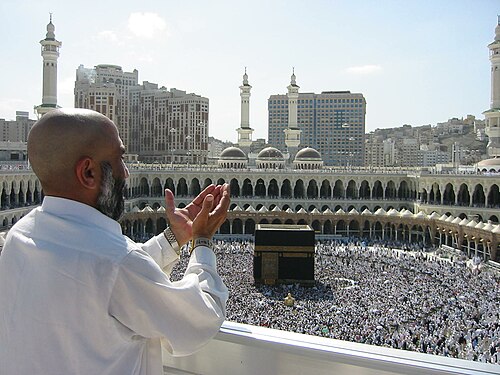
2. The Hajj is an annual Islamic pilgrimage to Mecca, Saudi Arabia. What is its significance in Islam?
It is a optional journey for wealthy Muslims.
It is one of the Five Pillars of Islam, obligatory for all able Muslims.
It is a historical reenactment of an ancient battle.
It is a secular festival celebrating cultural diversity.
3. The Camino de Santiago is a network of pilgrim routes leading to the shrine of the apostle Saint James the Great in the cathedral of Santiago de Compostela in Galicia, Spain. Which religion is primarily associated with this pilgrimage?
Buddhism
Hinduism
Christianity
Judaism
4. A journey undertaken for religious or spiritual reasons is known as a .
5. The city of Jerusalem holds significant importance for three major Abrahamic religions: , , and .
6. In Hinduism, a pilgrimage to the Ganges River is often undertaken to .
7. Describe two social or cultural impacts that a major pilgrimage route might have on the local communities it passes through.
8. Explain how the concept of 'journey' or 'transformation' is central to the experience of a pilgrim.
9. All pilgrimages require pilgrims to travel long distances on foot.
True
False
10. Pilgrimages are exclusively a practice of ancient religions and are no longer relevant in modern society.
True
False