Population Studies: Grade 11 Worksheet
An 11th-grade social studies worksheet covering key concepts in population studies, including demographic transition, population pyramids, and factors influencing population growth and distribution.
Includes
Standards
Topics
Population Studies: Grade 11
Name:
Date:
Score:
Read each question carefully and provide thoughtful answers. For multiple-choice questions, circle the best option. For short answer questions, use the lines provided.
1. Which stage of the Demographic Transition Model is characterized by high birth rates and high death rates, resulting in a relatively stable population size?
Stage 1: Low Growth
Stage 2: High Growth
Stage 3: Moderate Growth
Stage 4: Low/Negative Growth
2. What does a 'population pyramid' graphically represent?
The economic status of a country's population.
The age and sex distribution of a population.
The literacy rates across different age groups.
The migration patterns within a region.
1. The is the average number of children a woman will have during her childbearing years.
2. refers to the movement of people from one place to another with the intention of settling permanently in the new location.
3. The concept of suggests that population growth tends to outpace the growth of food supply.
1. A high dependency ratio often indicates a large proportion of the population is either too young or too old to work, placing a burden on the working-age population.
True
False
2. Anti-natalist policies are government strategies aimed at increasing the birth rate within a country.
True
False
1. Briefly explain the concept of 'carrying capacity' in relation to human populations.
2. Discuss two different factors that can influence the distribution of population across a country or region.
Analyze the map below showing global population density and answer the following questions.
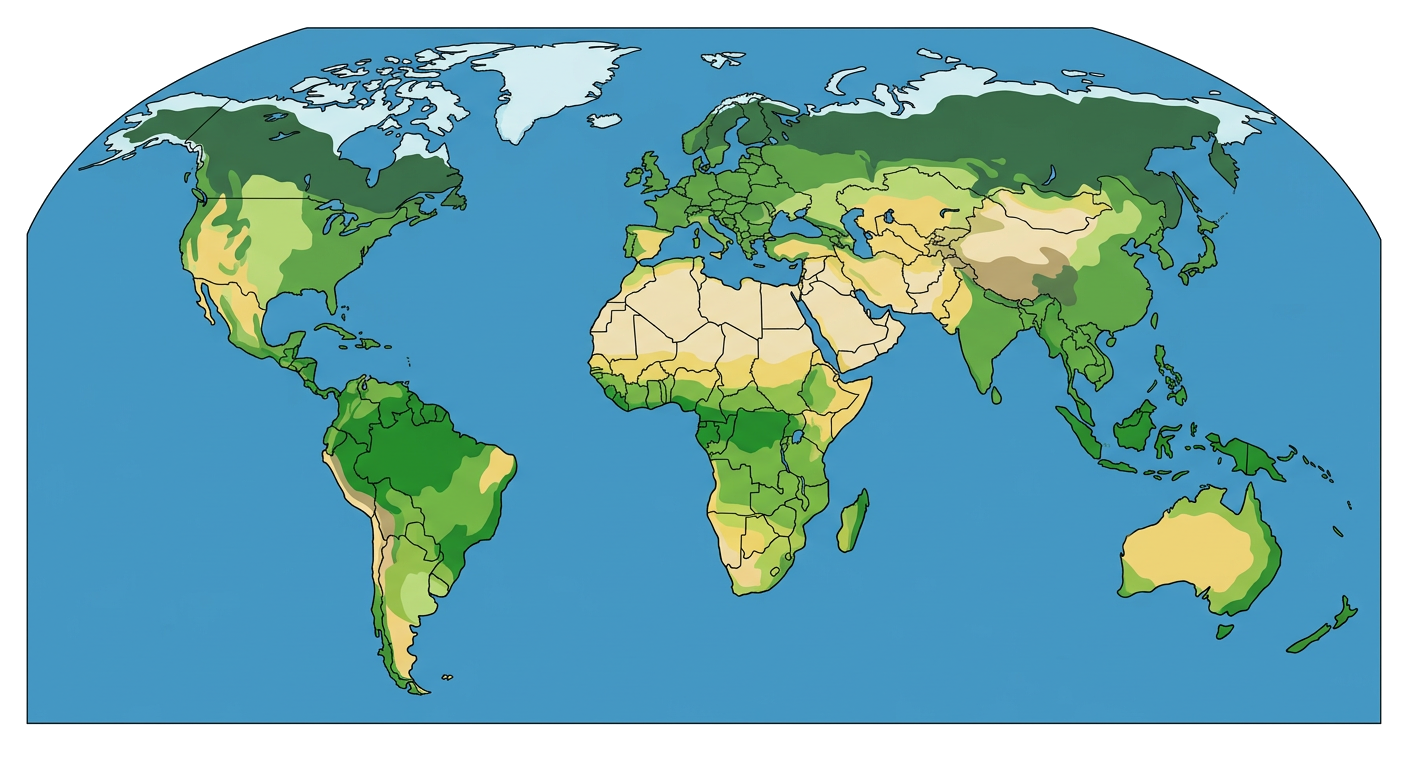
1. Identify two regions on the map that show very high population density. What might be some reasons for this high density in those areas?
2. Identify two regions on the map that show very low population density. What factors could contribute to these low densities?