Feudal Japan: Society, Culture, and Power
An 11th-grade social studies worksheet exploring the societal structure, cultural contributions, and power dynamics of Feudal Japan.
Includes
Topics
Feudal Japan: Society, Culture, and Power
Name:
Date:
Score:
Read each question carefully and provide thoughtful answers based on your knowledge of Feudal Japan. Use complete sentences and specific details where appropriate.
1. Which of the following best describes the social hierarchy of Feudal Japan?
Emperor, Shogun, Daimyo, Samurai, Peasants
Shogun, Emperor, Daimyo, Samurai, Merchants
Emperor, Daimyo, Shogun, Samurai, Artisans
Shogun, Daimyo, Emperor, Samurai, Peasants
2. The code of conduct followed by the samurai, emphasizing loyalty, honor, and martial arts, was known as:
Shintoism
Bushido
Zen Buddhism
Confucianism
1. The was the military dictator of Japan during the feudal period, holding real power while the Emperor was a symbolic figure.
2. were powerful Japanese feudal lords who ruled their domains with great autonomy and commanded armies of samurai.
3. The cultural practice of , characterized by its emphasis on simplicity and mindfulness, was influential among the samurai class.
1. Explain the role of the Emperor in Feudal Japan compared to the Shogun.
2. Describe one significant cultural contribution or development that occurred during Feudal Japan.
1. The Tokugawa Shogunate brought a long period of peace and isolation to Japan.
True
False
2. Samurai were primarily known for their artistic skills and peaceful negotiations.
True
False
Match each term on the left with its correct description on the right.
1. Shogun
a. Feudal lord who commanded a private army
2. Daimyo
b. Military dictator of Japan
3. Samurai
c. Warrior class who followed Bushido
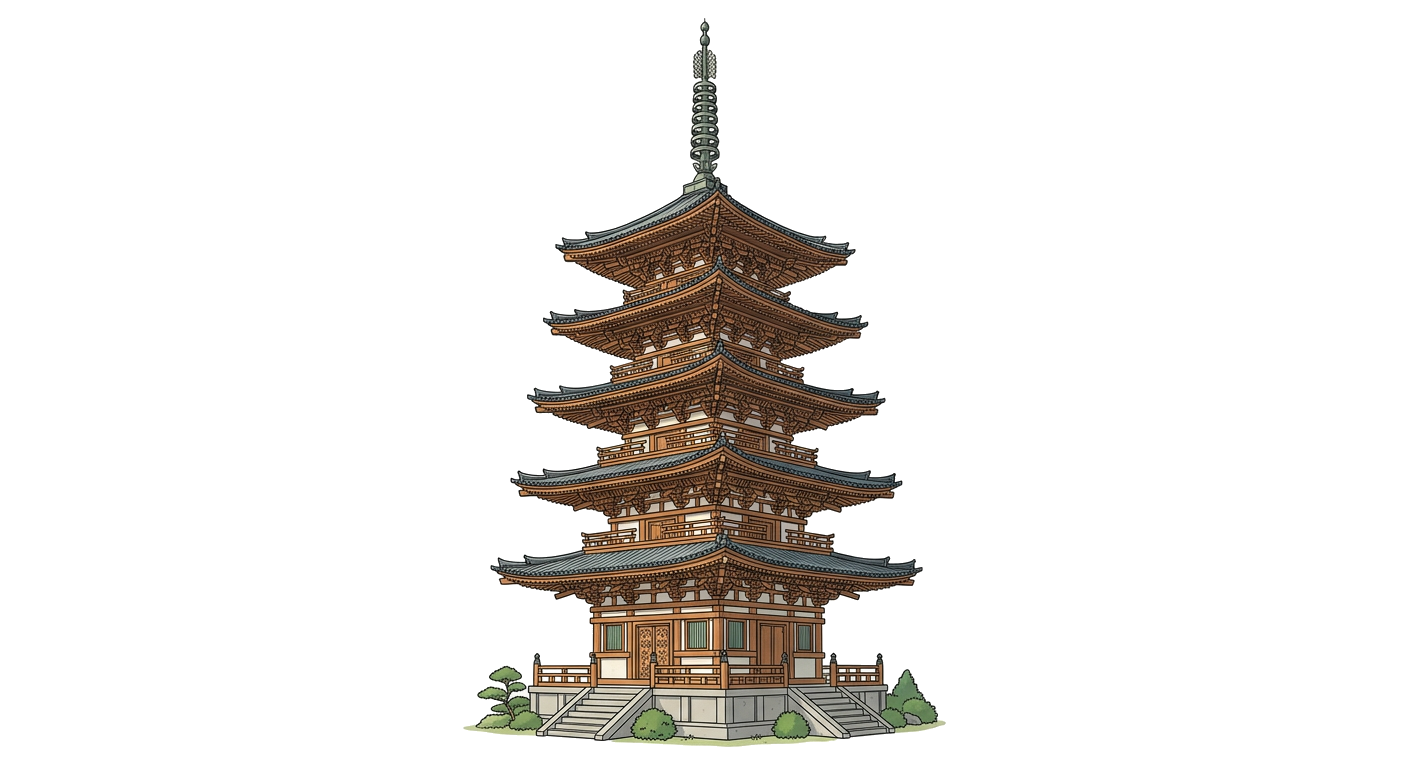
Below is an illustration of a Japanese pagoda, a common architectural feature during the feudal period, often associated with Buddhist temples and important cultural sites.