Dyslexia Intervention Strategies
This worksheet explores effective intervention strategies for dyslexia, focusing on understanding its neurological basis and practical approaches.
Includes
Standards
Topics
Dyslexia Intervention Strategies
Name:
Date:
Score:
Read the following passage and answer the questions that follow. Use complete sentences and provide thorough explanations.
Dyslexia is a specific learning disability that is neurobiological in origin. It is characterized by difficulties with accurate and/or fluent word recognition and by poor spelling and decoding abilities. These difficulties typically result from a deficit in the phonological component of language that is often unexpected in relation to other cognitive abilities and the provision of effective classroom instruction. Secondary consequences may include problems in reading comprehension and reduced reading experience that can impede growth of vocabulary and background knowledge. Effective intervention for dyslexia often involves a structured, multisensory approach to reading instruction. This typically includes explicit and systematic teaching of phonemic awareness, phonics, fluency, vocabulary, and reading comprehension strategies. Orton-Gillingham based approaches, for example, break down reading and spelling into smaller, manageable units and use visual, auditory, and kinesthetic modalities to reinforce learning. Early identification and intervention are crucial for improving outcomes for individuals with dyslexia, as the brain's plasticity is greater in younger years, making it more receptive to intervention.
1. Which of the following is a primary characteristic of dyslexia?
Difficulty with mathematical calculations
Challenges with accurate and fluent word recognition
Impaired social communication skills
Deficits in motor coordination
2. What is often considered a crucial factor for improving outcomes in individuals with dyslexia?
Exposure to a wide variety of literary genres
Early identification and intervention
Focus solely on rote memorization techniques
Limiting reading activities to avoid frustration
3. Dyslexia is neurobiological in .
4. Orton-Gillingham based approaches often utilize , , and modalities.
5. Explain how a deficit in the phonological component of language contributes to the difficulties experienced by individuals with dyslexia.
6. Describe the key components of a structured, multisensory approach to dyslexia intervention.
7. Dyslexia primarily affects an individual's intelligence.
True
False
8. The brain's plasticity is generally higher in older adults, making intervention more effective later in life.
True
False
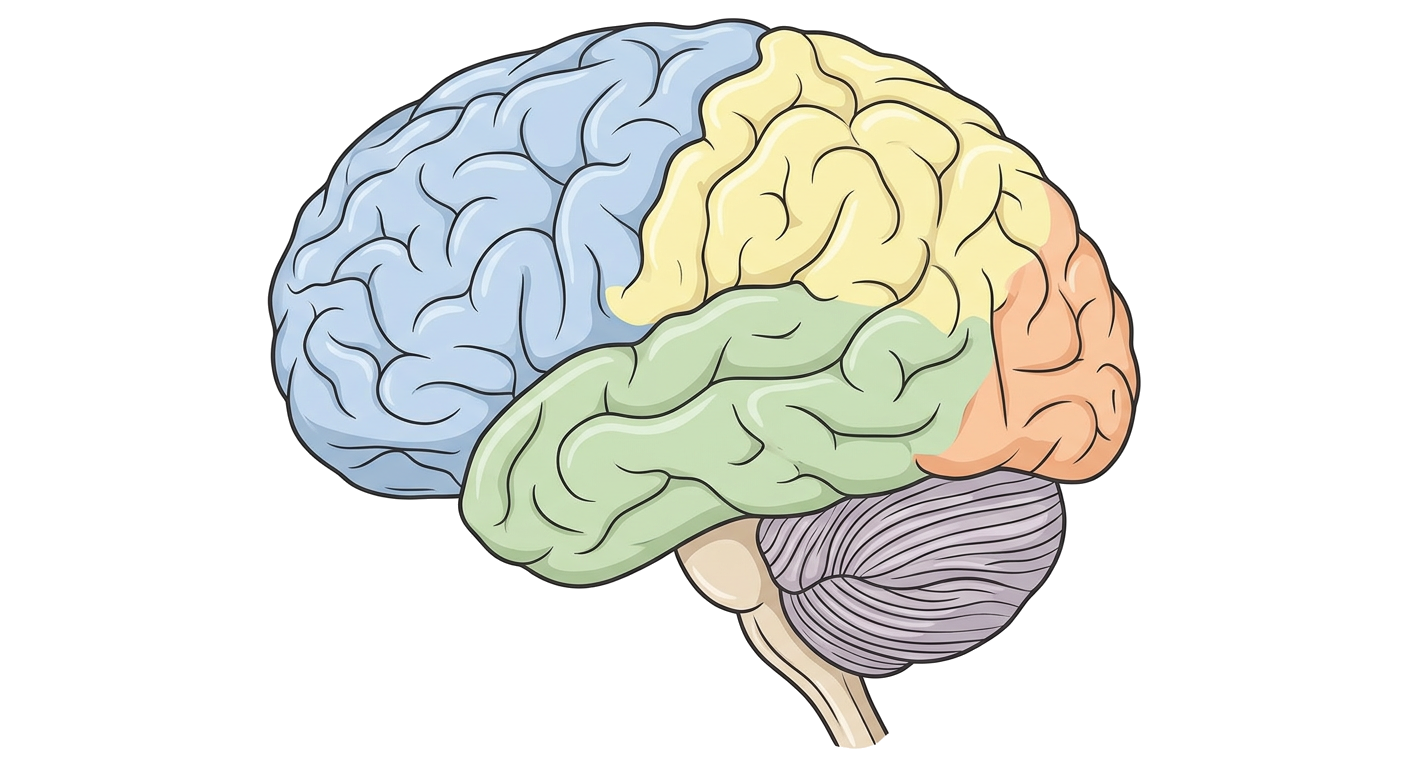
The image below illustrates the lateral view of the human brain. While dyslexia is a complex neurological condition, understanding the brain's structure can help in comprehending its impact on language processing.
9. Discuss the long-term impact of early and effective dyslexia intervention on an individual's academic, professional, and personal life. Provide specific examples to support your discussion.