Grade 12 Livestock Industry Worksheet
This worksheet covers key aspects of the livestock industry, including its economic importance, environmental impacts, and ethical considerations, suitable for Grade 12 science students.
Includes
Standards
Topics
Grade 12 Livestock Industry Assessment
Name:
Date:
Score:
Read each question carefully and provide thoughtful, detailed answers. This assessment covers various aspects of the livestock industry, including its impact on the environment, economy, and society.
1. Which of the following greenhouse gases is primarily associated with livestock digestion (enteric fermentation)?
Carbon dioxide (CO2)
Methane (CH4)
Nitrous oxide (N2O)
Chlorofluorocarbons (CFCs)
2. Which of the following is a potential positive economic impact of the livestock industry?
Increased deforestation for grazing land
Job creation in rural areas
Water pollution from animal waste
Loss of biodiversity
3. The practice of raising livestock in densely populated facilities is known as farming.
4. is a common method of livestock identification that involves applying a hot iron to the animal's hide.
5. Briefly explain two environmental impacts of large-scale livestock farming.
6. Describe one ethical concern associated with modern livestock production practices.
7. The demand for meat products is projected to decrease globally in the coming decades.
True
False
8. Sustainable livestock practices aim to reduce the environmental footprint of animal agriculture.
True
False
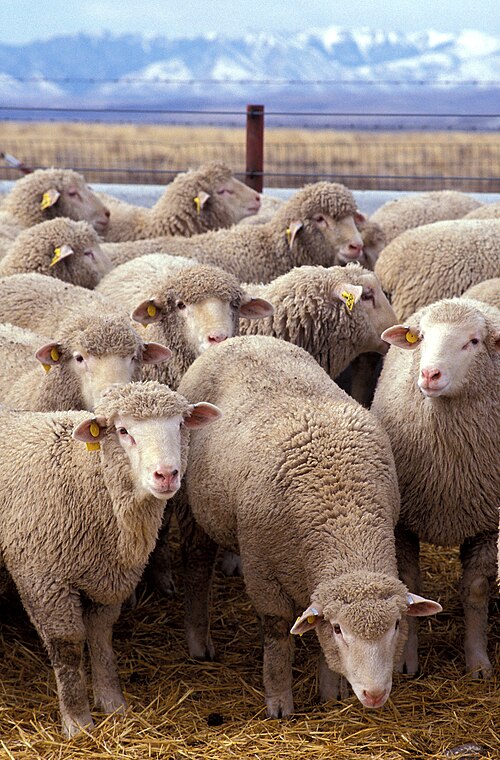
9. Based on the image above, what type of livestock operation is depicted, and what are two potential benefits of this type of farming for animal welfare or the environment?
10. Discuss the concept of 'food miles' in relation to the livestock industry. How do global supply chains for meat and dairy products contribute to or mitigate environmental impacts? Propose two strategies for reducing the environmental impact of food miles in livestock production.