Grade 12 Chemistry: Flame Test Worksheet
Explore the principles and applications of flame tests for identifying metal ions in this Grade 12 chemistry worksheet.
Includes
Topics
Grade 12 Chemistry: Flame Test Worksheet
Name:
Date:
Score:
Read each question carefully and provide detailed answers based on your understanding of flame tests and atomic emission.
1. What is the primary reason different metal ions produce distinct colors in a flame test?
Differences in their atomic mass.
Variations in their electron shell configurations, leading to different energy transitions.
The type of oxidizing agent used in the flame.
The presence of impurities in the sample.
2. Which of the following metal ions typically produces a crimson red flame?
Sodium (Na+)
Potassium (K+)
Strontium (Sr2+)
Copper (Cu2+)
3. When a metal ion is heated in a flame, its electrons absorb energy and jump to a higher energy level, becoming .
4. The unique set of wavelengths of light emitted by an excited atom is known as its spectrum.
5. Explain the role of hydrochloric acid in preparing samples for a flame test. Why is it important to clean the platinum wire between each test?
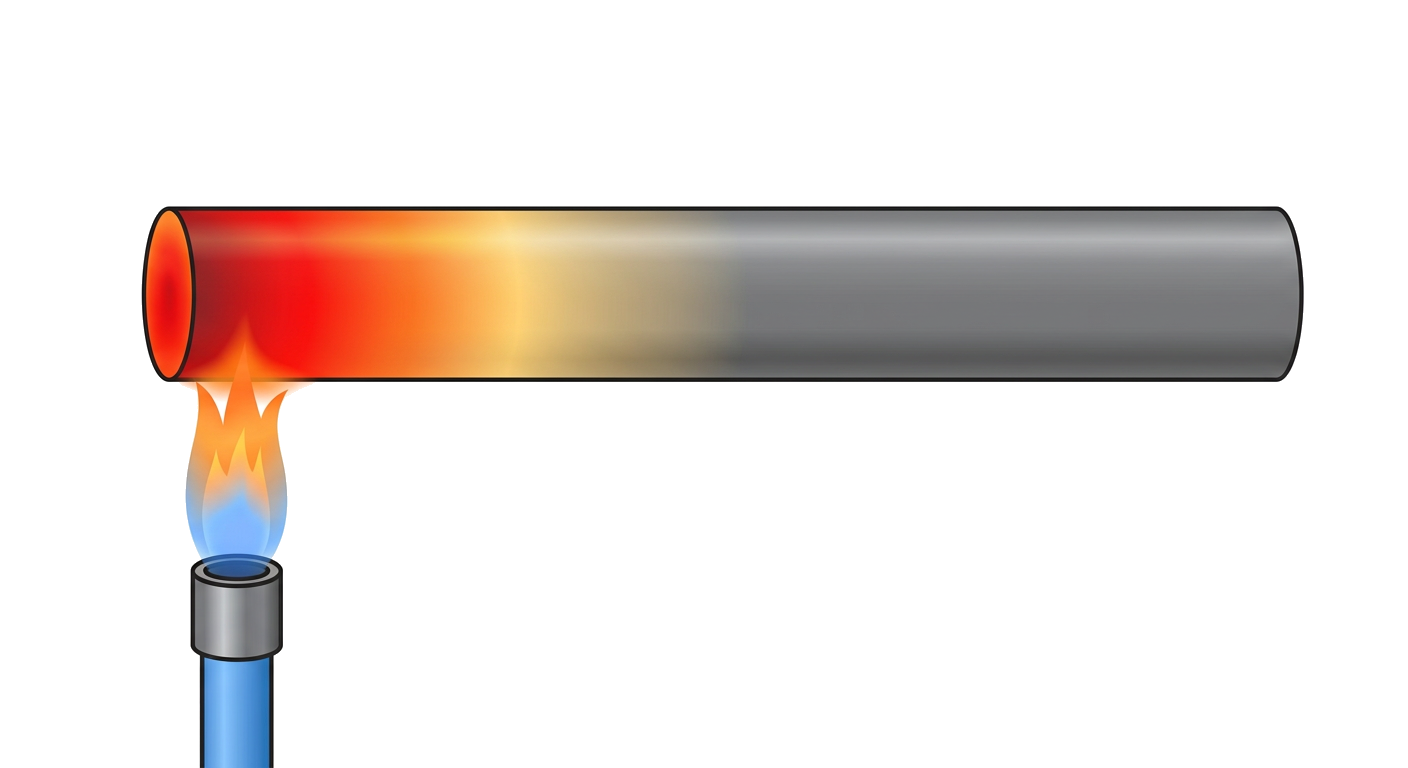
6. Describe the phenomenon of atomic emission and how it relates to the colors observed in a flame test. You may refer to the illustration below for context.
7. A flame test is a quantitative analytical method used to determine the exact concentration of a metal ion in a solution.
True
False
8. The color observed in a flame test is primarily due to the emission of light as electrons return from higher energy levels to lower energy levels.
True
False
Match the metal ion with its characteristic flame test color.
9. Lithium (Li+)
a. Yellow-orange
10. Sodium (Na+)
b. Lilac (pale purple)
11. Potassium (K+)
c. Brick red
12. Calcium (Ca2+)
d. Crimson red
13. Copper (Cu2+)
e. Blue-green
14. A chemist performs a flame test on an unknown solution and observes a persistent yellow-orange flame. What metal ion is most likely present in the solution? What precautions should the chemist take to confirm this result and avoid contamination?
Related Worksheets
Physical and Chemical Properties and Changes
Explore the fundamental concepts of physical and chemical properties and changes through various exercises for Grade 12 Chemistry.
Grade 12 Chemistry: Types of Reactions
A worksheet covering various types of chemical reactions for Grade 12 Chemistry students, including synthesis, decomposition, single displacement, double displacement, combustion, and redox reactions.