Grade 12 Chemistry: Polarity Worksheet
This worksheet covers key concepts of molecular polarity, including electronegativity, bond polarity, molecular geometry, and their impact on physical properties.
Includes
Standards
Topics
Grade 12 Chemistry: Polarity
Name:
Date:
Score:
Read each question carefully and provide your best answer. Show all work where applicable.
1. Which of the following factors primarily determines the polarity of a bond?
Atomic radius
Electronegativity difference
Ionization energy
Number of valence electrons
2. Which of the following molecules is nonpolar despite having polar bonds?
H2O
NH3
CO2
HCl
3. The unequal sharing of electrons in a covalent bond leads to a bond.
4. Molecules with a symmetrical geometry and polar bonds can still be overall.
5. Explain how molecular geometry influences the overall polarity of a molecule.
6. A molecule with a large electronegativity difference between its atoms will always be polar.
True
False
7. Water (H2O) is a polar molecule due to its bent molecular geometry and polar O-H bonds.
True
False
8. Observe the diagram of the water molecule below. Indicate the partial charges on the oxygen and hydrogen atoms, and draw an arrow representing the overall dipole moment of the molecule.
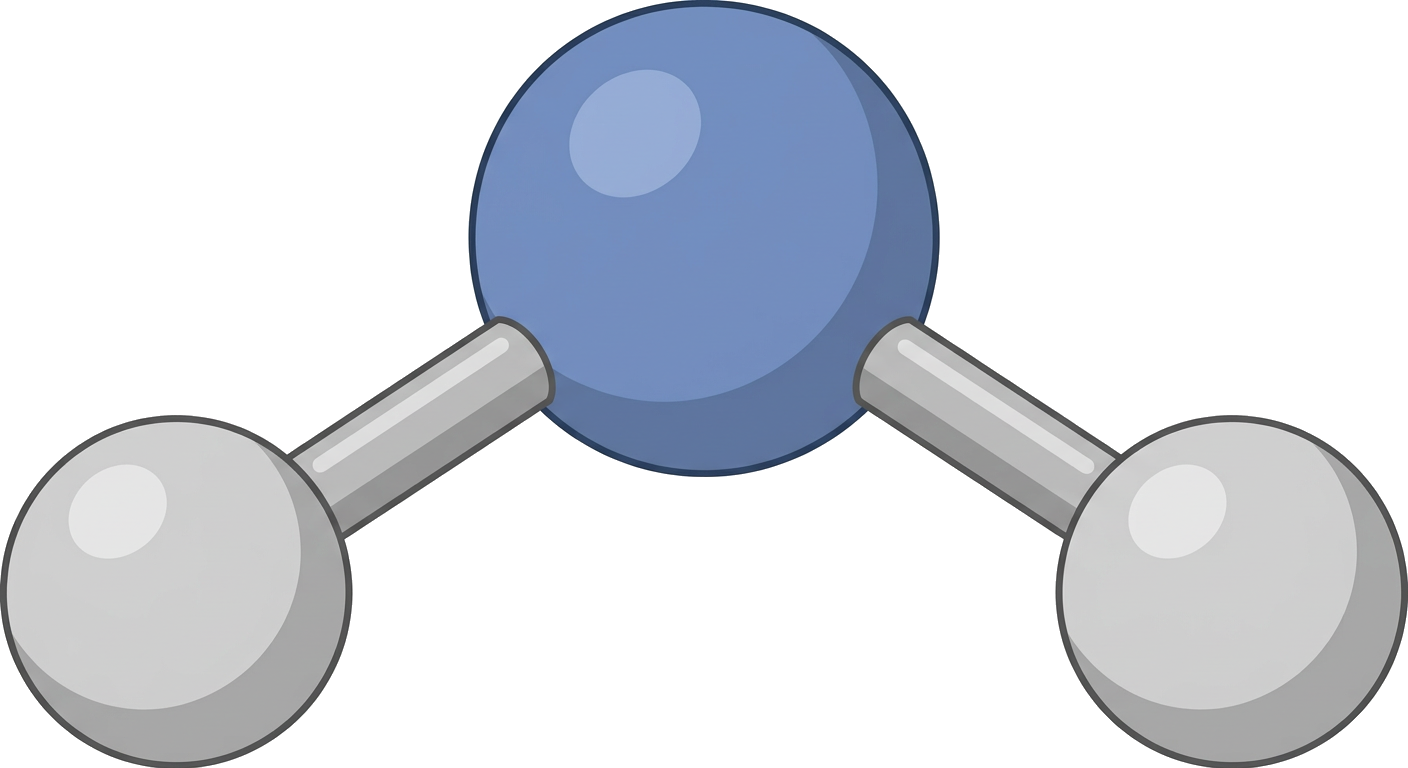
9. Discuss the concept of 'like dissolves like' in the context of molecular polarity. Provide at least two examples of how this principle is applied in everyday life or industrial processes.
Related Worksheets
Physical and Chemical Properties and Changes
Explore the fundamental concepts of physical and chemical properties and changes through various exercises for Grade 12 Chemistry.
Grade 12 Chemistry: Types of Reactions
A worksheet covering various types of chemical reactions for Grade 12 Chemistry students, including synthesis, decomposition, single displacement, double displacement, combustion, and redox reactions.