Writing Formulas for Covalent Compounds
A Grade 12 chemistry worksheet focusing on writing correct chemical formulas for covalent compounds based on their names and understanding their nomenclature.
Includes
Standards
Topics
Writing Formulas for Covalent Compounds
Name:
Date:
Score:
Read each question carefully and provide the correct chemical formula or name as required. Remember to use prefixes correctly for covalent compounds.
Covalent compounds are formed when atoms share electrons to achieve a stable electron configuration. The prefixes used in their names indicate the number of atoms of each element present in the compound. For example, 'di-' means two, 'tri-' means three, and 'tetra-' means four.
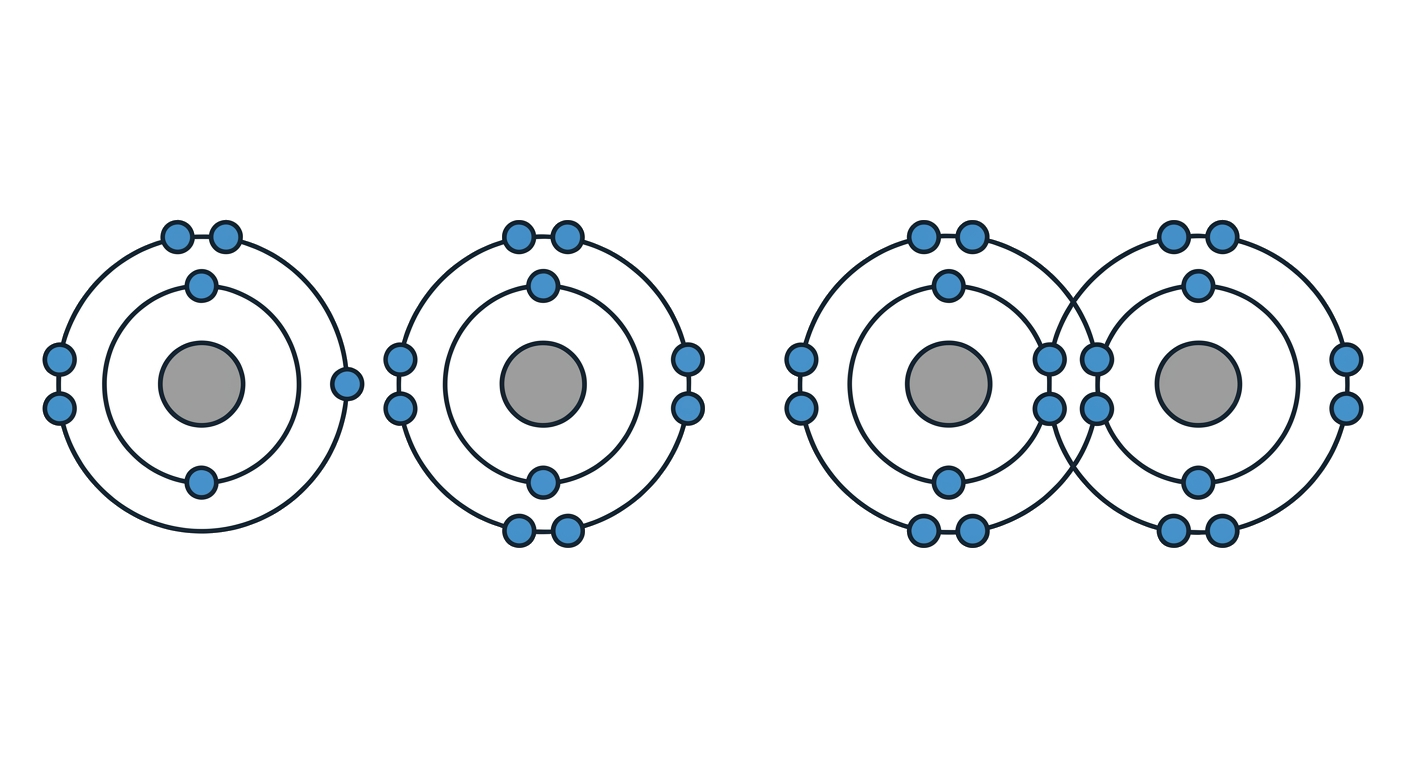
Write the chemical formula for each of the following covalent compounds:
1. Carbon dioxide:
2. Dinitrogen trioxide:
3. Sulfur hexafluoride:
4. Phosphorus pentachloride:
5. Dihydrogen monoxide:
Give the correct name for each of the following covalent compounds:
6. PCl₃
7. N₂O₄
8. SO₃
9. Cl₂O₇
10. Which of the following is the correct formula for carbon tetrachloride?
CCl₂
CCl₄
C₄Cl
C(Cl)₄
11. What is the name of the compound with the formula N₂O₅?
Nitrogen pentoxide
Dinitrogen pentoxide
Dinitrogen oxide
Nitrogen dioxide
Indicate whether each statement is True or False regarding covalent compound nomenclature.
12. The prefix 'mono-' is always used for the first element if there is only one atom of that element.
True
False
13. Covalent compounds typically involve a metal and a nonmetal.
True
False
14. Explain the difference between naming ionic compounds and covalent compounds. Provide an example for each.
Related Worksheets
Physical and Chemical Properties and Changes
Explore the fundamental concepts of physical and chemical properties and changes through various exercises for Grade 12 Chemistry.
Grade 12 Chemistry: Types of Reactions
A worksheet covering various types of chemical reactions for Grade 12 Chemistry students, including synthesis, decomposition, single displacement, double displacement, combustion, and redox reactions.