Grade 12 Earth & Space Science: Index Fossils
Explore the characteristics and applications of index fossils in geological dating and correlation for Grade 12 Earth & Space Science.
Includes
Standards
Grade 12 Earth & Space Science: Index Fossils
Name:
Date:
Score:
Read each question carefully and answer to the best of your ability. Use complete sentences for short answer questions.
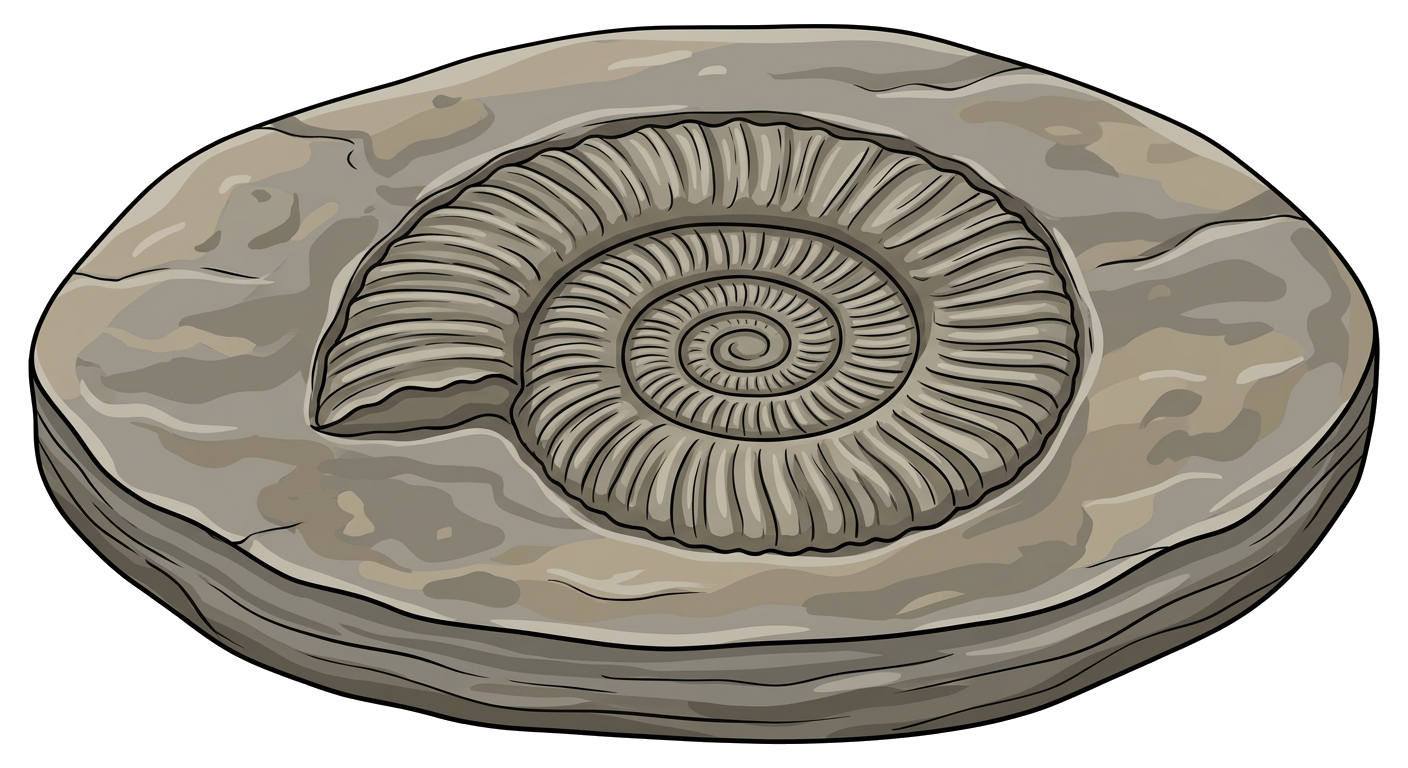
1. Which characteristic is MOST crucial for a fossil to be considered an index fossil?
Abundant in specific local areas
Having a very long geological range
Widespread geographical distribution
Found exclusively in deep-sea sediments
2. Which of the following conditions would make a fossil LEAST suitable as an index fossil?
Rapid evolutionary change
High population density
Limited geographic range
Distinctive morphological features
3. Index fossils are essential for dating, which involves ordering geological events and rock strata relative to one another.
4. The principle of states that layers of rock are deposited in a time sequence, with the oldest on the bottom and the youngest on top.
5. Explain how index fossils are used to correlate rock strata across different geographical regions.
6. Discuss the importance of a short geological range for an organism to be considered an effective index fossil.
7. An index fossil must be rare and difficult to find to be scientifically valuable.
True
False
8. The presence of an index fossil indicates a specific time period in Earth's history.
True
False
9. Observe the image below. If this fossil were found in multiple rock layers across different continents, what characteristics would make it a good index fossil?