Layers of the Earth: Grade 12 Science
This worksheet explores the composition, characteristics, and dynamic processes of Earth's internal layers, suitable for Grade 12 science students.
Includes
Standards
Topics
Layers of the Earth: Grade 12 Science
Name:
Date:
Score:
Read each question carefully and provide thoughtful, detailed answers based on your knowledge of Earth's internal structure and processes.
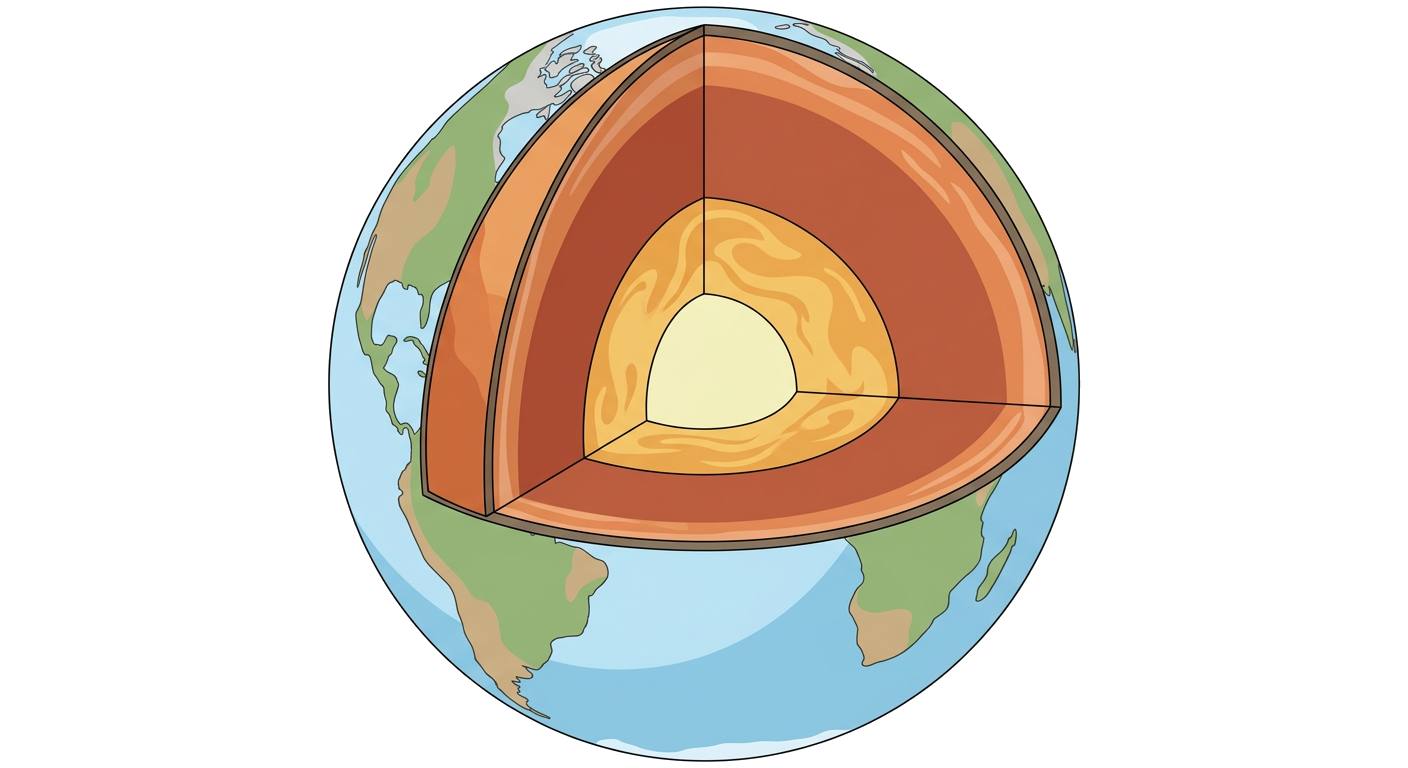
Refer to the diagram of Earth's layers below to answer the following questions:
1. Which layer of the Earth is primarily responsible for generating Earth's magnetic field?
Crust
Mantle
Outer Core
Inner Core
2. The asthenosphere is a layer within the mantle that is characterized by its:
Rigid and brittle nature
Plastic and ductile behavior
Liquid composition
Gaseous state
3. The outermost solid layer of the Earth, consisting of both continental and oceanic types, is known as the .
4. Convection currents within the are believed to be the driving force behind plate tectonics.
5. The discontinuity that separates the Earth's crust from the mantle is called the .
6. Describe the primary differences in composition and physical state between the Earth's outer core and inner core.
7. Explain how seismic waves are used by scientists to infer the internal structure and properties of Earth's layers.
8. The Earth's mantle is entirely molten.
True
False
9. Continental crust is generally denser and thinner than oceanic crust.
True
False
Match each term on the left with its correct description on the right.
10. Lithosphere
a. The solid, innermost layer of Earth
11. Asthenosphere
b. The rigid outer part of the Earth, consisting of the crust and upper mantle
12. Outer Core
c. The liquid layer of Earth's core that generates the magnetic field
13. Inner Core
d. The ductile, semi-fluid layer of the upper mantle