Cerebrospinal Fluid: Structure and Function
A Grade 12 science worksheet focusing on the composition, circulation, and functions of cerebrospinal fluid in the human body.
Includes
Standards
Topics
Cerebrospinal Fluid: Structure and Function
Name:
Date:
Score:
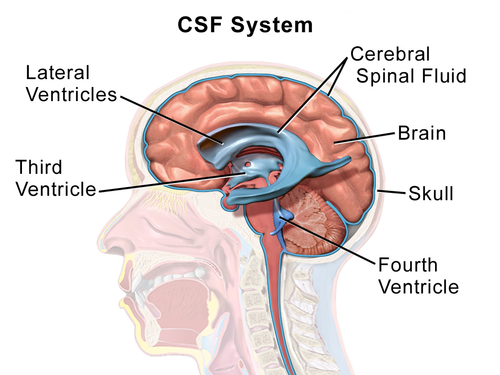
Read each question carefully and provide detailed answers. Refer to the diagram provided when necessary.
Cerebrospinal fluid (CSF) is a clear, colorless body fluid found in the brain and spinal cord. It plays a crucial role in protecting the central nervous system.
1. Label the major components of the cerebrospinal fluid system shown in the diagram.
1. Which of the following structures is primarily responsible for producing cerebrospinal fluid?
Arachnoid villi
Choroid plexus
Pia mater
Dura mater
2. The main function of cerebrospinal fluid is to:
Transport oxygen to brain cells
Provide structural support to the skull
Cushion the brain and spinal cord
Regulate body temperature
1. Cerebrospinal fluid circulates through the and the of the brain and spinal cord.
2. The reabsorption of CSF into the bloodstream occurs primarily through the .
3. CSF is similar in composition to , but with much lower protein content.
1. Describe the pathway of cerebrospinal fluid circulation, starting from its production to its reabsorption.
2. Explain two important functions of cerebrospinal fluid for the central nervous system.
1. The blood-brain barrier is permeable to all components of cerebrospinal fluid.
True
False
2. Hydrocephalus is a condition characterized by excessive accumulation of CSF in the brain.
True
False