Early Rebellions in Colonial America
Explore the causes, events, and significance of early rebellions in colonial America, including Bacon's Rebellion and the Pueblo Revolt.
Includes
Standards
Topics
Early Rebellions in Colonial America
Name:
Date:
Score:
Read each question carefully and answer to the best of your ability. Use complete sentences for short answer questions.
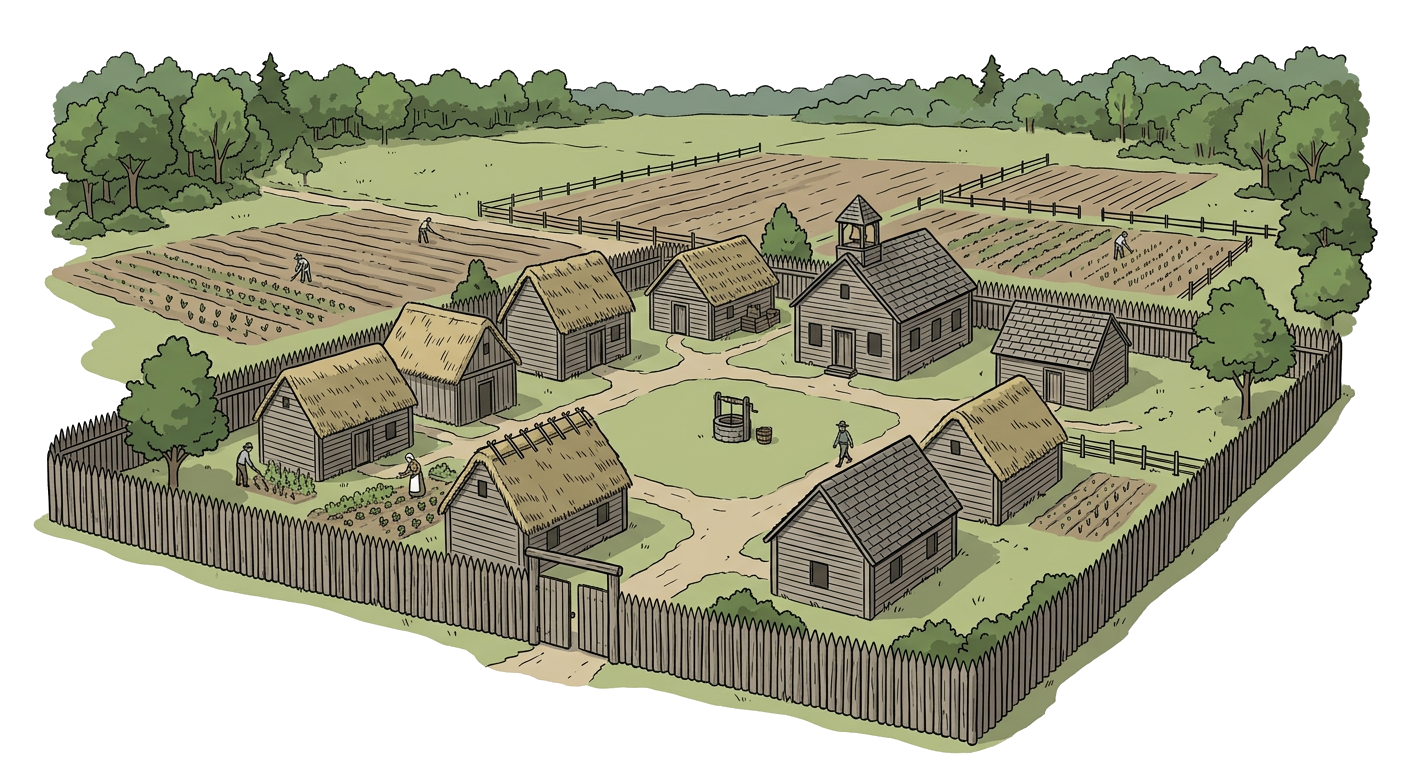
Before widespread calls for independence, colonial America experienced several significant uprisings. These early rebellions often stemmed from tensions between colonists and colonial authorities, conflicts with Native American populations, or socio-economic disparities. Two notable examples are Bacon's Rebellion and the Pueblo Revolt.
1. What was a primary cause of Bacon's Rebellion in 1676?
The British government imposing new taxes on colonial goods.
Disputes over land and protection from Native American attacks.
The desire for religious freedom among Puritan settlers.
The establishment of new trade routes with European powers.
2. The Pueblo Revolt of 1680 primarily targeted which European power?
The English
The French
The Spanish
The Dutch
3. Nathaniel Bacon led a rebellion in the colony of against Governor William Berkeley's policies.
4. The Pueblo Revolt was led by a Pueblo spiritual leader named .
5. Bacon's Rebellion ultimately resulted in a permanent shift of power from the elite planters to the common farmers in Virginia.
True
False
6. The Pueblo Revolt successfully expelled the Spanish from New Mexico for over a decade.
True
False
7. Discuss the long-term impact of Bacon's Rebellion on the institution of slavery in Virginia.
8. Explain how the Pueblo Revolt demonstrated the resilience and cultural preservation efforts of Native American communities against European colonization.
Match the rebellion with its primary cause.
9. Bacon's Rebellion
a. Religious oppression and forced labor
10. Pueblo Revolt
b. Frontier grievances and lack of protection
Related Worksheets
The Emancipation Proclamation: A Turning Point
This worksheet explores the historical context, content, and impact of the Emancipation Proclamation, a pivotal document in U.S. history.
The Roaring Twenties: A Deep Dive
This worksheet explores the social, economic, and political transformations of the Roaring Twenties in the United States, suitable for Grade 12 Social Studies.
The Progressive Era: Reforms and Impact
Explore the key reforms, figures, and lasting impact of the Progressive Era in U.S. History through a variety of question types.
Impeachment Process in the U.S. Government
Explore the impeachment process for high school students, covering its historical context, constitutional basis, and practical application in U.S. government.
Alphabet Agencies of the New Deal
Explore the key Alphabet Agencies created during Franklin D. Roosevelt's New Deal, their purposes, and their impact on American society and government.