The Scientific Revolution: A New Worldview
Explore the key figures, ideas, and impact of the Scientific Revolution on society and thought.
Includes
Topics
The Scientific Revolution: A New Worldview
Name:
Date:
Score:
Read each question carefully and provide thoughtful answers based on your knowledge of the Scientific Revolution. Some questions may require critical thinking and analysis.
1. Which of the following best describes the Scientific Revolution?
A period of political upheaval and social unrest.
A shift from an Earth-centered to a sun-centered model of the universe.
The transition from traditional beliefs to new ways of thinking about the natural world based on observation and experimentation.
A religious movement that challenged the authority of the Catholic Church.
2. Nicolaus Copernicus's heliocentric model proposed that:
The Earth is the center of the universe.
The sun is the center of the universe, and the Earth revolves around it.
Planets move in elliptical orbits.
Gravity is the force that holds the planets in orbit.
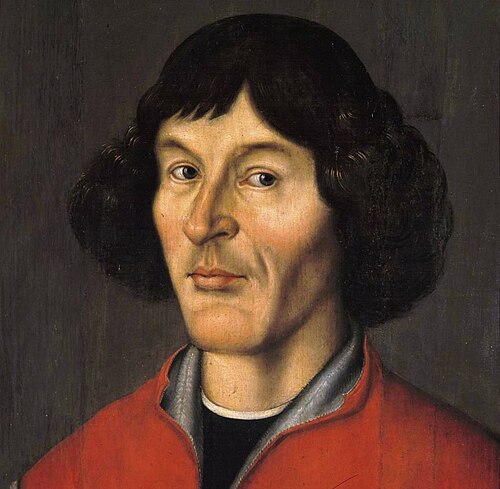
3. Who was Nicolaus Copernicus and what was his most significant contribution to the Scientific Revolution?

4. How did Galileo Galilei's observations with the telescope challenge existing beliefs about the cosmos?
5. Isaac Newton developed the laws of and , which explained the motion of objects on Earth and in space.
6. The Scientific Method emphasizes , , and to acquire knowledge.
7. The Scientific Revolution had no lasting impact on religious institutions.
True
False
8. Francis Bacon was a strong advocate for the use of inductive reasoning in scientific inquiry.
True
False

9. Discuss the long-term impact of Isaac Newton's work on scientific thought and the Enlightenment.
10. In what ways did the Scientific Revolution challenge traditional sources of authority, such as the Church and ancient philosophers?