Andrew Jackson Era Worksheet
Explore the presidency of Andrew Jackson, focusing on key policies, controversies, and their impact on American society and politics.
Includes
Standards
Topics
Andrew Jackson Era: Policies and Impact
Name:
Date:
Score:
Read each question carefully and answer to the best of your knowledge. Provide detailed explanations where requested.
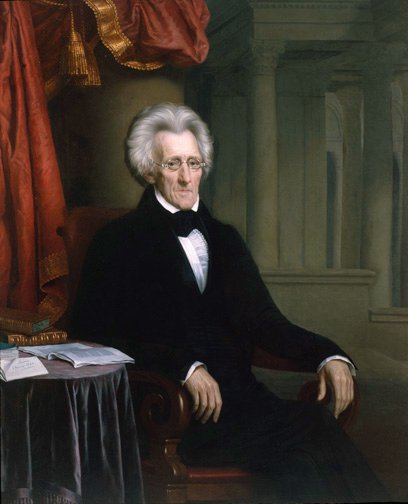
Andrew Jackson, the seventh President of the United States, served from 1829 to 1837. His presidency was marked by significant political and social changes, often referred to as the 'Age of Jackson' or 'Jacksonian Democracy.' Key policies and controversies during his tenure included the Indian Removal Act, the Nullification Crisis, and the Bank War.
1. Which of the following was a primary characteristic of 'Jacksonian Democracy'?
Increased power of the federal government over states.
Expansion of suffrage to all adult citizens, regardless of race or gender.
Emphasis on the common man and increased voter participation for white males.
A focus on industrial growth and urban development.
2. The Indian Removal Act of 1830 led to which significant event?
The establishment of permanent Native American reservations in the East.
The forced relocation of Native American tribes, known as the Trail of Tears.
Negotiations leading to peaceful coexistence with Native American nations.
The assimilation of Native Americans into white American society.
1. Andrew Jackson supported the Second Bank of the United States because he believed it stabilized the national economy.
True
False
2. The Nullification Crisis primarily involved a dispute over states' rights and tariffs.
True
False
1. Andrew Jackson's informal group of advisors was known as the .
2. The Supreme Court case of (1832) ruled that Georgia could not impose its laws on Cherokee lands, a decision Jackson notably defied.
1. Explain the concept of 'spoils system' and how it was applied during Jackson's presidency.
2. Discuss the reasons behind Andrew Jackson's opposition to the Second Bank of the United States.
Match each term with its correct description.
1. Nullification Crisis
a. The forced relocation of Native American tribes.
2. Trail of Tears
b. Dispute over tariffs and states' rights to declare federal laws unconstitutional.
3. Specie Circular
c. Required payment for government land in gold or silver.
Related Worksheets
The Emancipation Proclamation: A Turning Point
This worksheet explores the historical context, content, and impact of the Emancipation Proclamation, a pivotal document in U.S. history.
The Roaring Twenties: A Deep Dive
This worksheet explores the social, economic, and political transformations of the Roaring Twenties in the United States, suitable for Grade 12 Social Studies.
The Progressive Era: Reforms and Impact
Explore the key reforms, figures, and lasting impact of the Progressive Era in U.S. History through a variety of question types.
Impeachment Process in the U.S. Government
Explore the impeachment process for high school students, covering its historical context, constitutional basis, and practical application in U.S. government.
Alphabet Agencies of the New Deal
Explore the key Alphabet Agencies created during Franklin D. Roosevelt's New Deal, their purposes, and their impact on American society and government.