Water Distribution Worksheet
A Grade 2 science worksheet on water distribution, exploring where water is found on Earth and its different forms.
Includes
Standards
Topics
Water Distribution Worksheet
Name:
Date:
Score:
Read each question carefully and answer to the best of your ability.
1. Most of the Earth's surface is covered by:
Land
Water
Trees
Buildings
2. Where can you find most of the Earth's salt water?
Lakes and Rivers
Oceans
Underground
Glaciers
3. Most of the Earth's fresh water is frozen in and ice caps.
4. Rain and snow are forms of .
5. You can drink salt water directly from the ocean.
True
False
6. Rivers and lakes contain fresh water.
True
False
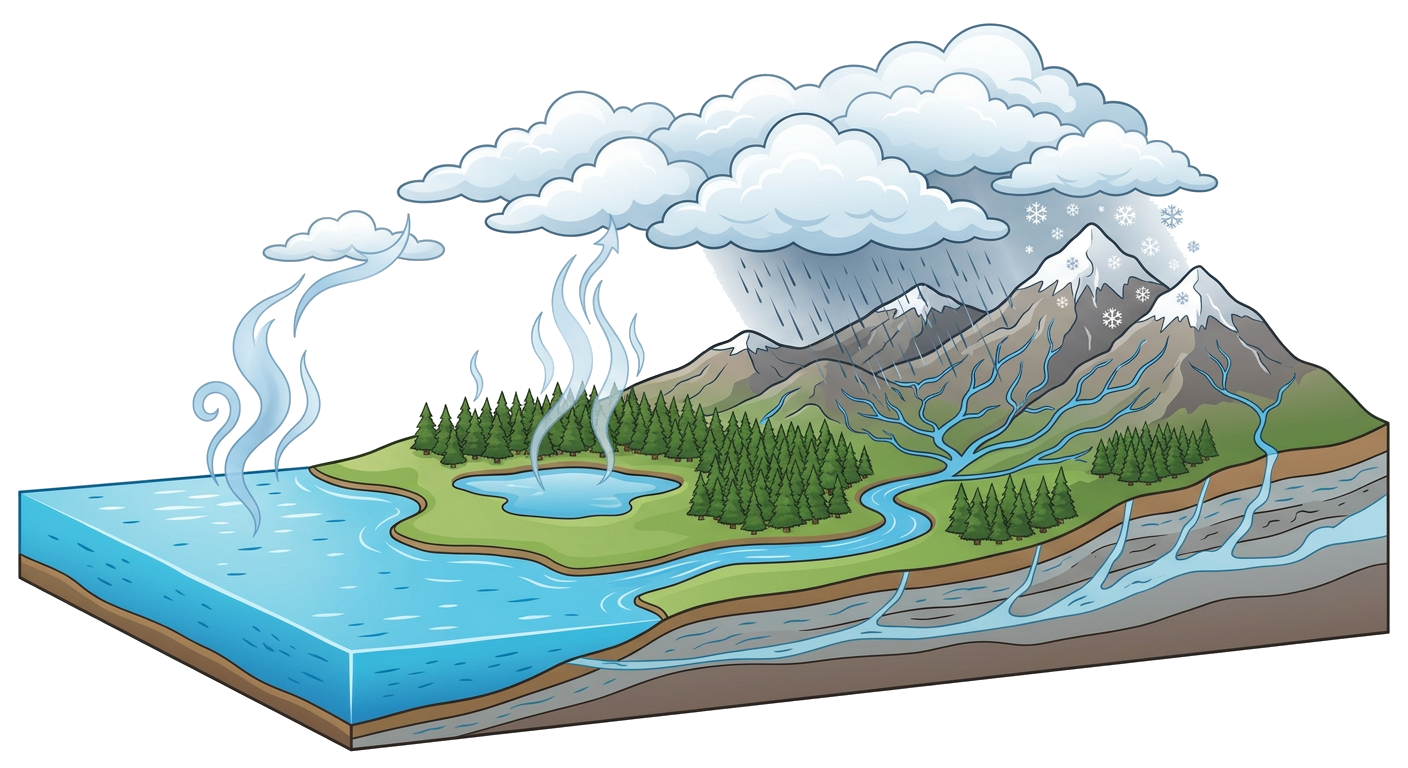
7. Look at the image below. What is happening to the water in the sky?
Use the words below to complete the sentences.
8. Most of the Earth's salt water is in the .
9. Fresh water can be found in lakes and .
10. Frozen fresh water is stored in .
Related Worksheets
Rocks and Minerals Exploration
A Grade 2 science worksheet to introduce students to different types of rocks and minerals and their properties.
Earth in Space
A Grade 2 science worksheet exploring basic concepts about Earth, the Sun, Moon, and stars.
Deposition: Earth's Building Blocks
A Grade 2 science worksheet exploring the concept of deposition, where earth materials are laid down to form new landforms.