Bee Life Cycle Worksheet
Explore the fascinating life cycle of a bee with this interactive worksheet for Grade 2 students. Learn about the different stages from egg to adult bee.
Includes
Standards
Topics
Bee Life Cycle
Name:
Date:
Score:
Read each question carefully and answer to the best of your ability. Good luck!
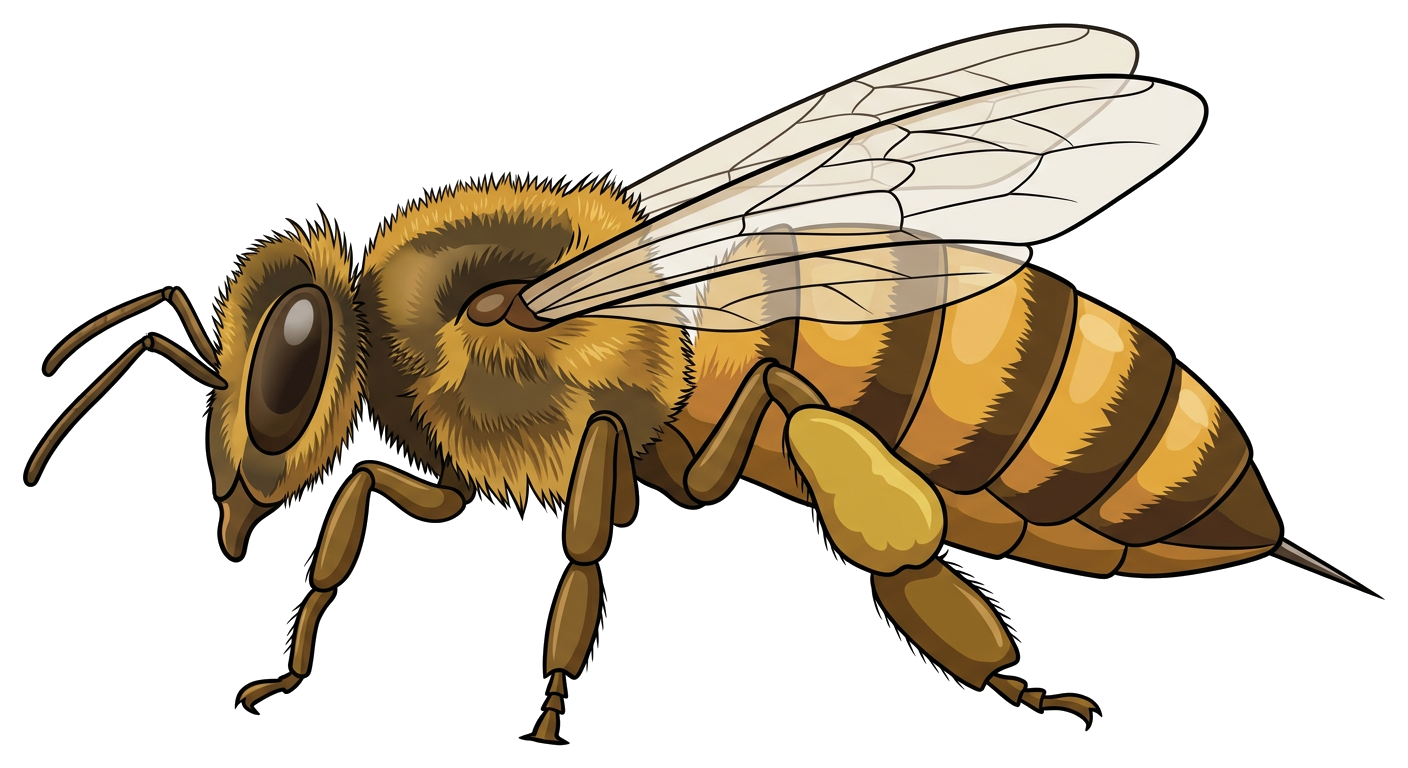
A bee goes through different stages as it grows. This is called a life cycle. Let's learn about the amazing journey of a bee!
1. A bee starts its life as a tiny .
2. After the egg, it turns into a that eats a lot.
3. The next stage is the , where it rests and changes.
4. Finally, it becomes an adult .
Number the stages of the bee life cycle in the correct order from 1 to 4.
Adult Bee
Larva
Pupa
Egg
1. What does a bee larva do most of the time?
Fly around
Eat and grow
Lay eggs
Sleep
2. What is the resting stage of the bee life cycle called?
Egg
Larva
Pupa
Adult
1. Name two things an adult bee does.
1. All bees lay eggs.
True
False
Related Worksheets
Nocturnal Animals Worksheet
Explore the fascinating world of nocturnal animals with this Grade 2 science worksheet. Learn about animals that are active at night and their unique adaptations.
Chicken Life Cycle Worksheet
Explore the fascinating life cycle of a chicken with this engaging worksheet for Grade 2 students. Learn about eggs, chicks, and adult chickens.
All About Penguins!
A second-grade science worksheet to learn about penguins, their habitats, and characteristics.