Grade 3 Skeleton Worksheet
A science worksheet for Grade 3 students to learn about the human skeleton, its parts, and functions.
Includes
Standards
Topics
Our Amazing Skeleton!
Name:
Date:
Score:
Read each question carefully and answer to the best of your ability. Good luck!
1. What is the main job of your skeleton?
To help you breathe
To pump blood
To give your body shape and support
To digest food
2. Which part of the skeleton protects your brain?
Rib cage
Spine
Skull
Leg bones
3. Your skeleton is made up of many different .
4. The longest bone in your body is the , found in your leg.
5. Bones meet at joints, which allow your body to .
6. Babies have fewer bones than adults.
True
False
7. The rib cage protects your heart and lungs.
True
False
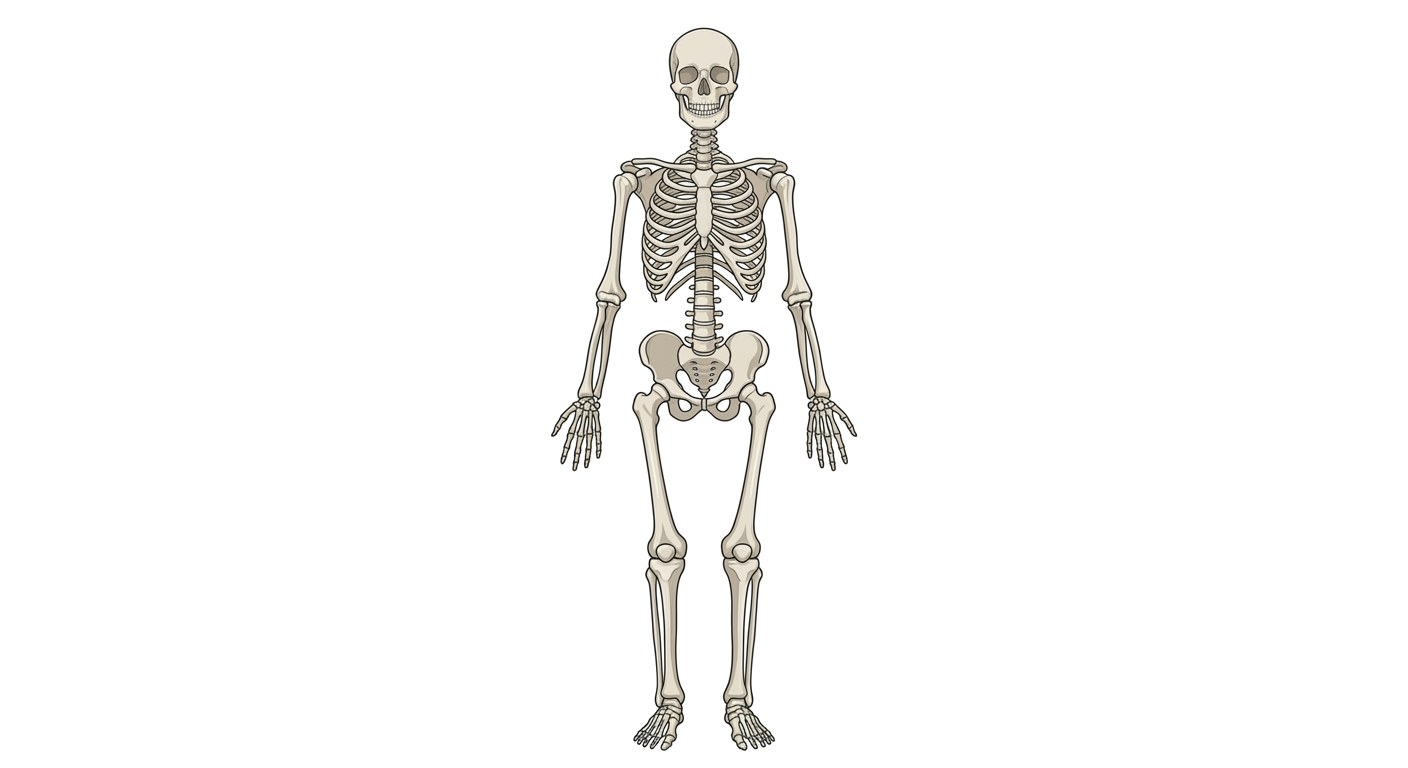
8. Look at the image below. What is this a picture of?
9. Name two things your skeleton helps you do.
Related Worksheets
Animal Adaptations Worksheet
Explore how animals adapt to their environments with this Grade 3 science worksheet.
Prokaryotes and Eukaryotes Worksheet
Explore the basic differences between prokaryotic and eukaryotic cells with this engaging science worksheet for 3rd graders.
Monocots and Dicots Worksheet
Explore the fascinating world of plants with this worksheet on monocots and dicots, designed for third graders. Learn about their differences in leaves, flowers, and roots.
Exploring Nekton
A worksheet for Grade 3 students to learn about nekton, including characteristics and examples of nektonic animals.
Plant Cell Labeling Worksheet
A Grade 3 science worksheet focusing on identifying and labeling the main structures of a plant cell.
Plant Parts and Their Functions
A Grade 3 science worksheet focusing on identifying and understanding the functions of different plant parts.
Unlocking Words: Prefixes and Suffixes
Explore the fascinating world of prefixes and suffixes to understand how they change word meanings, designed for Grade 3 science.
Asexual Reproduction Basics
Explore the basics of asexual reproduction in grade 3 science, learning about how some plants and animals make copies of themselves.