Earth's Layers Labeling Worksheet
A third-grade science worksheet to help students identify and label the different layers of the Earth, including the crust, mantle, outer core, and inner core.
Includes
Standards
Topics
Earth's Layers Labeling Worksheet
Name:
Date:
Score:
Read each question carefully and fill in the blanks or choose the best answer. Good luck!
Use the words below to help you label the diagram of the Earth.
1. Label the different layers of the Earth in the diagram below.
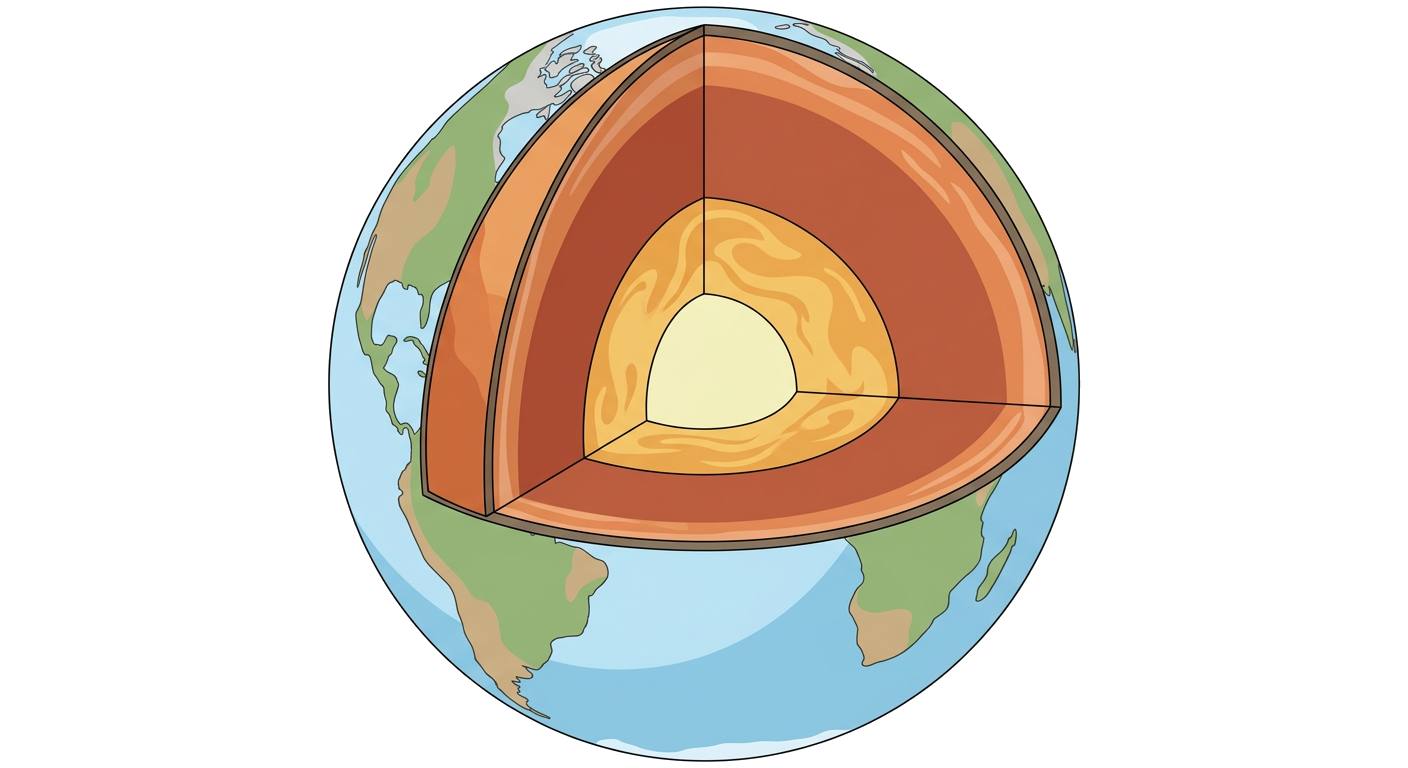
Layer A:
Layer B:
Layer C:
Layer D:
2. Complete the sentences using the words from the word bank.
a. The outermost layer of the Earth is called the .
b. The thickest layer of the Earth, located below the crust, is the .
c. The liquid layer of the Earth that surrounds the inner core is the .
d. The solid, hottest, and innermost layer of the Earth is the .
3. Which layer of the Earth is where we live?
Mantle
Crust
Outer Core
Inner Core
4. Which layer of the Earth is made of solid iron and nickel?
Mantle
Crust
Outer Core
Inner Core
5. Why is the Earth made of different layers?
Related Worksheets
Weather Instruments Worksheet
Explore different weather instruments and what they measure with this Grade 3 science worksheet.
Exploring Moon Phases
A Grade 3 science worksheet to help students understand the different phases of the moon and why they occur.
Planets of Our Solar System
Explore the planets in our solar system with this fun and educational worksheet for Grade 3 science students.
Grade 3 Climate Worksheet
A science worksheet for Grade 3 students covering basic concepts of climate, weather, and seasonal changes.
Understanding Erosion
A Grade 3 science worksheet on erosion, covering its causes, effects, and different types.
Rotation and Revolution of Earth
A Grade 3 science worksheet covering the concepts of Earth's rotation and revolution, day and night, and seasons.
Soil Composition Worksheet
A Grade 3 science worksheet covering soil composition, layers, and their importance.
Grade 3 Earth Science Worksheet
An engaging worksheet for 3rd graders covering fundamental Earth Science concepts such as Earth's layers, natural resources, and weather patterns.