Pollination Power!
Explore the amazing process of pollination with this Grade 4 science worksheet, covering key terms, parts of a flower, and the role of pollinators.
Includes
Standards
Topics
Pollination Power!
Name:
Date:
Score:
Read each question carefully and answer to the best of your ability. Good luck!
1. The transfer of pollen from the anther to the stigma is called .
2. Bees, butterflies, and birds are all examples of .
3. The sticky part of a flower that collects pollen is the .
4. After pollination, a flower can produce .
5. Which part of the flower produces pollen?
Petal
Stigma
Anther
Ovary
6. Which of these is NOT a common pollinator?
Wind
Water
Ants
Bees
7. Pollination helps plants make seeds.
True
False
8. All flowers are pollinated by insects.
True
False
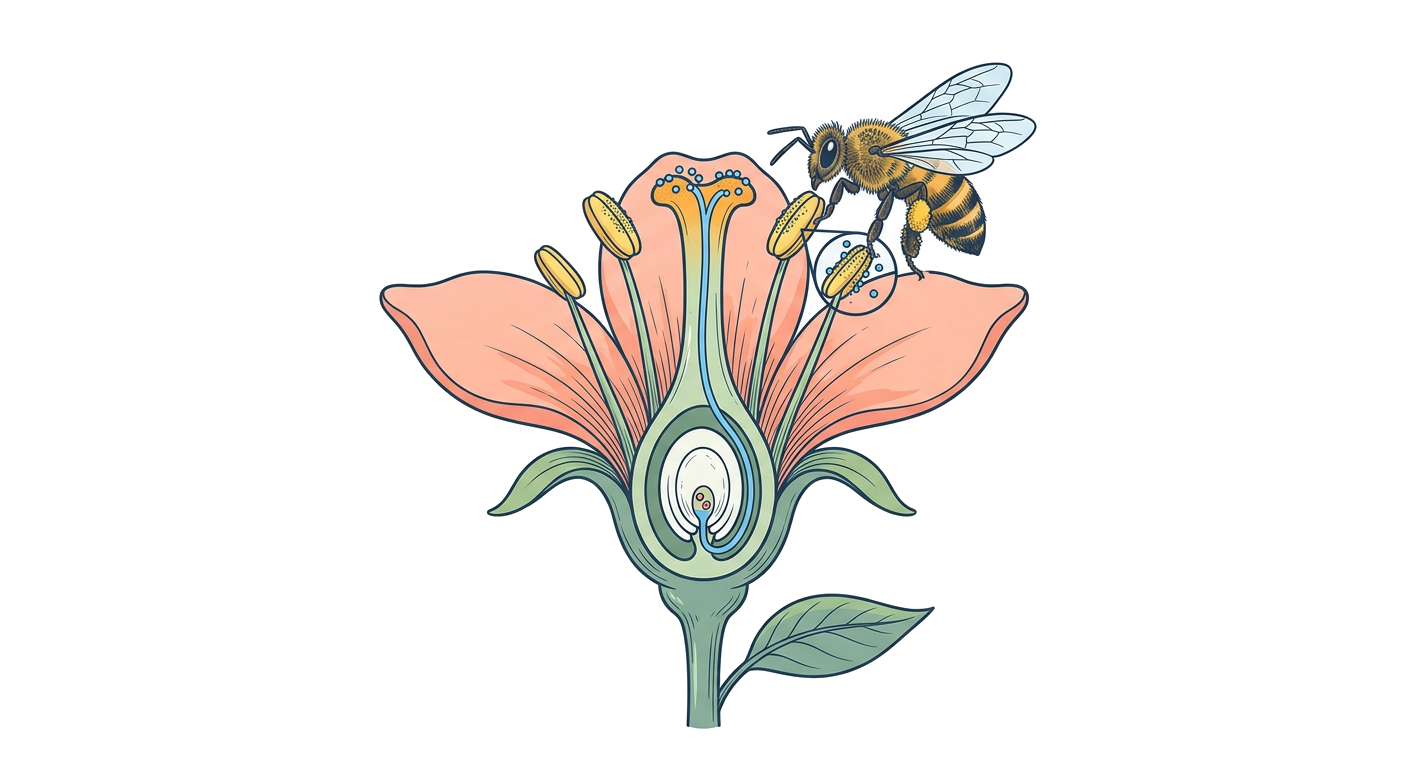
9. Look at the diagram. What is the main purpose of the flower's bright petals?
10. Describe how a bee helps in the process of pollination.
Related Worksheets
Grade 4 Body Systems Worksheet
Explore the amazing human body with this Grade 4 science worksheet focusing on major body systems and their functions.
Ecosystem Interactions
Explore the fascinating world of ecosystems, food chains, and how living things interact with their environment.
All About Corn
A Grade 4 science worksheet exploring the parts, growth, and uses of corn.
The Amazing Ear
Explore the parts of the human ear and how we hear sounds with this Grade 4 science worksheet.
Exploring Benthos: Life at the Bottom of the Sea
A worksheet for Grade 4 science students to learn about benthos, the organisms that live on or in the seafloor, their habitats, and adaptations.
Plant Adaptations Worksheet
Explore how plants adapt to their environments with this Grade 4 science worksheet, covering topics like desert plants, aquatic plants, and special features.
Exploring Nekton
A worksheet for Grade 4 students to learn about nekton, freely swimming aquatic animals.
Vertebrates and Invertebrates
Explore the fascinating world of animals by classifying them into vertebrates and invertebrates. Learn about their characteristics and examples.